
Protective coveralls play a critical role in safeguarding workers across medical, industrial, and chemical environments.
One of the most common questions buyers ask is:
Should I choose disposable or reusable protective coveralls?
Each option offers distinct advantages depending on application, cost, protection level, and hygiene requirements.
This guide compares disposable and reusable protective coveralls to help you make the right decision.
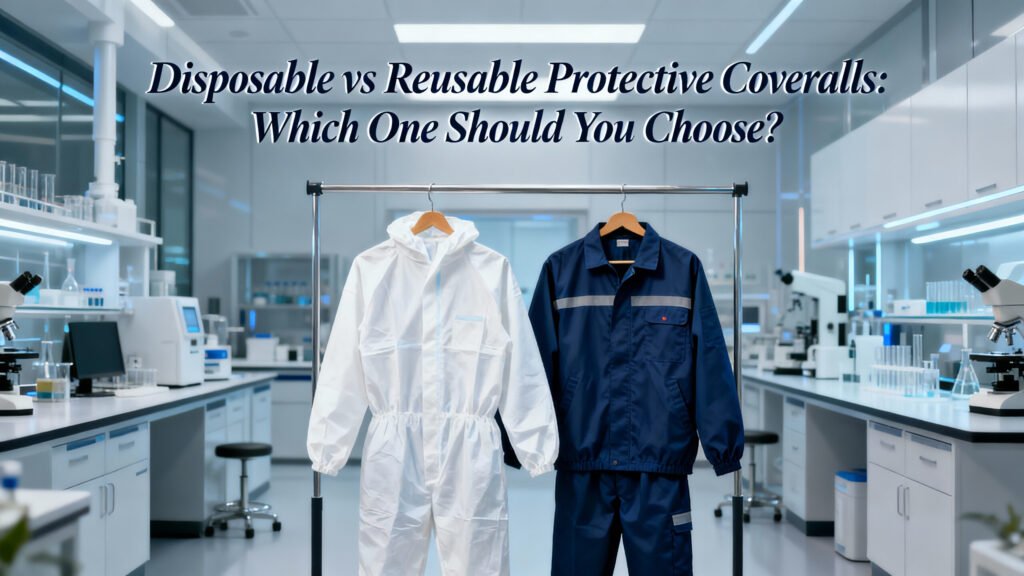
What Are Disposable Protective Coveralls?
Disposable protective coveralls are designed for single-use or limited-use applications and are commonly made from:
- SMS nonwoven
- Microporous film laminated material
Key Characteristics
- Lightweight and breathable
- Cost-effective for short-term use
- Reduced cross-contamination risk
- No laundering or maintenance required
Disposable coveralls are typically compliant with Type 5 / Type 6 standards and are widely used in medical and industrial environments.
What Are Reusable Protective Coveralls?
Reusable protective coveralls are designed for multiple uses and are usually made from:
- Woven polyester or cotton blends
- Coated or treated fabrics
Key Characteristics
- Higher initial cost
- Require washing, maintenance, and inspection
- Longer service life
- Suitable for heavy-duty applications
Reusable coveralls are often used where mechanical durability is more important than disposability.
Key Differences Between Disposable and Reusable Coveralls
1. Protection Level
- Disposable coveralls
Ideal for particle protection and light liquid splashes (Type 5/6) - Reusable coveralls
Better suited for heavy mechanical work but may offer limited liquid barrier unless specially treated
2. Hygiene and Contamination Control
- Disposable coveralls minimize cross-contamination
- Reusable coveralls require proper laundering to maintain hygiene
This makes disposable coveralls the preferred choice in medical and clean environments.
3. Cost Comparison
| Factor | Disposable | Reusable |
|---|---|---|
| Initial cost | Lower | Higher |
| Maintenance | None | Required |
| Replacement | Frequent | Infrequent |
| Long-term cost | Lower for short-term | Lower for long-term heavy use |
4. Comfort and Breathability
Disposable coveralls:
- Lightweight
- Designed for long shifts
- Better breathability in Type 5/6 designs
Reusable coveralls:
- Heavier
- Less breathable depending on fabric
Which Industries Prefer Disposable Protective Coveralls?
Disposable coveralls are commonly used in:
- Medical and healthcare facilities
- Laboratories
- Food processing
- Painting and coating
- Light industrial manufacturing
They offer better hygiene control and ease of use.
Which Industries Prefer Reusable Protective Coveralls?
Reusable coveralls are often used in:
- Heavy manufacturing
- Mechanical workshops
- Welding environments
- Oil & gas operations
These environments require durability over disposability.
How to Choose the Right Option for Your Application
Ask yourself:
- Is contamination control critical?
- Is the exposure short-term or continuous?
- Are laundering and maintenance facilities available?
- What standards are required (Type 5/6, CE, EN)?
For most medical and light industrial applications, disposable Type 5/6 protective coveralls offer the best balance of safety and cost.
Buying Disposable Protective Coveralls from a Manufacturer
Working directly with a disposable protective coverall manufacturer ensures:
- Certified Type 5/6 compliance
- Stable quality and supply
- Factory-direct pricing
- OEM and bulk order support
This is especially important for distributors and large-volume buyers.
Looking for a Disposable Protective Coverall Manufacturer?
If your application requires high hygiene, ease of use, and cost efficiency, disposable protective coveralls are the ideal solution.
👉 Contact us today to receive:
- Competitive manufacturer pricing
- MOQ & delivery lead time
- Free samples
- CE & EN certification documents

