
When choosing disposable protective clothing, one of the most common questions buyers ask is:
Should I choose microporous or SMS coveralls?
Both materials are widely used in Type 5/6 disposable protective coveralls, but they offer different levels of protection, comfort, and cost.
In this guide, we compare microporous vs SMS coveralls to help you choose the best option for your application.
For a general overview, see
Types of Protective Coveralls
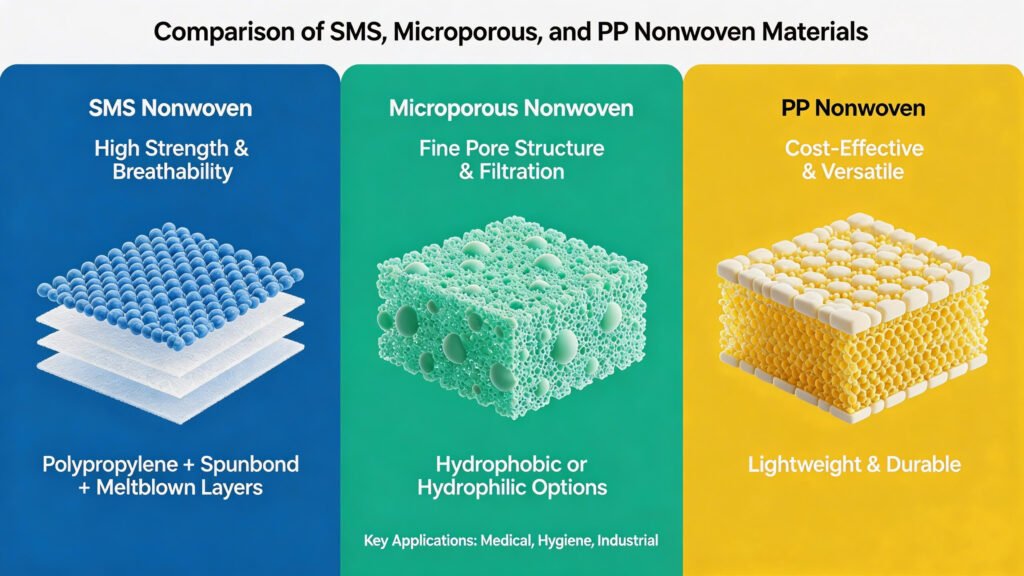
Quick Answer: Microporous vs SMS Coveralls
👉 Microporous coveralls offer better protection against liquids and fine particles.
👉 SMS coveralls are more breathable and cost-effective.
✔ Choose microporous for: spray painting, chemical handling
✔ Choose SMS for: dust protection, general industrial use
What Are Microporous Coveralls?
Microporous coveralls are made from laminated film material, combining a nonwoven base with a microporous film layer.
Key Features
- Excellent liquid barrier
- Protection against fine particles
- Smooth outer surface (low lint)
Typical Applications
- Spray painting
- Chemical handling
- Healthcare environments
See application guide:
Best Protective Coveralls for Painting
What Are SMS Coveralls?
SMS stands for Spunbond-Meltblown-Spunbond, a multilayer nonwoven fabric.
Key Features
- Lightweight and breathable
- Good particle filtration
- Cost-effective
Typical Applications
- Industrial manufacturing
- Construction
- Dust protection
Learn more here:
Industrial Disposable Protective Coverall Guide
Microporous vs SMS Coveralls: Key Differences
| Item | SMS Nonwoven | Microporous Nonwoven |
|---|---|---|
| Full Name | Spunbond + Meltblown + Spunbond Composite | Microporous Film Laminated Nonwoven |
| Structure | 3-layer composite (PP+MB+PP) | Nonwoven + breathable microporous film |
| Barrier Performance | Excellent barrier to liquid, bacteria and particles | Superb waterproof & anti-penetration, good particle barrier |
| Breathability | Good breathable and moisture permeable | Moderate breathability (microporous ventilation) |
| Waterproof Property | Water-resistant, anti-aerosol | Excellent waterproof, blood & chemical splash resistant |
| Softness | Soft, comfortable, no irritation | Slightly stiff, moderate flexibility |
| Strength & Tensile | Good tensile and tear resistance | High strength, not easy to tear |
| Typical Weight | 25–60 g/m² | 35–65 g/m² |
| Main Applications | Disposable protective gowns, surgical gowns, isolation apparel, medical packs | Chemical protective clothing, paint protection, cleanroom coveralls, fluid-resistant gowns |
| Cost Level | Medium | Medium-High |
| Key Features | Balanced barrier & breathability | Highest liquid barrier |
Not Sure Which Material You Need?
- Microporous for high protection
- SMS for cost efficiency
- Type 5/6 options available
👉 Get Expert Recommendation + Free Samples
Which One Should You Choose?
Choose Microporous Coveralls If:
- You work with liquids or chemicals
- You need higher protection
- You require cleaner surfaces (low lint)
Choose SMS Coveralls If:
- You need breathability
- You work in dry environments
Price Comparison
In general:
- SMS coveralls: higher cost
- Microporous coveralls: lower cost
Full pricing guide:
Disposable Protective Coverall Price
Certification and Standards
Both materials can meet:
- Type 5 (particle protection)
- Type 6 (limited liquid protection)
Certification details:
CE Certified Protective Coveralls Guide
Why Many Buyers Choose Type 5/6 Coveralls
Type 5/6 coveralls provide:
- Balanced protection
- Cost efficiency
- Wide application
View product example:
Type 5/6 Protective Coverall
Get Factory Price for Microporous & SMS Coveralls
- MOQ from 1,000 pcs
- CE certified
- OEM available
- Fast delivery
Both microporous and SMS coveralls have their advantages.
- Microporous = better protection
- SMS = better comfort
The best choice depends on your working environment and budget.
If you are unsure, contacting a manufacturer for samples and recommendations is the safest approach.

