
Protective coveralls are widely used across industries to protect workers from hazardous substances, particles, and liquids. However, not all protective coveralls provide the same level of protection.
Different environments require different types of protective clothing, each designed to meet specific safety standards.
This guide explains the six main types of protective coveralls (Type 1–6), their protection levels, materials, and common applications.
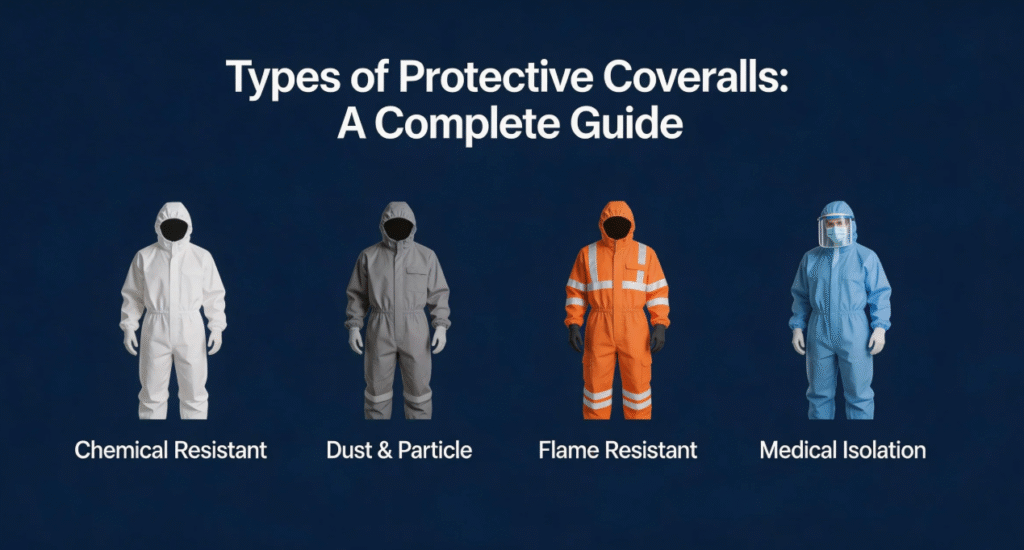
What Are Protective Coverall Types?
Protective coveralls are classified based on the level of protection they provide against hazardous materials.
International standards categorize protective suits into six types:
| Type | Protection Level | Typical Application |
|---|---|---|
| Type 1 | Gas-tight | Chemical plants |
| Type 2 | Non-gas-tight | Industrial environments |
| Type 3 | Liquid-tight | Chemical handling |
| Type 4 | Spray-tight | Chemical spraying |
| Type 5 | Particle protection | Dust and hazardous particles |
| Type 6 | Limited liquid splash | Light chemical protection |
Each type is tested according to specific European PPE standards.
Type 1 Protective Coveralls (Gas-Tight Suits)
Type 1 suits provide the highest level of protection.
Key Features
- Gas-tight construction
- Fully sealed seams
- Compatible with breathing apparatus
Typical Applications
- Hazardous chemical environments
- Emergency response teams
- Chemical manufacturing facilities
Related article: Industrial Disposable Coverall Guide
Type 2 Protective Coveralls (Non-Gas-Tight Suits)
Type 2 suits provide protection against hazardous gases without full gas-tight sealing.
Common Uses
- Industrial chemical operations
- Controlled laboratory environments
See also: Disposable vs Reusable Coveralls
Type 3 Protective Coveralls (Liquid-Tight)
Type 3 protective clothing provides complete protection against strong liquid chemical jets.
Key Characteristics
- Liquid-tight seams
- High chemical resistance
- Durable materials
Applications
- Chemical processing plants
- Hazardous liquid handling
- Industrial cleaning operations
These suits are often used in high-risk chemical industries.
Type 4 Protective Coveralls (Spray-Tight)
Type 4 coveralls protect against liquid sprays and aerosols.
Features
- Spray-tight seams
- Good chemical resistance
- Flexible design for mobility
Typical Applications
- Chemical spraying
- Agricultural pesticide work
- Industrial cleaning
Type 5 Protective Coveralls (Particle Protection)
Type 5 coveralls are designed to protect against hazardous dry particles.
Standard
EN ISO 13982-1
Applications
- Construction and renovation
- Powder processing
- Asbestos removal
- Industrial manufacturing
Type 5 coveralls are widely used in dust-heavy environments.
Type 6 Protective Coveralls (Limited Liquid Protection)
Type 6 coveralls provide limited protection against light liquid splashes and sprays.
Standard
EN 13034
Applications
- Industrial maintenance
- Painting and coating
- Laboratory work
- Light chemical handling
Many disposable protective suits combine Type 5 and Type 6 protection.
Why Type 5/6 Disposable Coveralls Are the Most Common
Among all protective clothing types, Type 5/6 coveralls are the most widely used.
Reasons include:
- Balanced protection level
- Lightweight and breathable design
- Cost-effective disposable solution
- Suitable for many industries
They are commonly used in:
- Manufacturing
- Healthcare
- Construction
- Automotive painting
Materials Used in Disposable Protective Coveralls
Common materials include:
SMS Nonwoven Fabric
- Breathable
- Lightweight
- Good particle protection
Microporous Film Laminated Fabric
- Strong liquid barrier
- Higher protection performance
The material choice depends on work environment and protection requirements.
How to Choose the Right Protective Coverall Type
Selecting the correct coverall depends on several factors:
- Workplace hazards
- Required protection level
- Regulatory compliance
- Comfort and breathability
- Cost considerations
For most industrial and medical environments, Type 5/6 disposable protective coveralls provide the ideal balance of safety and practicality.
Looking for a Reliable Protective Coverall Manufacturer?
If you are sourcing Type 5/6 disposable protective coveralls for industrial or medical use, working with a certified manufacturer ensures product quality and compliance.
👉 Contact us today to receive:
- CE certification documents
- EN standard test reports
- Factory pricing and MOQ details
- Free samples for evaluation

