
Protective clothing plays a vital role in ensuring worker safety across industries such as healthcare, manufacturing, and chemical handling.
However, understanding protective clothing standards can be complex, especially for buyers sourcing products internationally.
Different regions and industries follow different standards, including EN (European), ISO (International), and CE certification requirements.
In this guide, we break down the most important PPE standards and explain how to choose compliant protective clothing.
For an overview of protective suit categories, see
Types of Protective Coveralls
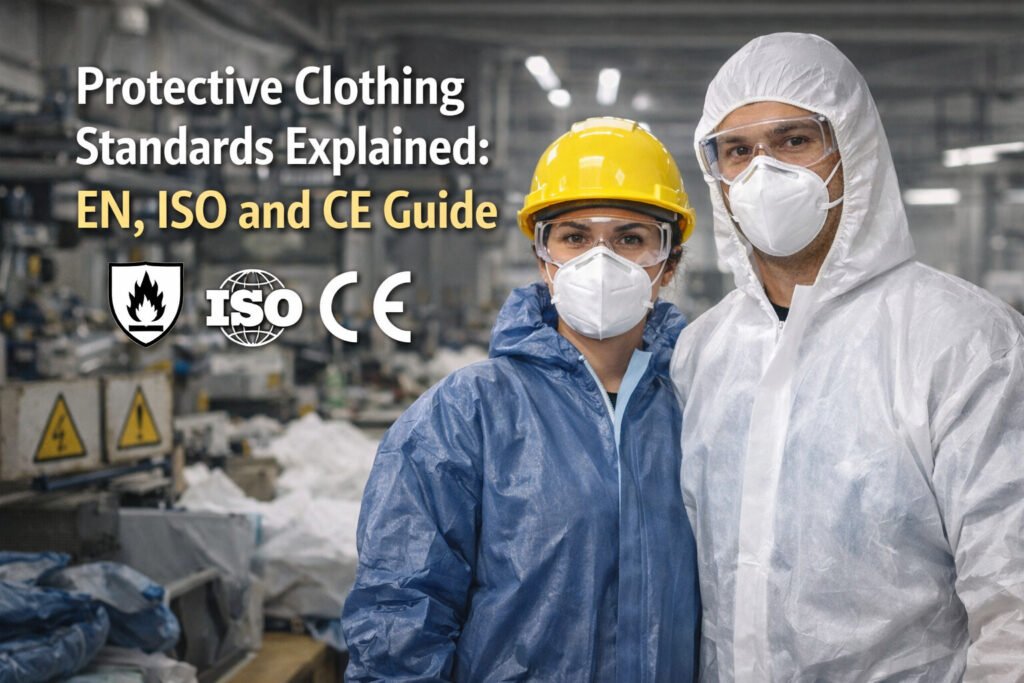
What Are Protective Clothing Standards?
Protective clothing standards are technical regulations that define how PPE should perform under specific conditions.
They ensure that protective garments:
- Provide adequate protection
- Meet safety requirements
- Are tested under controlled conditions
- Can be legally sold in regulated markets
Without proper certification, protective clothing may not be accepted in markets such as the EU.
What Is CE Certification in PPE?
CE certification indicates that a product complies with European PPE Regulation (EU) 2016/425.
For protective coveralls, CE marking means:
- The product has been tested by a notified body
- It meets required safety standards
- It is approved for sale in the European market
Learn more here:
CE Certified Protective Coveralls Guide
Key EN Standards for Protective Coveralls
EN standards are the most important regulations for PPE in Europe.
EN ISO 13982-1 (Type 5)
- Protection against hazardous dry particles
- Common in industrial environments
EN 13034 (Type 6)
- Protection against limited liquid splashes
- Used in light chemical handling
EN 14126
- Protection against biological hazards
- Required for medical protective clothing
EN 1149-5
- Antistatic performance
- Used in sensitive industrial environments
These standards are commonly applied to
Type 5/6 Protective Coveralls
ISO Standards for Protective Clothing
ISO standards are internationally recognized and often complement EN standards.
Common ISO standards include:
- ISO 9001 (Quality Management System)
- ISO 13485 (Medical Devices Quality System)
These standards ensure:
- Consistent manufacturing quality
- Reliable production processes
- Compliance with international markets
Types of Protective Clothing (Type 1–6 Explained)
Protective coveralls are categorized into six types based on protection level:
- Type 1: Gas-tight
- Type 2: Non-gas-tight
- Type 3: Liquid-tight
- Type 4: Spray-tight
- Type 5: Particle protection
- Type 6: Limited liquid splash
For a detailed breakdown, see
Types of Protective Coveralls
Why Type 5/6 Standards Are the Most Common
Among all PPE categories, Type 5/6 protective coveralls are the most widely used.
They provide:
- Protection against particles and light liquids
- Good balance between safety and comfort
- Cost-effective disposable solution
They are widely used in:
- Manufacturing
- Healthcare
- Painting and coating
Learn more in
What Is a Type 5/6 Protective Coverall
How Protective Clothing Is Tested
Protective clothing must undergo strict testing procedures before certification.
Typical tests include:
- Particle penetration tests
- Liquid repellency tests
- Seam strength testing
- Material durability testing
Testing ensures the garment meets required EN and ISO standards.
How to Verify PPE Certification
Before purchasing protective clothing, buyers should verify:
- CE certificate validity
- Notified body number
- Product model consistency
- Declaration of Conformity
Failure to verify certification may lead to:
- Customs clearance issues
- Regulatory penalties
- Product rejection
Common Mistakes Buyers Make
Many buyers face issues due to:
- Fake or expired certificates
- Incorrect product labeling
- Missing compliance documents
- Confusion between standards
Working with a reliable supplier helps avoid these risks.
See sourcing tips here:
Disposable Protective Coverall Manufacturer Guide
Choosing a Certified Protective Coverall Manufacturer
A reliable manufacturer should provide:
- Valid CE certification
- EN test reports
- ISO quality management systems
- Stable production capacity
Global buyers often source from experienced manufacturers to ensure compliance and supply stability.
Looking for Certified Protective Coveralls?
If you are sourcing protective clothing that meets EN, ISO, and CE standards, working with a certified manufacturer is essential.
We provide:
- CE certified protective coveralls
- Full EN compliance (Type 5/6)
- Test reports and documentation
- OEM and bulk supply support

