
Construction workers face daily exposure to dust, debris, insulation fibers, paint particles, chemicals, and contaminated environments. Choosing the right disposable protective coveralls helps improve workplace safety, reduce contamination, and increase worker comfort.
Whether you work in building construction, industrial maintenance, spray painting, or demolition projects, selecting the correct protective clothing is essential.
In this guide, we explain:
- The best types of construction protective coveralls
- Recommended materials
- Important certifications
- Key features buyers should look for
- How to choose a reliable manufacturer
Why Construction Workers Need Disposable Coveralls
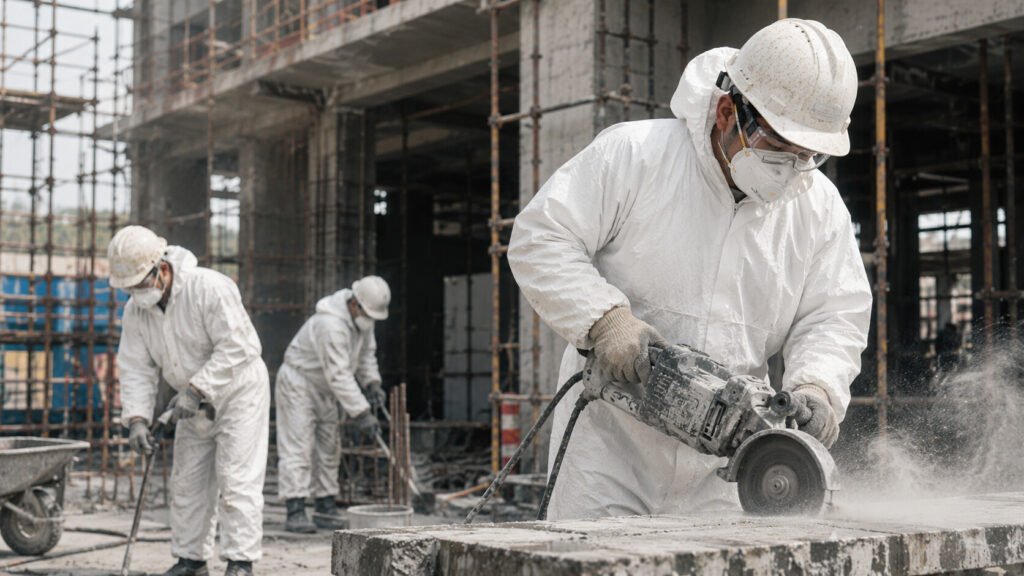
Construction environments contain many airborne particles and hazardous materials that can affect workers’ health and contaminate clothing.
Disposable coveralls help protect workers against:
- Cement dust
- Fiberglass insulation
- Paint overspray
- Industrial dirt
- Light chemical splashes
- Oil and grease
- Construction debris
They are widely used in:
- Building construction
- Renovation projects
- Road construction
- Industrial maintenance
- Spray painting
- Insulation installation
- Roofing work
What Type of Protective Coveralls Are Best for Construction?
For most construction applications, Type 5/6 disposable protective coveralls are the best solution.
Type 5 Coveralls
Type 5 protective clothing protects against hazardous airborne dry particles.
Recommended for:
- Dust-heavy environments
- Sanding work
- Fiberglass handling
- Cement applications
Type 6 Coveralls
Type 6 coveralls provide limited protection against liquid splashes.
Recommended for:
- Paint spraying
- Water-based chemicals
- Light liquid exposure
Why Type 5/6 Is Popular in Construction
Type 5/6 coveralls combine:
- Particle protection
- Splash resistance
- Breathability
- Lightweight comfort
- Cost efficiency
This makes them ideal for long working hours on construction sites.
👉 Related Article:
Type 5 vs Type 6 Protective Coveralls
Best Materials for Construction Disposable Coveralls
Different materials offer different levels of protection and comfort.
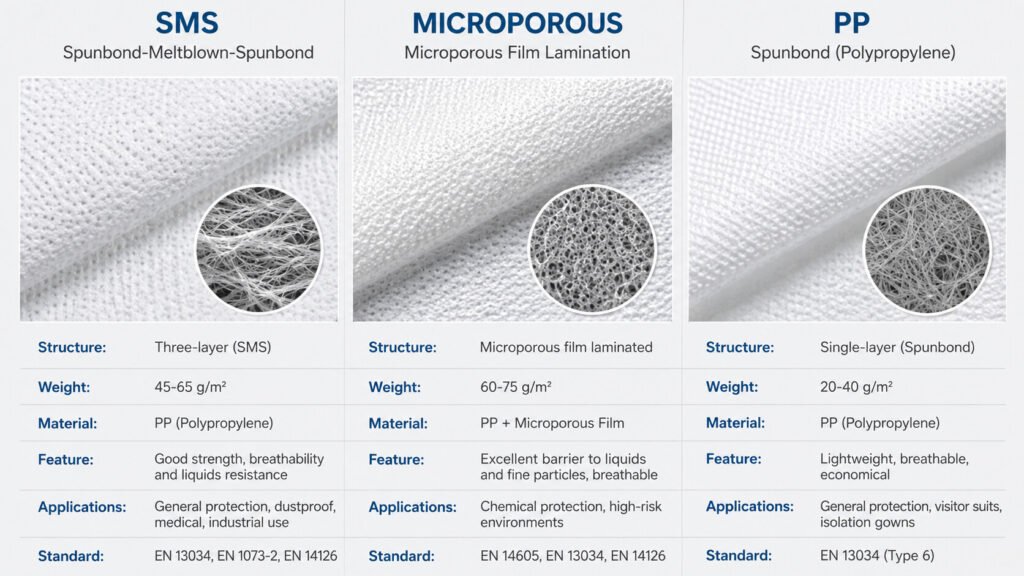
1. SMS Nonwoven Coveralls
SMS fabric is breathable and lightweight.
Advantages
- Comfortable for long shifts
- Good airflow
- Affordable
- Suitable for general construction
Best For
- General construction
- Warehouse work
- Dust protection
- Painting preparation
2. Microporous Coveralls
Microporous film laminated coveralls offer higher protection.
Advantages
- Excellent dust barrier
- Better splash resistance
- Strong particle filtration
- Durable structure
Best For
- Hazardous dust
- Spray painting
- Industrial construction
- Insulation handling
3. PP Polypropylene Coveralls
PP coveralls are economical but offer lower protection levels.
Advantages
- Low cost
- Lightweight
- Disposable convenience
Best For
- Visitor protection
- Low-risk tasks
- Basic contamination control
Important Features to Look for
When purchasing disposable construction coveralls, buyers should evaluate several key features.
Breathability
Construction workers often wear PPE for many hours. Breathable fabrics improve comfort and reduce heat stress.
Tear Resistance
Construction work involves heavy movement and abrasive environments. Durable seams help reduce tearing.
Elastic Hood, Wrists, and Ankles
Elastic closures help block dust and debris entry.
Zipper with Protective Flap
A zipper flap improves protection against particles and splashes.
Anti-Static Treatment
Useful in industrial and electronic work environments.
Disposable vs Reusable Construction Coveralls
Many buyers compare disposable and reusable protective clothing.
Advantages of Disposable Coveralls
- No laundering costs
- Reduced contamination risks
- Convenient disposal
- Better hygiene control
- Lower inventory management
Advantages of Reusable Coveralls
- Long-term reuse
- Suitable for mechanical maintenance
- Higher durability
However, disposable coveralls are generally preferred for:
- Dust-intensive construction
- Painting work
- Hazardous particles
- Temporary projects
👉 Related Article:
Disposable vs Reusable Protective Coveralls
Which Construction Industries Use Disposable Coveralls?
Residential Construction
Protection against dust and insulation fibers.
Commercial Construction
Used during renovation and finishing work.
Industrial Construction
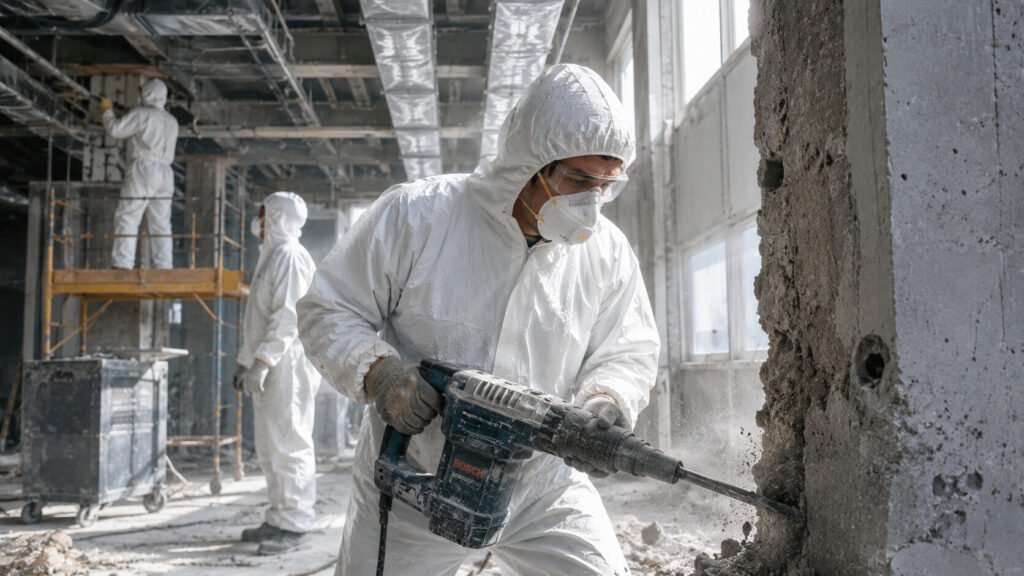
Protection against hazardous particles and chemicals.
Infrastructure Projects
Suitable for bridge, tunnel, and road construction.
Spray Painting Contractors
Disposable coveralls help prevent paint contamination.
👉 Related Article:
Protective Coveralls for Spray Painting
Certifications Buyers Should Check
Professional PPE buyers should always verify certifications before purchasing.
CE Certification
Indicates compliance with European PPE regulations.
EN ISO 13982-1
Type 5 dry particle protection.
EN 13034
Type 6 limited splash protection.
EN 14126
Biological hazard protection for specialized applications.
👉 Related Article:
CE Certified Protective Coveralls Guide
How to Choose a Reliable Construction Coverall Manufacturer
When sourcing disposable coveralls in bulk, buyers should evaluate:
- Production capacity
- Material quality
- OEM capabilities
- Certification support
- Export experience
- Delivery lead time
Reliable manufacturers should provide:
- Product test reports
- Samples
- Stable supply
- Custom packaging options
👉 Recommended Reading:
Protective Coverall Manufacturer in China
Why Many Global Buyers Source Coveralls from China
China remains one of the largest PPE manufacturing hubs in the world.
Advantages include:
- Competitive pricing
- Large-scale production
- OEM customization
- Fast lead times
- Export experience
For importers, distributors, and wholesalers, working directly with a factory can significantly reduce procurement costs.
FAQ
What are the best disposable coveralls for construction work?
Type 5/6 microporous or SMS coveralls are commonly considered the best choice for construction applications because they offer dust protection, splash resistance, and breathability.
Are disposable coveralls suitable for heavy-duty construction?
Yes. Microporous Type 5/6 coveralls are widely used in demanding industrial and construction environments.
Which material is best for construction dust protection?
Microporous laminated fabric provides excellent dry particle protection.
Are construction coveralls waterproof?
Most disposable Type 5/6 coveralls provide limited liquid splash resistance but are not fully waterproof.
Can construction protective coveralls be customized?
Yes. Manufacturers can provide:
- OEM branding
- Custom packaging
- Custom colors
- Private labels
- Size customization
The best disposable coveralls for construction work combine protection, comfort, durability, and compliance.
For most applications, Type 5/6 SMS or microporous coveralls provide the ideal balance between safety and cost efficiency.
Choosing a reliable PPE manufacturer also helps ensure:
- Stable product quality
- Certification compliance
- Fast delivery
- Long-term supply stability
For distributors, contractors, and industrial buyers, selecting the right construction protective coveralls is essential for improving worker safety and operational efficiency.
Looking for a Reliable Disposable Coverall Manufacturer?
We supply:
- Type 5/6 Protective Coveralls
- Microporous Coveralls
- SMS Disposable Coveralls
- OEM & Private Label Services
- CE Certified PPE Products
Contact us today for:
- Free samples
- Latest catalog
- Factory pricing
- Bulk order quotations

