Polyethylene (PE) lamination film is used in a range of composite materials where a film layer is combined with a textile, nonwoven web, or another substrate to provide specific functional properties.
For manufacturers of disposable protective clothing, medical-related products, industrial materials, and other converted products, choosing a suitable PE lamination film involves more than comparing film thickness or price per kilogram. Buyers also need to consider substrate compatibility, bonding performance, flexibility, barrier requirements, converting conditions, and production consistency.
A film that works well with one nonwoven substrate may not bond reliably to another. Similarly, a laminated material that performs adequately in one application may not satisfy the requirements of a different end product.
This guide explains the key factors B2B buyers should evaluate when sourcing PE lamination film for nonwoven fabric, preparing specifications, comparing suppliers, and qualifying materials for production.
1. What Is PE Lamination Film?
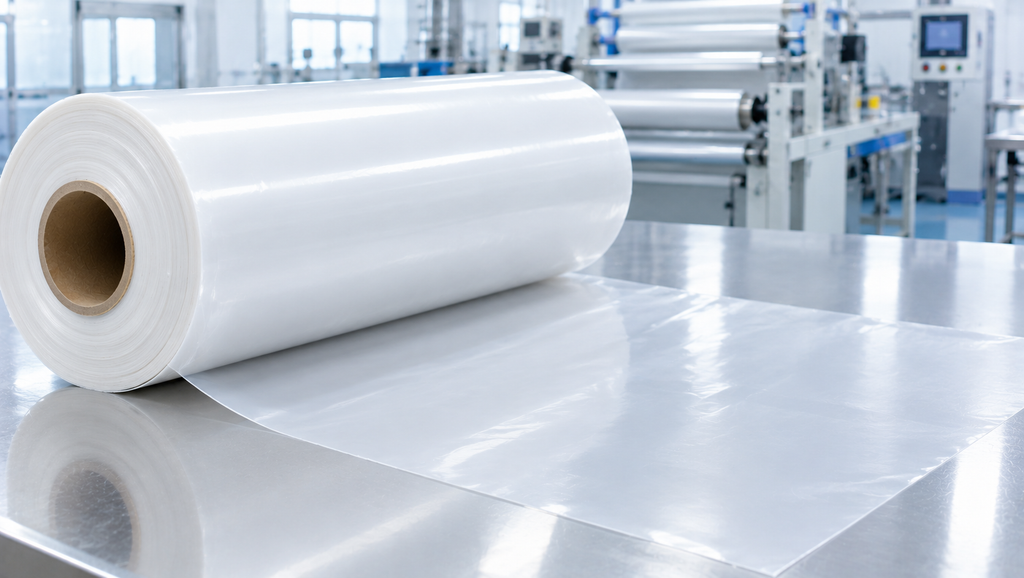
PE lamination film is a polyethylene-based film used as a layer in a composite material. Depending on the product design, it may be bonded to a nonwoven substrate through a suitable lamination process.
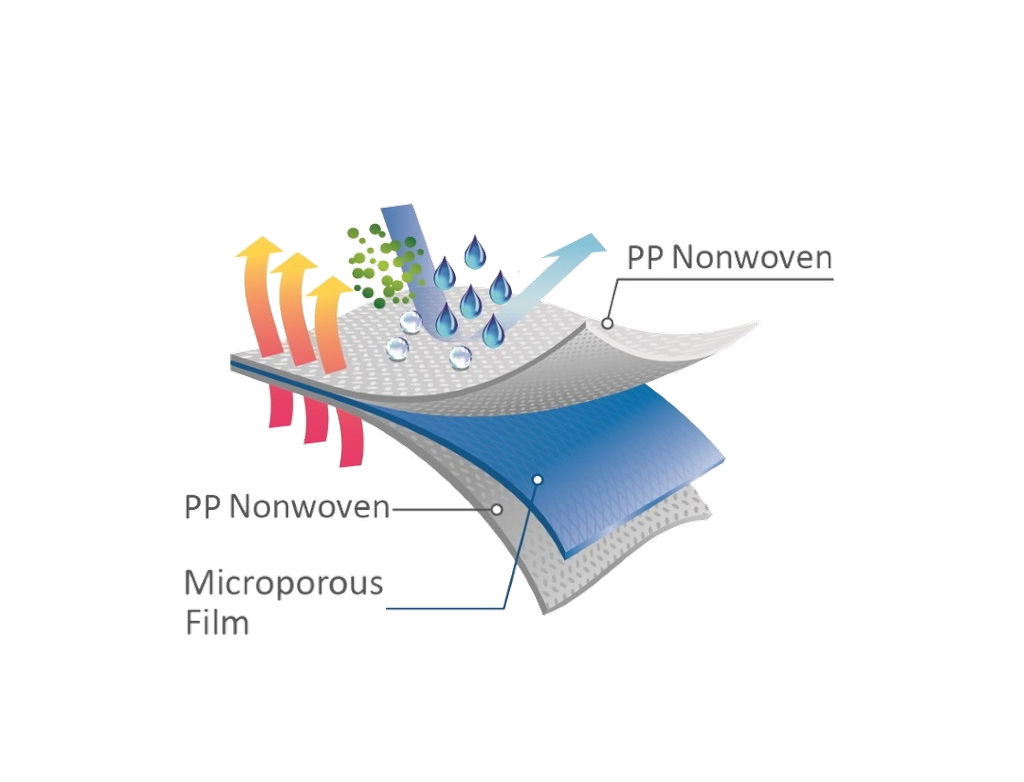
The resulting composite combines the characteristics of the film and the substrate. The PE layer may contribute to liquid resistance or surface protection, while the nonwoven layer can provide softness, flexibility, bulk, or mechanical support.
The actual properties of the finished laminate depend on several factors:
- PE formulation and film construction
- Film thickness and uniformity
- Nonwoven substrate type and surface characteristics
- Bonding method and process conditions
- Adhesive or tie-layer requirements, where applicable
- Finished-product design and quality requirements
For buyers, the important distinction is that the performance of a laminated material depends on the complete structure, not the PE film alone.
When evaluating a supplier, request information about the intended laminate construction and confirm that the proposed film is compatible with your production process.
2. Common Applications of PE Lamination Film
PE lamination film can be used in several types of composite products. The appropriate specification depends on the intended function and the performance requirements of the finished material.
Disposable Protective Clothing
Some disposable protective garments use laminated nonwoven materials when the application calls for a film layer combined with a nonwoven substrate.
The film may contribute to resistance against liquid penetration, while the substrate influences flexibility, handling, and mechanical properties. However, a PE layer does not automatically make a garment suitable for every chemical, liquid, or hazardous environment.
For garment applications, buyers should evaluate the complete laminate and finished garment against the relevant requirements. Explore our microporous PE film material for a related film-based material option used in suitable protective applications.
Medical and Hygiene-Related Products
PE-laminated nonwovens may be used in selected disposable products where liquid resistance or surface protection is required.
The exact requirements vary by product. Buyers should define whether the material needs liquid resistance, a particular level of softness, controlled bonding, or compatibility with additional layers.
Any medical or regulated application should be evaluated against its applicable specifications and documentation. A material description alone is not proof of regulatory compliance.
Industrial Composite Materials
In industrial applications, PE film may be incorporated into composite materials designed for a particular combination of flexibility, surface protection, and resistance to liquid penetration.
Performance requirements can vary considerably between applications. For this reason, buyers should communicate the operating environment, exposure conditions, expected service duration, and relevant test requirements before selecting a material.
Custom Laminated Nonwoven Products
Some buyers need a film that can be combined with a particular nonwoven substrate or incorporated into an existing converting line.
In these cases, sourcing discussions should cover the intended substrate, bonding process, required roll dimensions, production speed, and acceptance criteria for the finished laminate.
3. PE Lamination Film vs. Microporous PE Film
PE lamination film and microporous film are related material options, but they should not be treated as interchangeable.
| Feature | PE lamination film | Microporous PE film |
|---|---|---|
| General description | PE film used as a layer in a composite construction | Film with a microporous structure |
| Typical selection focus | Film properties, bonding compatibility, and laminate construction | Pore structure and the balance between barrier and vapor transmission requirements |
| Key evaluation points | Thickness, width, uniformity, bond strength, and finished-laminate performance | Film construction, relevant barrier test results, and intended garment or product application |
| Main purchasing consideration | Suitability for the intended lamination process | Suitability of the microporous material for the target application |
The distinction matters because a conventional PE film and a microporous PE film may have different functional characteristics.
If the project requires a breathable or microporous construction, review the microporous PE film product page and confirm the properties of the exact material being offered.
If your process involves combining film with a nonwoven web, also confirm whether the supplier offers the required film grade and whether a separate lamination process is necessary.
brp_del_th:null;
brp_del_sen:null;
delta:null;
module: photo;hw-remosaic: false;touch: (-1.0, -1.0);sceneMode: 8;cct_value: 0;AI_Scene: (-1, -1);aec_lux: 0.0;aec_lux_index: 0;HdrStatus: auto;albedo: ;confidence: ;motionLevel: 0;weatherinfo: null;temperature: 38;
4. Key Specifications to Confirm Before Ordering
A clear material specification helps prevent misunderstandings between buyers, film suppliers, and lamination manufacturers.
Film Thickness
Film thickness affects material weight, flexibility, handling, and certain mechanical or barrier properties. Its influence depends on the film formulation, construction, and manufacturing process.
When requesting a quotation, specify the target thickness and acceptable tolerance. Clarify the measurement method and whether the specification applies to the film before lamination or to the complete composite material.
Do not assume that a thicker film automatically meets every performance requirement. Finished-material testing is still necessary.
Film Width and Roll Dimensions
Roll dimensions must match the converting equipment and the planned product layout.
Confirm the following details:
- Nominal film width and acceptable tolerance
- Roll length or net roll weight
- Core diameter and core material
- Maximum roll diameter, if relevant
- Winding direction and edge quality
- Packaging and moisture or dust protection requirements
If the film will be laminated to a nonwoven web, confirm the width relationship between the film and substrate to minimize waste and avoid alignment problems.
Film Composition and Construction
PE film can be produced in different formulations and constructions. The appropriate choice depends on the required flexibility, mechanical behavior, bonding method, and end-use conditions.
Ask the supplier to identify the offered material grade and disclose relevant technical information. If additives, surface treatments, or other formulation characteristics affect bonding or end-use performance, confirm them before approval.
Avoid relying on a generic “PE film” description when your production process requires a defined material specification.
Surface and Bonding Compatibility
Bonding compatibility is one of the most important factors when film is combined with nonwoven fabric.
Depending on the materials and production process, lamination may involve heat, adhesive, extrusion, or another suitable bonding method. The appropriate process depends on the film grade, substrate, equipment, and desired laminate properties.
Before bulk purchasing, evaluate whether the film bonds adequately to the intended substrate and whether the bonding process affects the nonwoven web or finished material.
Mechanical Properties
Depending on the application, buyers may need to specify tensile strength, elongation, tear resistance, puncture resistance, or other mechanical properties.
The relevant tests should reflect the actual use of the finished material. Film-only results may not predict the performance of a laminated composite, so establish whether acceptance criteria apply to the film, the laminate, or both.
Barrier and Liquid Resistance
If the film is intended to contribute to liquid resistance, identify the relevant liquid, exposure conditions, test method, and required performance.
Do not assume that every PE film provides the same barrier performance or that liquid resistance automatically establishes chemical protection. Chemical compatibility and protective performance must be assessed for the specific material and intended exposure.
5. How to Evaluate Lamination Quality
A suitable film must work as part of the intended composite construction. The quality of the bonding process can influence the performance and consistency of the finished material.
Bond Strength and Delamination
Weak bonding may cause layers to separate during converting, handling, or use.
Buyers should define an appropriate method for assessing bond strength and identify the conditions under which the laminate will be evaluated. Acceptance limits should reflect the finished product’s needs rather than an arbitrary target.
Wrinkles, Bubbles, and Surface Defects
Visual defects may affect appearance, conversion efficiency, and, in some cases, material performance.
Agree on inspection criteria for wrinkles, bubbles, uneven coating, pinholes, edge defects, or other relevant issues. The significance of each defect depends on the product design and the applicable quality requirements.
Uniformity Across the Roll
Variations in thickness, coating coverage, or bonding behavior can create difficulties during downstream processing.
Ask suppliers how they monitor material uniformity and what inspection records are available. For repeat orders, establish how production lots will be identified and how nonconforming rolls will be handled.
Performance of the Finished Composite
Where possible, evaluate the film after it has been combined with the intended nonwoven substrate.
The finished laminate may behave differently from the unlaminated components. Tests should reflect the final construction and include the properties that matter most for the application, such as bond integrity, flexibility, mechanical strength, or liquid resistance.
6. How to Select the Right Nonwoven Substrate
PE lamination film is only one part of a composite. The choice of nonwoven substrate affects how the laminate handles, performs, and behaves during production.
PP Spunbond Nonwoven
PP spunbond is commonly used where a nonwoven web with continuous filaments and useful structural properties is required.
When selecting a substrate, evaluate basis weight, web uniformity, mechanical strength, surface characteristics, and compatibility with the proposed bonding method.
Our PP spunbond nonwoven fabric page provides a related material option for buyers comparing nonwoven substrates.
SMS Nonwoven
SMS combines spunbond and meltblown layers into a composite web. Its structure and intended use differ from those of a single-layer spunbond material.
If SMS is being considered as the substrate, confirm that the proposed film and lamination process are suitable for the exact SMS construction. The effects of heat, pressure, or adhesive on the substrate should be evaluated during material qualification.
Review our SMS nonwoven fabric options when assessing composite nonwoven materials.
Microporous Film-Based Composites
Some applications require a film-based composite with a specific balance of liquid barrier properties and vapor transmission. A microporous film may be more relevant than a conventional PE film, depending on the design.
The appropriate choice should be determined by the intended application and verified performance rather than by a general assumption that all film laminates have the same breathability.
7. How to Compare PE Lamination Film Suppliers
Price is important, but a reliable sourcing decision should also consider material compatibility, technical documentation, quality controls, and repeat-order capability.
Review Technical Documentation
Request a specification sheet covering the material grade, thickness, width, roll dimensions, relevant mechanical properties, and any application-specific test data.
If the film is intended for a regulated or protective application, verify the documentation required for the exact finished product. Avoid relying on broad claims that are not supported by appropriate evidence.
Request Samples and Conduct Trials
Samples should represent the material proposed for production. If bonding compatibility is critical, evaluate the sample using your intended substrate and process conditions.
Agree on acceptance criteria before the trial. Document the sample grade, dimensions, test conditions, and approval status so that the approved material can be identified in future orders.
Evaluate Manufacturing Consistency
Ask how the supplier controls thickness variation, roll dimensions, surface defects, and other parameters relevant to the application.
For recurring purchases, discuss batch traceability, change control, inspection procedures, and the process for resolving quality issues.
Confirm Customization and Commercial Terms
Depending on supplier capabilities, available options may include thickness, width, roll dimensions, packaging, and other agreed specifications.
Before placing an order, clarify minimum order quantity, sample availability, production lead time, order tolerance, packaging, delivery terms, and the availability of technical support.
If your project requires multiple material types, our nonwoven fabric manufacturer and supplier information is a useful starting point for discussing your material requirements.
8. PE Lamination Film RFQ Checklist
A structured request for quotation helps suppliers understand the project and makes competing offers easier to compare.
Include as much of the following information as possible:
| RFQ item | Details to provide |
|---|---|
| Intended application | Protective clothing, medical-related product, industrial composite, or other use |
| Film material | Required PE grade or agreed material description |
| Thickness | Target value and acceptable tolerance |
| Width | Nominal width and tolerance |
| Roll specifications | Length or weight, core diameter, and maximum roll diameter |
| Substrate | PP spunbond, SMS, another nonwoven, or specified material |
| Bonding process | Heat, adhesive, extrusion, or other intended process |
| Performance targets | Mechanical properties, bonding requirements, liquid resistance, or other relevant criteria |
| Test methods | Applicable methods and acceptance limits |
| Order volume | Trial quantity and forecast for recurring orders |
| Packaging | Roll protection, labeling, and packing requirements |
| Delivery | Destination and required delivery schedule |
If you are still developing the product, explain the intended construction and end-use conditions. A supplier may be able to suggest candidate materials for testing, but final approval should be based on verified performance.
9. Common Purchasing Mistakes to Avoid
Selecting film by thickness alone. Thickness is important, but it does not establish bonding compatibility, barrier performance, or suitability for the finished product.
Assuming all PE films have the same properties. Formulation, structure, manufacturing quality, and intended use can differ significantly.
Ignoring the nonwoven substrate. A film that performs well with one substrate may not bond reliably to another.
Approving samples without a defined test plan. Establish the relevant tests and acceptance criteria before production orders.
Treating liquid resistance as proof of chemical protection. The actual chemical, concentration, exposure conditions, and applicable testing requirements must be considered.
Failing to plan for repeat orders. A successful sample should be supported by a documented specification and a process for maintaining production consistency.
10. Source PE Lamination Film for Your Project
Sourcing PE lamination film successfully starts with a clear understanding of the finished product and the role the film must perform. Buyers should specify the film dimensions, intended substrate, bonding process, and required performance, then qualify the proposed material through appropriate trials.
If you are purchasing film for nonwoven lamination, prepare your target thickness, roll width, substrate details, estimated order quantity, and application requirements before requesting a quotation.
Explore our PE lamination film product page to review the relevant material option. If you are comparing film-based materials for protective applications, you can also review our microporous PE film.
For bulk sourcing or custom material discussions, contact our team through the nonwoven fabric manufacturer page and share your project specifications.
Frequently Asked Questions
What is PE lamination film used for?
PE lamination film is used as a layer in composite materials where the film’s properties can complement those of a nonwoven or another substrate. Applications depend on the material construction and required performance.
What thickness of PE lamination film should I choose?
The appropriate thickness depends on the finished product, required mechanical and barrier properties, bonding process, and converting equipment. Define performance targets and validate samples rather than selecting thickness in isolation.
Can PE lamination film be bonded to PP spunbond nonwoven?
It may be possible, but compatibility depends on the film grade, substrate surface characteristics, and bonding process. Conduct a trial using the intended production conditions before approving a material for bulk orders.
What is the difference between PE lamination film and microporous PE film?
PE lamination film is a broad category of film used in composite structures. Microporous PE film has a specific porous structure that can provide a different balance of barrier and vapor transmission properties. Confirm the actual construction and test data before choosing between them.
Does PE lamination film automatically provide chemical protection?
No. Chemical protection depends on the exact material construction, chemical exposure, exposure duration, garment design, and applicable performance requirements. Product claims should be supported by relevant testing.
What should I provide when requesting a quotation?
Provide the intended application, film grade if known, target thickness, width, roll requirements, substrate, bonding method, performance targets, estimated quantity, and delivery requirements.
PE lamination film selection requires a clear understanding of the film, the nonwoven substrate, the bonding process, and the requirements of the finished composite.
By defining measurable specifications, evaluating samples under realistic conditions, and checking supplier quality controls, B2B buyers can make more reliable sourcing decisions and reduce avoidable production issues.
For repeat purchases, document the approved material construction and acceptance criteria so that future orders can be evaluated consistently.