
Meltblown fabric is widely used as a filtration medium in products that require fine fiber structures and application-specific particle capture performance. It is commonly found in disposable face masks, respirators, air filtration products, liquid filtration systems, and selected industrial applications.
For B2B buyers, choosing meltblown fabric involves more than selecting a material by name or basis weight. Filtration efficiency, airflow resistance, fiber structure, electrostatic treatment, production consistency, and end-use requirements all influence material suitability.
This guide explains the main factors buyers should evaluate when sourcing meltblown fabric for filtration applications, helping procurement teams compare specifications, assess samples, and communicate technical requirements to manufacturers.
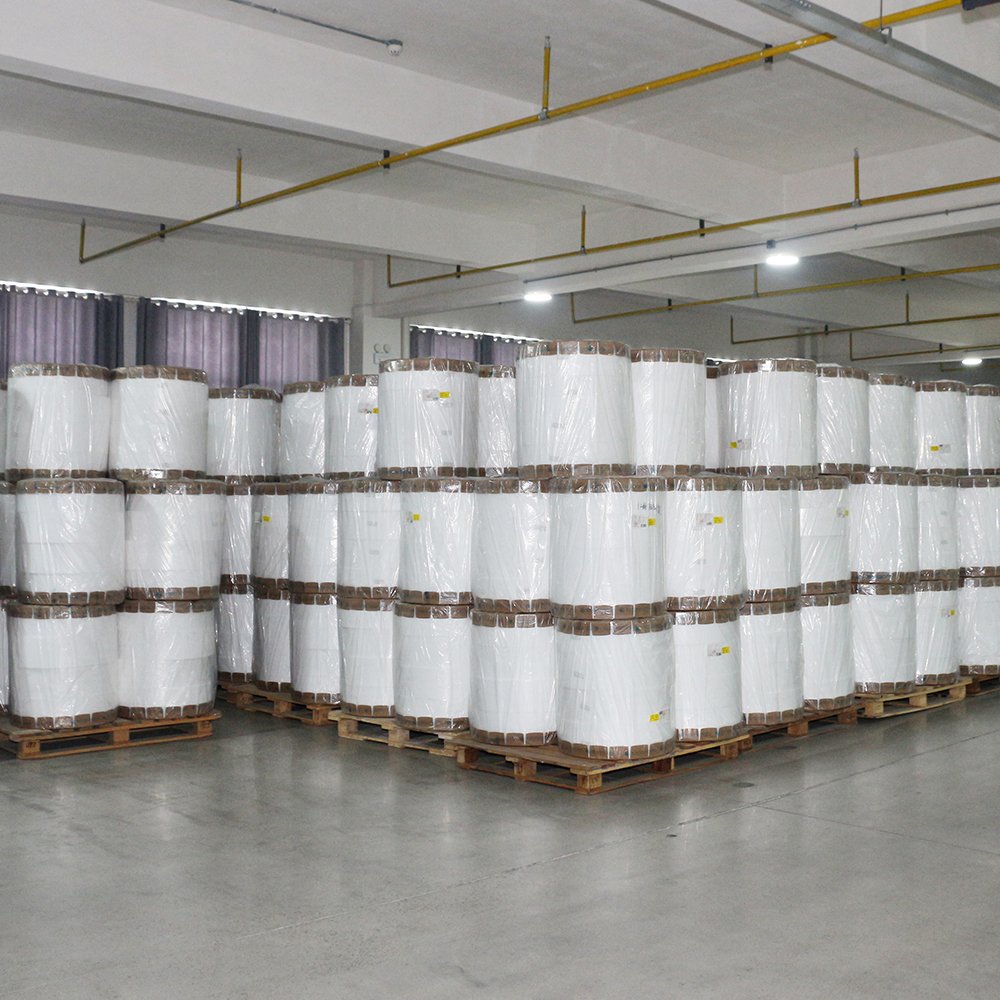
1. What Makes Meltblown Fabric Suitable for Filtration?
Meltblown nonwoven fabric is typically manufactured by extruding molten polymer through fine nozzles and using high-velocity air to attenuate the polymer into fine fibers. These fibers form a web with a large surface area and a fine pore structure.
Polypropylene (PP) is a common raw material for meltblown filtration media. Depending on the manufacturing process and intended application, the material may be designed to capture particles through a combination of mechanical filtration mechanisms and electrostatic attraction.
Electret treatment can improve particle capture under appropriate conditions without requiring an equally large increase in airflow resistance. However, performance depends on the material design, treatment process, test conditions, and storage or use environment.
For buyers, the key point is that meltblown fabric is a material category, not a universal performance specification. Two fabrics with the same basis weight may perform differently in filtration tests.

2. Common Filtration Applications of Meltblown Fabric
Disposable Face Masks and Respirators
Meltblown fabric is frequently used as a filtration layer in disposable masks and respirators. In these products, the material must work as part of a complete structure that may also include spunbond nonwoven layers, nose components, and fastening systems.
The required filtration performance depends on the finished product and its applicable standard. Buyers should request test data for the relevant material or finished product rather than assuming that a particular GSM automatically meets a mask or respirator classification.
For related material options, explore our meltblown fabric product range and compare it with PP spunbond nonwoven fabric, which serves different structural functions in many multilayer products.
Air Filtration Media
Meltblown fibers can be used in air filtration media where particle capture and airflow resistance must be balanced. The appropriate specification depends on the target particle size, air velocity, filter design, service conditions, and required filtration performance.
Industrial dust collection, HVAC systems, and other air filtration products may require different media characteristics. Buyers should define the intended filtration grade and test method before requesting samples.
Liquid Filtration
Meltblown nonwoven materials are also used in selected liquid filtration products. In these applications, fiber structure, pore characteristics, thickness, compatibility with the liquid, and the required contaminant retention level are important considerations.
A fabric suitable for air filtration should not automatically be assumed suitable for liquid filtration. The material must be evaluated under the intended liquid, flow, pressure, and operating conditions.
Other Industrial Applications
Depending on its formulation and construction, meltblown material may also be used in oil absorption, specialized industrial media, and other functional products.
These applications can require different properties from respiratory filtration media. Buyers should specify the actual end use instead of sourcing solely by the term “meltblown fabric.”
3. Key Specifications to Confirm Before Ordering
A clear technical specification helps buyers avoid receiving material that meets a nominal description but fails in the finished product.
Basis Weight (GSM)
Basis weight, measured in grams per square meter, indicates the mass of fabric per unit area. It is an important purchasing parameter, but it does not independently establish filtration efficiency.
When requesting a quotation, specify the target GSM and acceptable tolerance. If the material is intended for an existing product, provide the current fabric specification or an approved reference sample where possible.
Width and Roll Dimensions
Roll width should match the converting equipment and finished-product dimensions. Buyers should also confirm roll length, core diameter, winding direction, outer diameter limits, and packaging requirements when these affect production.
For mask filter media, slit widths may be especially important. For other filtration products, wider rolls or custom dimensions may be more suitable.
Filtration Efficiency
Filtration efficiency describes how effectively a medium captures particles under a defined test method. Results depend on factors such as particle size, aerosol characteristics, airflow, conditioning, and the testing standard.
When comparing suppliers, confirm:
- The applicable test method and standard
- The reported filtration efficiency and test conditions
- Whether the result applies to raw material or the finished product
- Whether a current test report is available
- Whether the result represents a typical value or a verified acceptance specification
Avoid comparing percentages from different test methods as if they were directly equivalent.
Pressure Drop and Air Permeability
Pressure drop indicates the resistance encountered as air passes through a filter medium under specified conditions. Lower resistance can support easier breathing or lower energy consumption, but it must be considered alongside filtration performance and the requirements of the finished product.
Ask suppliers to identify the airflow, test area, and measurement method used for pressure-drop results. Values obtained under different conditions may not be directly comparable.
Electrostatic Treatment
Some meltblown filtration media use electret treatment to enhance particle capture. Buyers should confirm whether the offered material is treated, how the property is evaluated, and whether performance stability has been assessed under relevant storage and use conditions.
Electret treatment alone is not proof of compliance with a particular respirator or filtration standard.
Color, Cleanliness, and Packaging
Color and visual appearance may be specified for product identification or manufacturing consistency. Buyers should also clarify requirements for contamination control, roll protection, moisture protection, traceability, and storage.
For sensitive applications, request documented quality controls that match the intended product and regulatory requirements.
4. How to Balance Filtration Efficiency and Pressure Drop
One of the most important sourcing decisions is finding a suitable balance between particle capture and airflow resistance.
A medium with higher filtration efficiency may also introduce greater airflow resistance, depending on its structure and treatment. However, the relationship is not determined by GSM alone. Fiber diameter, web structure, electrostatic properties, and manufacturing consistency can all influence the result.
A practical evaluation process includes:
- Define the required filtration target and the relevant test method.
- Set an acceptable pressure-drop range under specified test conditions.
- Obtain samples with documented specifications.
- Test samples using the same method and comparable conditions.
- Evaluate performance in the intended product structure.
- Confirm that the selected material can be supplied consistently at production scale.
The best material is the one that meets the application’s documented requirements while remaining compatible with converting processes, product design, and total purchasing cost.
5. Meltblown vs. Spunbond vs. SMS Nonwoven Fabric
These materials are related but serve different roles in many disposable products.
| Material | Typical role | What buyers should evaluate |
|---|---|---|
| Meltblown PP | Fine-fiber filtration media | Filtration efficiency, pressure drop, fiber structure, and treatment |
| PP spunbond | Structural nonwoven layer | Strength, softness, uniformity, and converting performance |
| SMS nonwoven | Composite spunbond-meltblown-spunbond structure | Layer construction, strength, barrier requirements, and intended application |
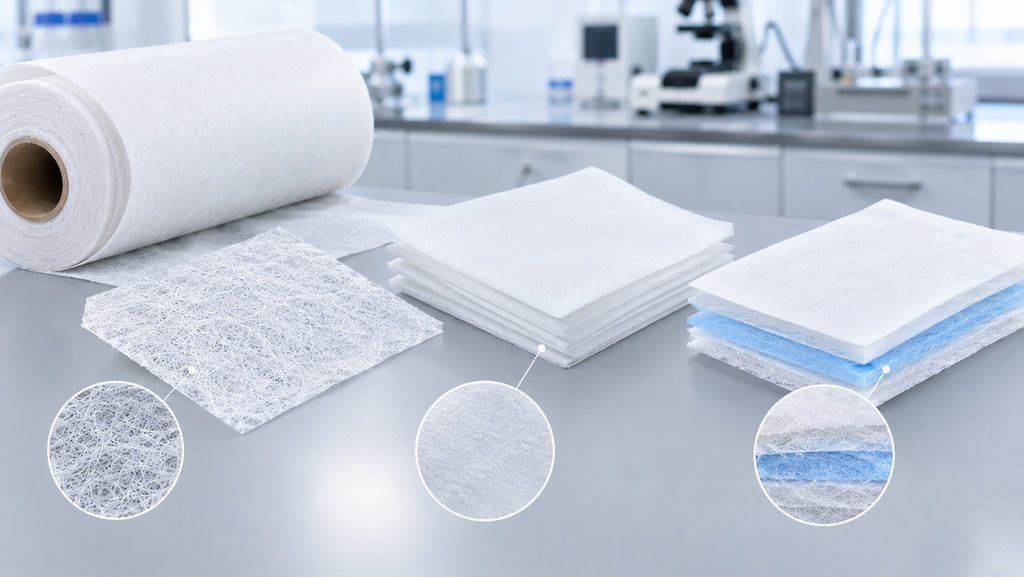
Meltblown fabric is often selected for its filtration function, while spunbond commonly provides structural support. SMS combines spunbond outer layers with a meltblown middle layer to create a composite material for suitable applications.
These materials are not automatically interchangeable. Selection should be based on the finished product’s function and validated performance.
For additional material options, review our SMS nonwoven fabric and PP spunbond nonwoven fabric pages.
6. How to Evaluate a Meltblown Fabric Supplier
A competitive quotation is only one part of supplier evaluation. B2B buyers should also examine technical support, production controls, sample consistency, and the supplier’s ability to meet recurring order requirements.
Review Technical Documentation
Ask for a specification sheet that identifies the material, basis weight, dimensions, applicable test methods, and relevant performance data.
Where a product must comply with a specific standard, verify that the documentation supports the exact claim being made. Do not treat a general fabric specification as proof that every finished product using the fabric meets that standard.
Request Samples Before Bulk Production
Samples allow your technical or production team to check the material against actual requirements. Depending on the application, evaluation may include filtration testing, pressure drop, uniformity, converting performance, and compatibility with adjacent layers.
Agree on sample identification and approval criteria before moving to mass production.
Check Production Consistency
Ask how the supplier controls variation between rolls and production batches. Relevant points may include basis-weight consistency, roll inspection, traceability, quality records, and procedures for handling nonconforming material.
For repeat orders, clarify how approved specifications and reference samples will be maintained.
Confirm Customization and Supply Capacity
Depending on manufacturing capability, customization may cover basis weight, width, roll dimensions, packaging, and other agreed specifications.
Before placing a bulk order, confirm minimum order quantity, production lead time, sample lead time, order quantity tolerance, packaging details, and shipping arrangements.
Businesses sourcing several nonwoven material types can also review our nonwoven fabric manufacturer and supplier information to discuss sourcing requirements directly.
7. Questions to Include in a Meltblown Fabric RFQ
A well-prepared request for quotation helps suppliers provide comparable offers.
Include the following information wherever possible:
- Application: Respirator, disposable mask, air filter, liquid filter, or another product
- Material: Polypropylene meltblown or another specified composition
- Basis weight: Target GSM and tolerance
- Dimensions: Roll width, roll length, and core requirements
- Performance: Filtration target, pressure-drop limit, and required test methods
- Treatment: Whether electret or another treatment is required
- Quality documents: Specification sheet, test reports, and traceability requirements
- Order quantity: Trial quantity and estimated recurring demand
- Customization: Packaging, labeling, and other agreed production requirements
- Delivery: Destination, target schedule, and shipping terms
If you do not yet have a complete technical specification, provide the intended application and finished-product requirements first. A qualified supplier can help identify the information needed before samples are approved.
8. Common Mistakes When Buying Meltblown Filter Media
Choosing by GSM alone. Basis weight does not establish filtration efficiency or pressure drop. Evaluate the complete specification.
Comparing results from different test methods. Performance figures should only be compared when the test conditions and methods are sufficiently aligned.
Assuming all meltblown fabric is electret-treated. Confirm the treatment status and supporting data rather than relying on the material name.
Approving samples without defining acceptance criteria. Agree on measurable specifications before mass production.
Ignoring the finished-product structure. A material that performs well on its own may behave differently when combined with other layers or converted into a finished product.
Overlooking batch consistency. A successful sample is not enough; buyers also need a process for maintaining quality across recurring orders.
9. Request a Quote for Meltblown Fabric
If you are sourcing meltblown fabric for filtration applications, prepare your target basis weight, roll width, intended use, performance requirements, and estimated order quantity before requesting a quotation.
If these details are not yet finalized, you can still describe the product you plan to manufacture and the performance targets you need to achieve. This helps the supplier determine whether an available specification is suitable or whether further material evaluation is required.
Explore our meltblown fabric options or contact our team through the nonwoven fabric manufacturer page to discuss your sourcing requirements, sample evaluation, and bulk purchasing needs.
Frequently Asked Questions
Is higher-GSM meltblown fabric always better for filtration?
No. GSM measures mass per unit area, not filtration efficiency by itself. Fiber structure, treatment, pressure drop, and the applicable test method also matter.
Can meltblown fabric be used in both air and liquid filtration?
Certain meltblown materials can be used in both categories, but suitability must be verified for the intended medium and operating conditions. Air-filtration performance does not automatically establish liquid-filtration performance.
What information should I provide when requesting a quotation?
Provide the application, target GSM, width, roll requirements, performance targets, test methods, estimated quantity, and any documentation or packaging requirements.
Does meltblown fabric automatically meet a respirator standard?
No. Compliance depends on the applicable requirements and evidence for the relevant material or finished product. Buyers should verify test reports and certification claims for the exact product being purchased.
Can meltblown fabric be customized?
Depending on the manufacturer’s capabilities, specifications such as GSM, width, roll dimensions, and packaging may be customized. Confirm the available options and minimum order requirements with the supplier.
Sourcing meltblown fabric for filtration applications requires a clear understanding of the intended product, measurable performance requirements, and supplier quality controls. Buyers should evaluate filtration efficiency and pressure drop together, confirm test methods, approve samples against documented criteria, and verify consistency before placing repeat bulk orders.
A well-defined RFQ and a technically capable supplier can make material comparison more reliable and help reduce avoidable problems during production.

