
What Is a Microporous Coverall?
A microporous coverall is a disposable protective garment made from a laminated nonwoven fabric that combines breathable comfort with strong barrier protection against dust, liquid splashes, and hazardous particles.
Microporous protective coveralls are widely used in:
- Painting & spray coating
- Asbestos removal
- Pharmaceutical manufacturing
- Chemical handling
- Industrial maintenance
- Cleanroom environments
- Healthcare & biohazard protection
Compared with basic PP or SMS coveralls, microporous coveralls provide a higher level of liquid and particle protection while still remaining lightweight and breathable.

What Is Microporous Fabric?
Microporous fabric is usually constructed with:
- PP spunbond nonwoven base layer
- Microporous PE film membrane
- Laminated protective structure
The microporous film contains microscopic pores that are:
- Small enough to block liquid droplets and hazardous particles
- Large enough to allow air vapor to pass through
This creates the balance between:
- Protection
- Breathability
- Comfort
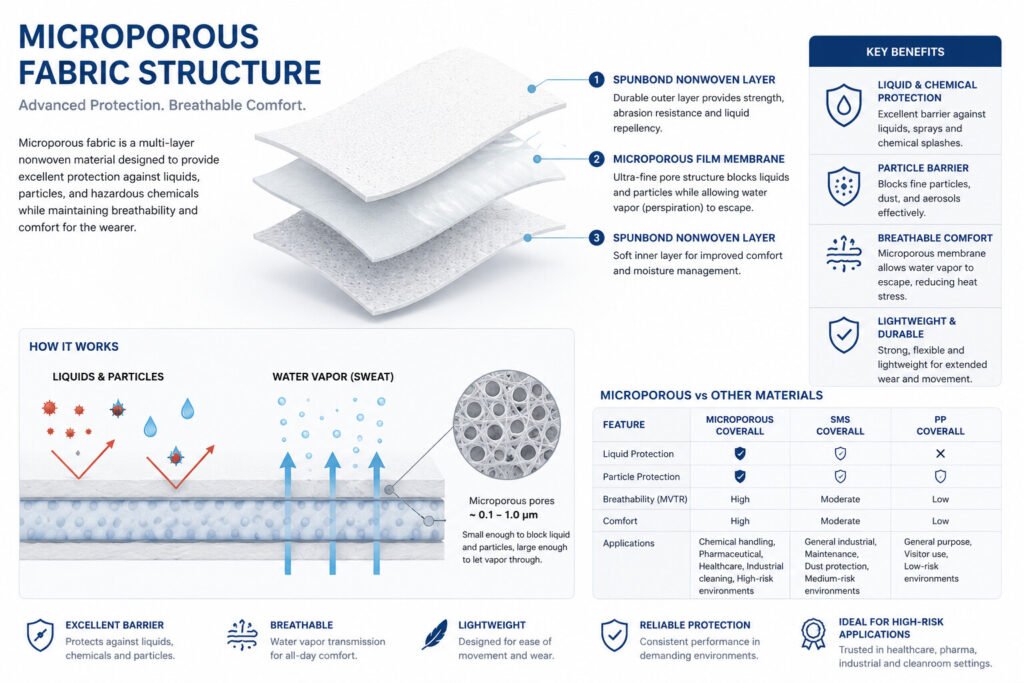
Structure of Microporous Protective Coverall
Typical Material Structure
| Layer | Function |
|---|---|
| Spunbond Nonwoven | Strength & flexibility |
| Microporous Film | Liquid & particle barrier |
| Laminated Surface | Durability |
Key Features of Microporous Coveralls
1. Excellent Particle Protection
Microporous coveralls help block:
- Fine dust
- Powder particles
- Fiberglass
- Asbestos fibers
- Paint overspray
This is why they are commonly used in industrial environments requiring Type 5 protection.
2. Liquid Splash Resistance
The microporous membrane provides resistance against:
- Light chemical splashes
- Non-hazardous liquids
- Paint mist
- Water-based contaminants
3. Better Breathability
Compared with fully coated chemical suits, microporous coveralls are:
- More breathable
- More comfortable for long working hours
- Less heat stressful
4. Lightweight Disposable Protection
Disposable microporous coveralls reduce:
- Cross contamination risks
- Laundry costs
- Maintenance requirements
Microporous Coverall vs SMS Coverall
| Feature | Microporous Coverall | SMS Coverall |
|---|---|---|
| Liquid Resistance | Higher | Moderate |
| Breathability | Good | Excellent |
| Dust Protection | Excellent | Good |
| Chemical Splash Protection | Better | Basic |
| Paint Spray Application | Ideal | Limited |
| Cost | Higher | Lower |
Common Applications of Microporous Coveralls
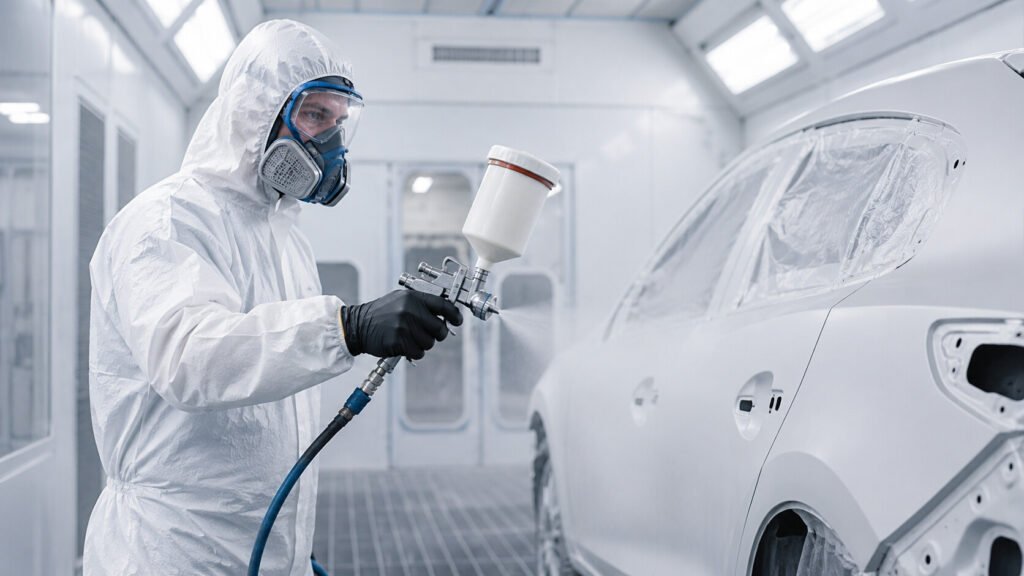
Painting & Spray Booths
Microporous coveralls are extremely popular in:
- Automotive painting
- Industrial spray coating
- Furniture painting
The fabric helps reduce lint contamination while protecting workers from paint mist.
Recommended Internal Link: paint spray protective coveralls
Pharmaceutical Manufacturing
In pharmaceutical factories, microporous garments help:
- Reduce contamination
- Control particles
- Improve cleanroom safety
Recommended Internal Link
Recommended Internal Link: pharmaceutical protective clothing
Asbestos Removal
Microporous Type 5 coveralls are frequently used during:
- Hazardous dust removal
- Insulation handling
- Demolition projects
Chemical Industry
Workers handling light chemicals often use microporous protective suits for:
- Splash resistance
- Disposable safety protection
- Reduced contamination
EN Standards for Microporous Coveralls
Most industrial microporous coveralls comply with:
| Standard | Description |
|---|---|
| EN ISO 13982-1 Type 5 | Hazardous dry particle protection |
| EN 13034 Type 6 | Limited liquid splash protection |
| EN 14126 | Infective agent protection |
| EN 1149-5 | Anti-static protection |
Recommended Internal Link: protective clothing standards guide
Key Design Features to Look For
When sourcing microporous coveralls, buyers should evaluate:
Elastic Hood & Cuffs
Improves sealing and comfort.
Front Zipper with Flap
Enhances splash protection.
Anti-Static Treatment
Suitable for electronic and industrial environments.
Seam Construction
Options include:
- Serged seams
- Bound seams
- Taped seams
Taped seams provide higher liquid resistance.
Microporous Coverall vs Reusable Protective Clothing
| Disposable Microporous | Reusable Garment |
|---|---|
| Single-use hygienic protection | Requires washing |
| Lower contamination risk | Reuse possible |
| Lightweight | Heavier |
| Lower maintenance | Higher maintenance |
Recommended Internal Link: disposable vs reusable protective coveralls
How to Choose the Right Microporous Coverall
Consider Your Industry
Different applications require different protection levels.
| Industry | Recommended Type |
|---|---|
| Painting | Type 5/6 |
| Pharmaceutical | Low-lint microporous |
| Chemical handling | Taped seam Type 5/6 |
| Asbestos removal | Certified Type 5 |
Check Certifications
Always confirm:
- CE certification
- Test reports
- EN standard compliance
Recommended Internal Link: CE certified protective coveralls
Evaluate Manufacturer Capability
Reliable manufacturers should provide:
- OEM customization
- Fabric options
- Stable production capacity
- Quality inspection systems
Recommended Internal Link: protective coverall manufacturer in China
Why Global Buyers Prefer Microporous Coveralls
Microporous protective clothing offers the ideal balance of:
- Protection
- Comfort
- Cost efficiency
- Disposable hygiene
This makes it one of the most demanded disposable PPE products worldwide.
Microporous coveralls are one of the most versatile disposable protective garments used across industrial, medical, and chemical environments.
With excellent particle filtration, liquid splash resistance, and breathable comfort, they are ideal for applications requiring reliable disposable protection without sacrificing worker comfort.
For importers, distributors, and industrial buyers, selecting a certified and experienced manufacturer is essential to ensure stable quality and international compliance.

