Choosing a nonwoven fabric manufacturer is an important decision for businesses purchasing materials in bulk. The right manufacturing partner can help maintain consistent supply, support customized specifications, and reduce sourcing risks over time.
However, not every company advertising itself as a nonwoven fabric manufacturer operates its own production facilities. Some businesses manufacture materials directly, while others rely on outsourced production or purchase finished rolls from third-party factories.
For importers, distributors, and manufacturers, this difference can affect production scheduling, customization, technical communication, and supply chain control.
Before placing a large order, buyers should look beyond product catalogs and quotations. They need to understand how the supplier operates, what it actually manufactures, how production capacity is managed, and whether its capabilities match their purchasing requirements.
This guide provides a practical framework for evaluating a nonwoven fabric manufacturer before committing to a bulk order or long-term supply agreement.
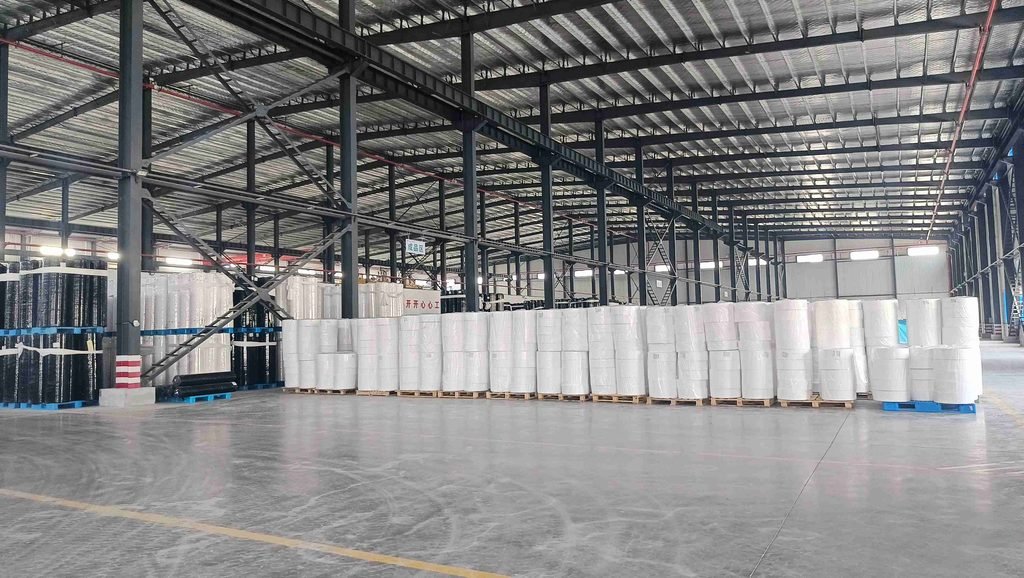
1. Verify Whether the Supplier Is a Direct Manufacturer
The first step is to understand the supplier’s actual business model.
A company may describe itself as a manufacturer, supplier, factory, or trading company. These terms are not always used consistently in international B2B sourcing.
Direct Manufacturer
A direct manufacturer operates its own production facilities and controls relevant manufacturing processes.
Depending on its business model, it may manage:
- Raw material procurement or production
- Nonwoven web formation
- Material processing and finishing
- Roll winding and slitting
- Product inspection
- Packaging and shipment preparation
Not every manufacturer performs every process in-house. The important point is to establish which operations are owned, managed, or outsourced.
Trading Company or Sourcing Agent
A trading company may purchase nonwoven fabric from one or more factories and resell it to international buyers.
This arrangement is not necessarily unsuitable. Trading companies may provide sourcing flexibility, access to multiple factories, or support for smaller orders.
However, buyers should understand who is responsible for production, technical specifications, quality issues, and delivery commitments.
Questions to Ask
Before requesting a quotation, ask:
- Do you own or directly operate the production facility?
- Which manufacturing processes are completed in-house?
- Which processes are outsourced?
- Can you provide recent production-line photographs or videos?
- Can you arrange a live or virtual factory tour?
- Who controls production scheduling and final product release?
The objective is not simply to obtain a manufacturer’s business license. It is to understand the actual production chain behind the material being offered.
2. Evaluate the Factory and Production Infrastructure
A manufacturer’s factory infrastructure can provide useful evidence of its ability to support recurring orders.
When evaluating a facility, consider more than its total floor area. The number and type of production lines, equipment condition, material handling arrangements, and supporting facilities are also important.
Check the Production Equipment
Different nonwoven materials require different manufacturing processes.
For example:
- PP spunbond production requires suitable spunbond equipment.
- SMS production requires compatible spunbond and meltblown production capabilities or an appropriate integrated arrangement.
- Meltblown materials require equipment designed for meltblown web formation.
- PE-laminated materials require suitable lamination and bonding processes.
Ask the manufacturer which equipment is used for your required material and whether it is operated directly by the company.
If you are sourcing several materials, verify each production capability separately. A factory producing PP spunbond fabric does not automatically have the equipment needed to manufacture SMS or laminated materials.
Review Supporting Facilities
Depending on the manufacturing process, relevant supporting facilities may include:
- Raw material storage areas
- Production workshops
- Slitting and rewinding equipment
- Packaging areas
- Quality inspection laboratories
- Finished goods warehouses
A well-organized production environment can make material handling and order management easier, but facility appearance alone does not prove manufacturing performance.
Arrange a Factory Tour
A factory visit or live video inspection can help buyers verify information that is difficult to assess from a catalog.
During the visit, observe:
- Whether the stated equipment is actually installed
- Whether production lines are operating
- How raw materials enter production
- How finished rolls are handled
- Whether production and storage areas are organized
- How quality inspections are performed
For overseas buyers unable to visit in person, request a live video tour focused on the specific production line relevant to the order.
3. Assess Production Capacity and Supply Reliability
A manufacturer’s production capacity should be evaluated against your actual purchasing requirements.
A supplier may be able to produce a small trial order but struggle to meet a much larger recurring demand. Conversely, a factory with substantial capacity may not be the most suitable option for a specialized, low-volume order.
Understand the Available Production Capacity
Ask for information about:
- Number of relevant production lines
- Available production hours
- Typical output for the required material
- Current production utilization
- Planned maintenance arrangements
- Normal production lead time
- Capacity available for additional orders
Capacity figures should be relevant to the specific material, GSM, width, and production configuration.
A general statement such as “high daily output” is less useful than an explanation of how much of your required material can be produced within the requested schedule.
Check Whether Capacity Matches Your Order Plan
Consider three purchasing scenarios:
Trial order: Can the manufacturer support sample production or a smaller initial order?
Regular bulk order: Can it produce the required volume within your normal purchasing cycle?
Peak demand: Can it accommodate seasonal increases or urgent repeat orders?
For long-term cooperation, buyers should also understand how production capacity is allocated between different customers and product categories.
Clarify Lead Time and Order Scheduling
Ask the supplier to distinguish between:
- Sample preparation time
- Pre-production preparation
- Mass production lead time
- Inspection and packaging time
- Shipment preparation time
A realistic production schedule should account for all relevant stages rather than presenting production time as the entire order fulfillment period.
4. Understand Raw Material Sourcing and Production Control
Raw material management can influence product consistency, manufacturing flexibility, and supply continuity.
For buyers sourcing nonwoven fabrics, it is useful to understand where the manufacturer’s key inputs come from and how they are controlled.
Ask About Raw Material Sources
Depending on the material, relevant inputs may include:
- Polypropylene resin
- Meltblown-grade polymer materials
- PE film
- Additives or masterbatch
- Other functional or processing materials
Ask whether the manufacturer purchases these materials from qualified suppliers, maintains approved sourcing arrangements, or produces any key inputs internally.
If the manufacturer claims to have integrated raw material production, clarify which materials and processes are actually covered by that integration.
Check Material Change Management
A manufacturer should have a process for managing changes to raw materials or production specifications.
For repeat orders, buyers should clarify:
- Whether material suppliers may change between batches
- How changes are evaluated
- Whether buyers are notified of significant changes
- Whether samples or test reports are required before approval
- How approved specifications are maintained
This is particularly important when a material is used in a finished product with defined performance requirements.
Evaluate Supply Chain Resilience
Ask how the manufacturer handles raw material shortages, unexpected production interruptions, and changes in customer demand.
Useful questions include:
- Are alternative qualified raw material sources available?
- How are material inventories managed?
- What happens if a key raw material becomes unavailable?
- How are production delays communicated?
- Can the supplier propose an alternative material for evaluation if necessary?
A supplier’s ability to explain these procedures is more meaningful than a general promise of uninterrupted supply.
5. Review the Manufacturer’s Quality Management System
A factory’s quality management system should cover more than final inspection.
Buyers should understand how quality requirements are maintained throughout production, from incoming materials to finished rolls.
Review the Main Quality Control Stages
A structured manufacturing process may include:
Incoming material inspection: Checking relevant raw material information and acceptance requirements.
In-process monitoring: Monitoring production parameters and identifying deviations during manufacturing.
Finished roll inspection: Checking the agreed product specifications and recording inspection results.
Batch identification: Maintaining production records that connect finished rolls with relevant manufacturing information.
Nonconformity management: Investigating problems and defining corrective actions.
Request Relevant Documents
Depending on the product and application, buyers may request:
- Product specification sheets
- Production inspection records
- Batch-specific test reports
- Certificates of Analysis, where available
- Relevant management system certificates
- Applicable product or third-party test certificates
Always verify the certificate holder, issuing organization, validity period, scope, and relevance to the product or facility.
A company-level management system certificate does not automatically prove that a particular nonwoven fabric meets every technical or application requirement.
For a deeper look at material inspection, buyers can also refer to our guide to nonwoven fabric quality control.
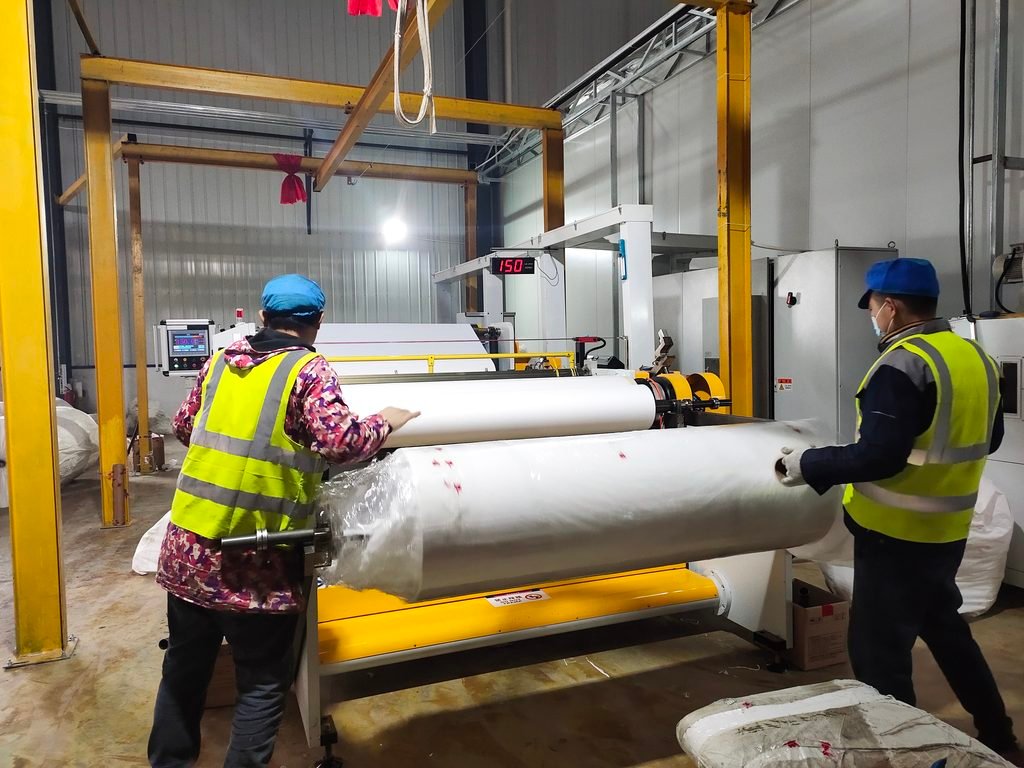
6. Check Product Range and Customization Capabilities
A manufacturer may specialize in one material structure or offer several types of nonwoven fabric.
The important question is whether its actual production range matches your requirements.
Understand the Available Material Categories
Depending on its equipment and manufacturing arrangements, a nonwoven fabric manufacturer may supply:
| Material | Typical Manufacturing or Processing Focus |
|---|---|
| PP spunbond | Spunbond polypropylene web formation |
| SMS nonwoven | Spunbond-meltblown-spunbond composite structure |
| Meltblown fabric | Fine-fiber nonwoven web formation |
| PE laminated nonwoven | Film lamination and bonding |
| Microporous laminated fabric | Microporous film and nonwoven composite processing |
Buyers should confirm whether each material is manufactured directly, processed in-house, or sourced through a partner.
Explore the available nonwoven fabric product range to compare material categories and identify the products relevant to your project.
Evaluate Customization Options
Depending on the production equipment and order requirements, customization may include:
- Basis weight (GSM)
- Roll width
- Roll length
- Color
- Roll configuration
- Packaging
- Selected material structures
- Agreed performance requirements
Customization should be discussed in measurable terms.
For example, instead of requesting “stronger fabric,” provide the required application, target performance, test method, and acceptance criteria.
Confirm Minimum Order Quantities
Custom production may involve different minimum order quantities depending on the material, color, width, and production setup.
Ask whether the MOQ applies to:
- Each material type
- Each GSM specification
- Each width
- Each color
- Each production batch
This helps buyers understand the commercial implications of ordering several customized materials.
7. Evaluate Technical Support and Communication
Manufacturing capability is only part of a successful supplier relationship.
For international B2B buyers, clear technical communication is important when developing new materials, changing specifications, or resolving production issues.
Assess Technical Understanding
A capable manufacturer should be able to understand your product requirements and identify which material specifications need to be confirmed.
For example, if you are sourcing nonwoven fabric for disposable protective clothing, the discussion may involve:
- Intended garment application
- Required material structure
- Fabric weight and dimensions
- Barrier or breathability requirements
- Converting and garment manufacturing considerations
- Relevant testing requirements
The supplier should distinguish between what the fabric itself can demonstrate and what must be verified on the finished product.
Check Response Quality
When contacting a prospective manufacturer, observe whether its team:
- Answers technical questions directly
- Provides consistent product information
- Understands the requested specifications
- Identifies missing information before quoting
- Explains limitations clearly
- Communicates production changes promptly
Fast replies are useful, but accurate and consistent answers are more important when evaluating a long-term manufacturing partner.
8. Verify Export Experience and Commercial Operations
A manufacturer serving international customers should understand the practical requirements of overseas orders.
Export experience does not guarantee that every shipment will be problem-free, but it can indicate familiarity with international purchasing procedures.
Review Export and Documentation Capabilities
Ask whether the supplier can support the documents and arrangements relevant to your shipment, such as:
- Commercial invoices
- Packing lists
- Shipping documentation
- Product specifications
- Agreed inspection records
- Applicable certificates
- Export packaging requirements
Requirements vary by destination, product, and shipping arrangement. Buyers should confirm the documents needed for their specific transaction.
Discuss Payment and Contract Terms
Before placing a bulk order, confirm:
- Quotation validity
- Currency
- Payment terms
- MOQ
- Production lead time
- Delivery terms
- Order quantity tolerance
- Packaging requirements
- Inspection arrangements
- Procedures for handling nonconforming goods
The purchase agreement should clearly identify the material specification and the responsibilities of both parties.
Avoid relying only on informal messages for important commercial commitments.
9. Conduct a Trial Order Before Long-Term Cooperation
Even after a manufacturer passes an initial evaluation, a trial order is a useful way to assess actual performance.
A trial order allows buyers to evaluate more than the appearance of a sample.
What to Evaluate During a Trial Order
Specification compliance: Does the delivered material match the approved specification?
Production consistency: Are the rolls consistent across the order?
Delivery performance: Was the order completed according to the agreed schedule?
Packaging condition: Did the material arrive in the agreed packaging condition?
Documentation: Were the required product and inspection records provided?
Communication: How did the supplier handle questions or unexpected issues?
Where possible, test the material using your actual converting or manufacturing process.
For larger or technically demanding projects, buyers may also arrange a pre-shipment inspection or agree on additional testing before release.
Establish a Supplier Performance Record
After the trial order, record the manufacturer’s performance against agreed criteria.
For recurring orders, this creates a practical basis for deciding whether to increase order volume or establish a longer-term supply arrangement.
10. Warning Signs When Evaluating a Nonwoven Fabric Manufacturer
A supplier does not need to meet every possible requirement to be suitable. However, certain warning signs deserve closer investigation.
Unclear Factory Ownership or Production Responsibility
If the company cannot explain where the material is produced or who controls manufacturing, buyers may have difficulty managing technical and quality issues.
Production Capacity Claims Without Supporting Details
Statements such as “unlimited production capacity” or “fastest delivery” should be supported by relevant production information and a realistic schedule.
Inconsistent Product Information
If specifications, quotations, and sample descriptions contain conflicting information, ask for clarification before proceeding.
Certificates That Cannot Be Verified
Check whether certificates are valid and relevant to the actual company, facility, or product. Do not accept certificate images as sufficient proof without reviewing their scope and issuing source.
Unwillingness to Define Specifications
A manufacturer should be willing to discuss measurable requirements and agree on the specifications used for production.
Unclear Responsibility for Problems
Before placing an order, buyers should understand how the supplier handles delays, nonconforming goods, and other order-related issues.
The goal is not to eliminate every commercial risk. It is to identify uncertainties early enough to make an informed sourcing decision.
11. A Practical Manufacturer Evaluation Checklist
Use the following checklist when comparing potential manufacturers.
| Evaluation Area | Questions to Confirm |
|---|---|
| Business identity | Is the company a direct manufacturer, trading company, or both? |
| Factory verification | Can the production facility be visited or inspected remotely? |
| Equipment | Does it have the relevant equipment for the required material? |
| Production capacity | Can it meet trial and recurring order volumes? |
| Raw materials | Are input sources and material changes controlled? |
| Quality management | Are inspection procedures and records available? |
| Traceability | Can products be linked to production batches? |
| Product range | Does the actual manufacturing range match the order? |
| Customization | Can the supplier meet the requested specifications? |
| Technical support | Can the team understand and discuss application requirements? |
| Export capability | Can it support the required international shipping documents? |
| Commercial terms | Are MOQ, lead time, payment, and delivery responsibilities clear? |
| Trial order | Can the buyer evaluate actual production and delivery performance? |
A simple scoring system can help compare multiple suppliers. However, critical requirements such as production authenticity, required certifications, and technical compliance should be treated as pass-or-fail conditions rather than offset by a high score in unrelated areas.
12. What Information Should You Send When Contacting a Manufacturer?
A detailed initial inquiry helps a manufacturer assess whether it can support your project and prepare a more accurate quotation.
Include the following information:
| Inquiry Item | Information to Provide |
|---|---|
| Intended application | Finished product or manufacturing process |
| Material type | PP spunbond, SMS, meltblown, or laminated material |
| GSM | Target basis weight and tolerance |
| Width | Required roll width |
| Color | Required color |
| Roll format | Roll length, core size, or weight |
| Performance requirements | Relevant mechanical, barrier, filtration, or other targets |
| Quantity | Trial order and estimated annual demand |
| Customization | Special production or packaging requirements |
| Destination | Delivery country and location |
| Documentation | Required test reports or certificates |
| Schedule | Expected sample and bulk delivery dates |
If your material specification is still under development, explain the intended product and operating conditions. The manufacturer can then clarify which technical details need to be established before sample evaluation.
For direct sourcing inquiries, visit our nonwoven fabric manufacturer page to discuss material options, production capabilities, and bulk order requirements.
Evaluating a nonwoven fabric manufacturer requires more than comparing quotations or reviewing product samples.
B2B buyers should verify the supplier’s actual manufacturing role, inspect relevant production infrastructure, assess capacity against expected demand, understand raw material management, and review quality and export procedures.
A factory tour, technical discussion, document review, and trial order can provide a much clearer picture of whether a manufacturer is suitable for long-term cooperation.
Before committing to a bulk order, make sure that production responsibility, technical specifications, delivery arrangements, and quality expectations are clearly agreed.
A well-evaluated manufacturing partner can help build a more reliable sourcing relationship and support the changing requirements of your business.
Frequently Asked Questions
1. How can I tell whether a nonwoven fabric supplier is a real manufacturer?
Ask which production processes it operates directly, request evidence of its production facility and equipment, and arrange a factory visit or live video inspection where possible. Also clarify whether any processing stages are outsourced.
2. What should I check during a nonwoven fabric factory audit?
Review the relevant production equipment, raw material handling, manufacturing workflow, inspection facilities, finished goods storage, batch identification, and production records. Focus on the processes related to the material you intend to purchase.
3. How do I evaluate a manufacturer’s production capacity?
Ask for capacity information specific to the required material, GSM, width, and production configuration. Confirm available production scheduling, lead time, current workload, and the ability to support repeat orders.
4. Should I place a trial order before buying in bulk?
A trial order is a practical way to evaluate actual production consistency, delivery performance, packaging, documentation, and communication before committing to a larger or recurring purchase.
5. Is buying directly from a nonwoven fabric manufacturer always cheaper?
Not necessarily. Direct sourcing may reduce certain intermediary costs, but the final price depends on order volume, customization, material specifications, logistics, and commercial terms. Buyers should compare the total purchasing value rather than unit price alone.
6. What documents should I request from a nonwoven fabric manufacturer?
Depending on the product and application, request product specifications, relevant test reports, batch inspection records, applicable certificates, and export documents. Verify that each document is current and relevant to the actual product or facility.
7. What is the difference between a nonwoven fabric manufacturer and a supplier?
A manufacturer operates or controls manufacturing processes, while a supplier is a broader term that may include manufacturers, distributors, and trading companies. Buyers should establish who is responsible for production, quality, and delivery before placing an order.