SMS nonwoven fabric is widely used in disposable garment manufacturing because it combines spunbond layers with a meltblown middle layer in a single composite structure.
For manufacturers producing disposable coveralls, isolation gowns, laboratory garments and other nonwoven apparel, selecting the right SMS material involves more than comparing fabric prices.
Fabric weight, width, tensile performance, air permeability, seam construction and the intended application can all influence the performance of the finished garment.
Buyers also need to consider whether standard SMS fabric meets their requirements or whether a different material structure, such as a PE-laminated composite, is necessary.
This guide explains how to evaluate SMS nonwoven fabric for disposable garments, prepare material specifications and source suitable fabric rolls for production.
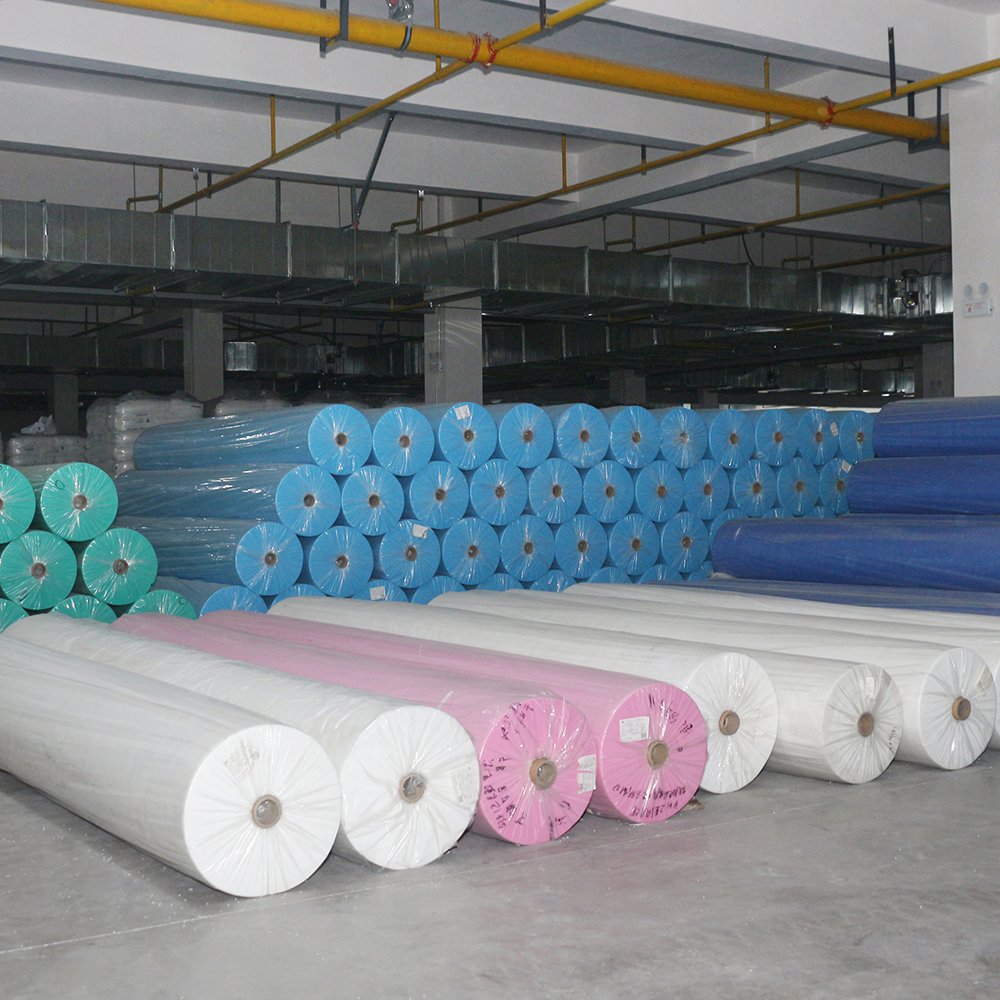
1. What Is SMS Nonwoven Fabric?
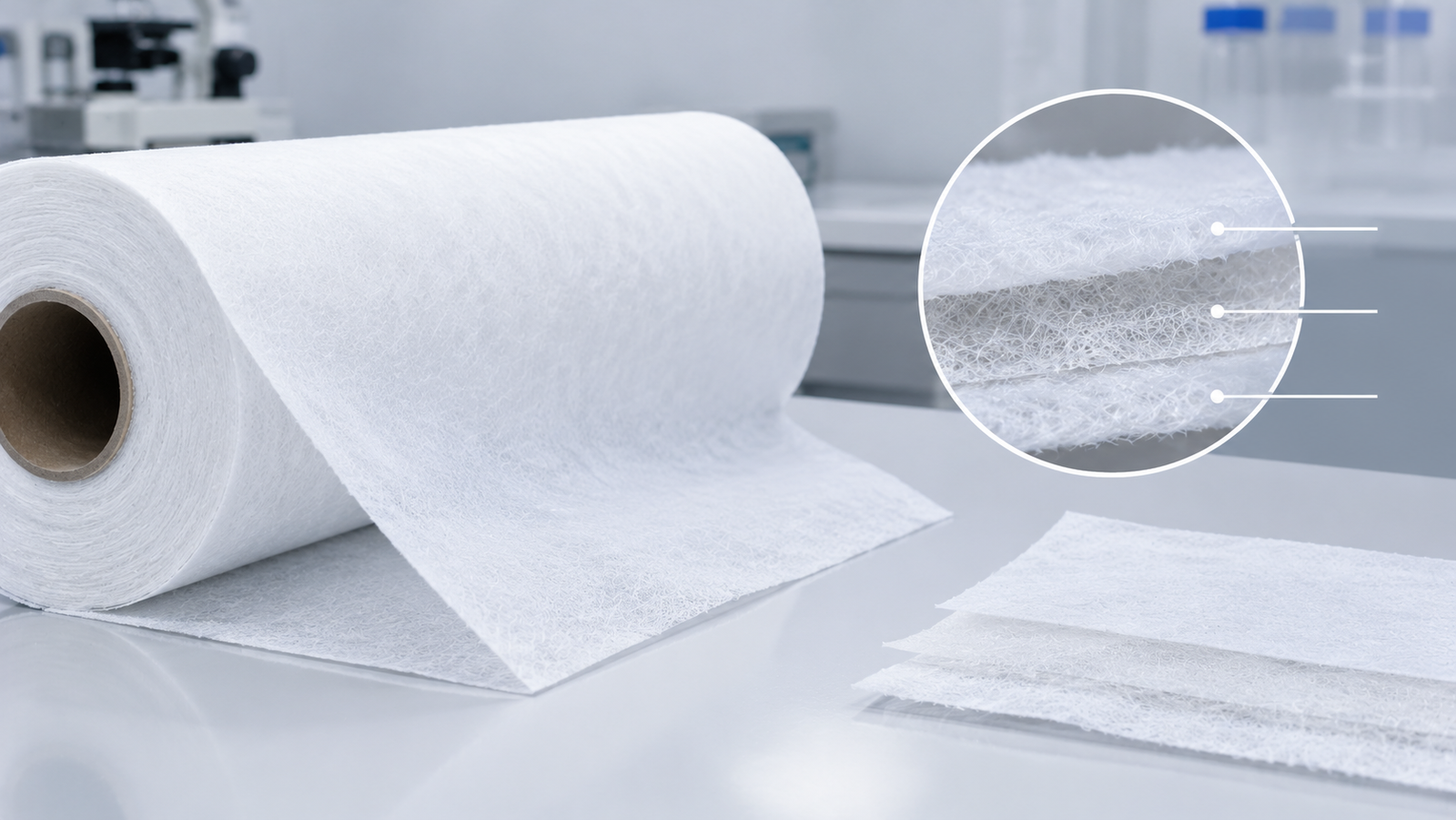
SMS stands for Spunbond–Meltblown–Spunbond.
It is a multilayer nonwoven structure consisting of:
- First spunbond layer: Provides structural support and contributes to mechanical strength.
- Meltblown middle layer: Contains fine fibers that contribute to filtration and barrier-related performance, depending on the material and its construction.
- Second spunbond layer: Adds structural support and helps form the composite fabric.
The three layers are bonded into one material.
SMS is not simply ordinary PP spunbond fabric with a different name. Its layered structure gives it different characteristics, making it useful for applications where a balance of strength, lightweight construction and functional performance is required.
However, not all SMS fabrics provide identical protection. Performance depends on the construction, manufacturing parameters, test methods and intended application.
For product details and available material options, visit the SMS nonwoven fabric product page.
2. Why Do Disposable Garment Manufacturers Use SMS Fabric?
SMS fabric can be suitable for disposable garments when the material specification matches the requirements of the finished product.
Lightweight Material Construction
SMS can be manufactured in different fabric weights to suit different garment designs.
For disposable clothing, a suitable lightweight structure can help balance material consumption, garment weight and wearability.
The lowest GSM is not necessarily the best choice. Buyers should confirm that the selected material can withstand the cutting, sewing, handling and use conditions of the finished garment.
Strength During Garment Conversion
Fabric must remain sufficiently stable during cutting, sewing, folding, packaging and transportation.
Tensile strength and elongation are useful evaluation parameters, but the relevant acceptance criteria depend on the product design and production process.
Breathability and Wearability
Air permeability can affect comfort, particularly when a garment is worn for extended periods.
However, breathability should be assessed alongside the required barrier performance. A more breathable material is not automatically appropriate for every protective application.
Compatibility With Different Garment Designs
SMS fabric may be converted into different disposable products, including gowns, coveralls, caps and other protective apparel.
The suitability of the material depends on the intended use, garment construction and required performance level.
3. Common Applications of SMS Nonwoven Fabric
Before requesting a quotation, identify the finished product you intend to manufacture. Different applications require different material specifications.
Disposable Isolation Gowns
SMS fabric may be considered for isolation gowns where its documented performance meets the applicable requirements.
Buyers should evaluate the intended use, garment design, seam construction and required liquid barrier performance before selecting the fabric.
Disposable Coveralls
SMS material can be used for certain disposable coverall applications, particularly where lightweight construction and wearability are important.
For applications involving hazardous particles or liquids, do not select fabric based on its name alone. Confirm the complete garment’s test results and certification against the relevant requirements.
Laboratory and Industrial Garments
Some laboratory, maintenance and industrial garments use SMS nonwoven material for general contamination control.
The correct material depends on the contaminants involved and the level of protection required.
Other Disposable Products
SMS can also be used in selected disposable apparel and healthcare-related products. Requirements for filtration, softness, strength and fluid resistance vary by application.
If your project requires a material other than SMS, review the nonwoven fabric product category to compare available material types.
4. How to Specify SMS Nonwoven Fabric for Bulk Purchasing
A clear technical specification helps buyers compare quotations and reduces the risk of receiving material that does not match production requirements.
Fabric GSM
GSM means grams per square meter. It describes the mass of the fabric per unit area.
When specifying GSM, buyers should confirm:
- Target fabric weight
- Acceptable weight tolerance
- Whether the specification applies to the complete SMS composite
- The method used for incoming quality inspection
Avoid selecting material based on GSM alone. Two fabrics with the same nominal weight may have different mechanical properties and barrier performance.
Fabric Width
Roll width should match the requirements of your cutting and converting equipment.
Before ordering, confirm:
- Required finished width
- Permitted width tolerance
- Machine working width
- Edge-trimming requirements
- Roll configuration
Correct width selection can help reduce cutting waste and improve material utilization during mass production.
Color and Appearance
White and blue are common choices for disposable garments, although other colors may be available depending on the supplier’s production capabilities.
Buyers should confirm color consistency, surface uniformity and any appearance requirements before approving a sample.
Tensile Strength and Elongation
The fabric should be evaluated in both machine direction and cross direction when relevant to the application.
These properties can affect how the fabric behaves during conversion and use.
Specify the test method and acceptance criteria instead of relying on descriptions such as “strong fabric.”
Air Permeability and Barrier Performance
Air permeability may be important for garments intended for extended wear.
Where barrier performance is required, buyers should specify the relevant test method and required performance level. Do not assume that all SMS fabrics provide the same resistance to liquids or particles.
Roll Length and Packaging
Roll length, roll diameter, core size and packaging can affect storage, shipping and compatibility with production equipment.
These details should be agreed upon before a bulk order is confirmed.
5. SMS vs. PP Spunbond: Which Material Should You Choose?
SMS and PP spunbond are related nonwoven materials, but they have different structures and may serve different purposes.
| Buying Factor | PP Spunbond | SMS Nonwoven |
|---|---|---|
| Structure | Spunbond polypropylene web | Spunbond–meltblown–spunbond composite |
| Main consideration | General material strength and lightweight construction | Balance of structural support and meltblown-layer functions |
| Material selection | Based on finished-product requirements | Based on finished-product requirements and required composite performance |
| Cost comparison | Depends on GSM, specifications and volume | Depends on layer construction, specifications and volume |
| Typical purchasing checks | GSM, width, strength, uniformity | GSM, width, strength, uniformity and relevant barrier or filtration tests |
There is no universal winner. The appropriate material depends on the finished product, technical requirements and target cost.
If your application can use a single spunbond layer, explore PP spunbond nonwoven fabric.
If you need a more detailed material comparison, review the existing PP nonwoven vs. SMS nonwoven comparison.
6. When Is SMS Not the Right Material?
SMS should not be treated as a universal solution for disposable protective products.
Some applications require different material structures or additional functional layers.
Applications Requiring a Liquid Barrier
Standard SMS fabric should not automatically be considered waterproof or suitable for high liquid exposure.
If the finished product requires a stronger liquid barrier, a laminated material may be more appropriate, depending on the specific requirements.
Explore PE lamination film when evaluating film-based composite structures.
Applications Requiring a Microporous Barrier
Some protective clothing applications use microporous film laminated to a nonwoven substrate.
This construction can provide a different combination of liquid barrier and moisture vapor transmission properties, depending on the laminate design and test results.
Learn more about microporous PE film.
Applications Requiring Meltblown Material
If your project specifically requires a meltblown layer or meltblown fabric for filtration-related applications, review the meltblown fabric product page.
The correct material should be selected according to the intended application and verified performance rather than assumed to be interchangeable with SMS.
7. How to Evaluate an SMS Fabric Sample
A sample should be assessed against the requirements of the finished product, not just by touch or appearance.
Step 1: Check the Basic Specification
Record the sample’s GSM, width, color, roll details and stated material construction.
Make sure these details match the supplier’s quotation and technical documentation.
Step 2: Evaluate Fabric Uniformity
Inspect the sample for visible holes, inconsistent bonding, creases, uneven appearance or other defects that may affect production.
The acceptance criteria should be agreed upon with the supplier.
Step 3: Test Mechanical Performance
Where relevant, assess tensile strength, elongation and other mechanical properties using suitable test methods.
For garments, also evaluate how the material behaves during cutting, sewing or heat sealing.
Step 4: Verify Application-Specific Performance
If the material is intended for a regulated medical or protective application, request the appropriate technical documentation and test reports.
A fabric sample that feels soft or looks uniform does not, by itself, prove compliance with a protective clothing standard.
Step 5: Approve the Production Reference
Once the sample is approved, document the exact specification and acceptance criteria.
This provides a reference for incoming inspections and future repeat orders.
8. What Should You Ask an SMS Nonwoven Fabric Supplier?
When contacting a supplier, provide enough information for a meaningful quotation.
Useful details include:
- Intended end product
- Required SMS construction
- Target GSM and tolerance
- Roll width
- Color
- Required mechanical properties
- Barrier or filtration requirements, where applicable
- Roll length and packaging
- Estimated order volume
- Destination country
- Required delivery schedule
- Documentation or testing requirements
If you are still developing the product, explain the intended use and ask the supplier to clarify which specifications need to be finalized before sampling.
This is generally more effective than requesting a quotation for “SMS fabric” without further details.
9. Buying SMS Nonwoven Fabric in Bulk
For repeat purchasing, material consistency and production reliability matter alongside unit price.
Before confirming an order, discuss the following points with the supplier.
Specification control: Confirm the approved GSM, width, color, construction and tolerances.
Sample approval: Ensure that the approved sample corresponds to the intended mass-production specification.
Quality inspection: Agree on inspection criteria and the documentation supplied with the order.
Production capacity: Confirm whether the supplier can meet your expected order volume and delivery schedule.
Packaging and logistics: Confirm roll protection, packaging configuration and shipment arrangements.
Repeat-order consistency: Discuss how the approved specification will be maintained across future batches.
For buyers seeking a direct sourcing contact, the non-woven fabric manufacturer page is the main starting point for discussing fabric specifications, customization and bulk requirements.
10. Can SMS Nonwoven Fabric Be Customized?
Customization depends on the manufacturer’s available production processes and product range.
Potentially customizable parameters may include:
- GSM
- Roll width
- Color
- Roll length
- Packaging
- Selected material properties
- Order-specific quality requirements
Not every supplier offers every option, and some custom specifications may affect minimum order quantities or lead times.
Before requesting a custom quotation, provide the target specification and estimated annual or per-order volume. If the finished product has strict performance requirements, include the relevant test methods and acceptance criteria.

Frequently Asked Questions
What is SMS nonwoven fabric used for?
SMS nonwoven fabric is used in selected disposable garments, healthcare products and industrial applications. Its suitability depends on the material construction and the performance required for the finished product.
Is SMS fabric waterproof?
Not necessarily. Standard SMS fabric should not be assumed to be waterproof. Liquid resistance depends on the material structure, any additional treatments or layers, and the results of appropriate tests.
What GSM is suitable for SMS disposable garments?
There is no single GSM suitable for every garment. The appropriate weight depends on the garment design, strength requirements, comfort expectations, conversion process and target cost.
What is the difference between SMS and PP spunbond fabric?
PP spunbond consists primarily of a spunbond polypropylene web. SMS combines spunbond layers with a meltblown middle layer, creating a different composite structure.
Can I order SMS nonwoven fabric in custom widths?
Custom width may be available depending on the supplier’s manufacturing capabilities and minimum order requirements. Confirm the required width and tolerance before requesting samples or bulk pricing.
What information is needed to request an SMS fabric quotation?
Provide the intended application, target GSM, width, color, order quantity, roll configuration, required performance criteria and delivery destination. If the specification is not yet finalized, explain the end product so the supplier can identify the details that need confirmation.
How can I compare SMS fabric suppliers?
Compare suppliers using documented specifications, sample quality, relevant test reports, production capacity, customization options, quality control and delivery reliability—not price alone.
Final Thoughts
Selecting SMS nonwoven fabric for disposable garments requires a clear understanding of the finished product and its technical requirements.
Buyers should confirm the material construction, GSM, width, mechanical properties, relevant barrier performance and production compatibility before committing to bulk orders.
If your project requires SMS rolls for disposable garment manufacturing, prepare a specification sheet and request samples for evaluation. For requirements that involve stronger liquid barriers or other specialized functions, compare SMS with laminated or alternative nonwoven structures before making the final decision.
To discuss material specifications, customization options or bulk supply, visit the SMS nonwoven fabric product page or contact the non-woven fabric manufacturer with your purchasing requirements.