
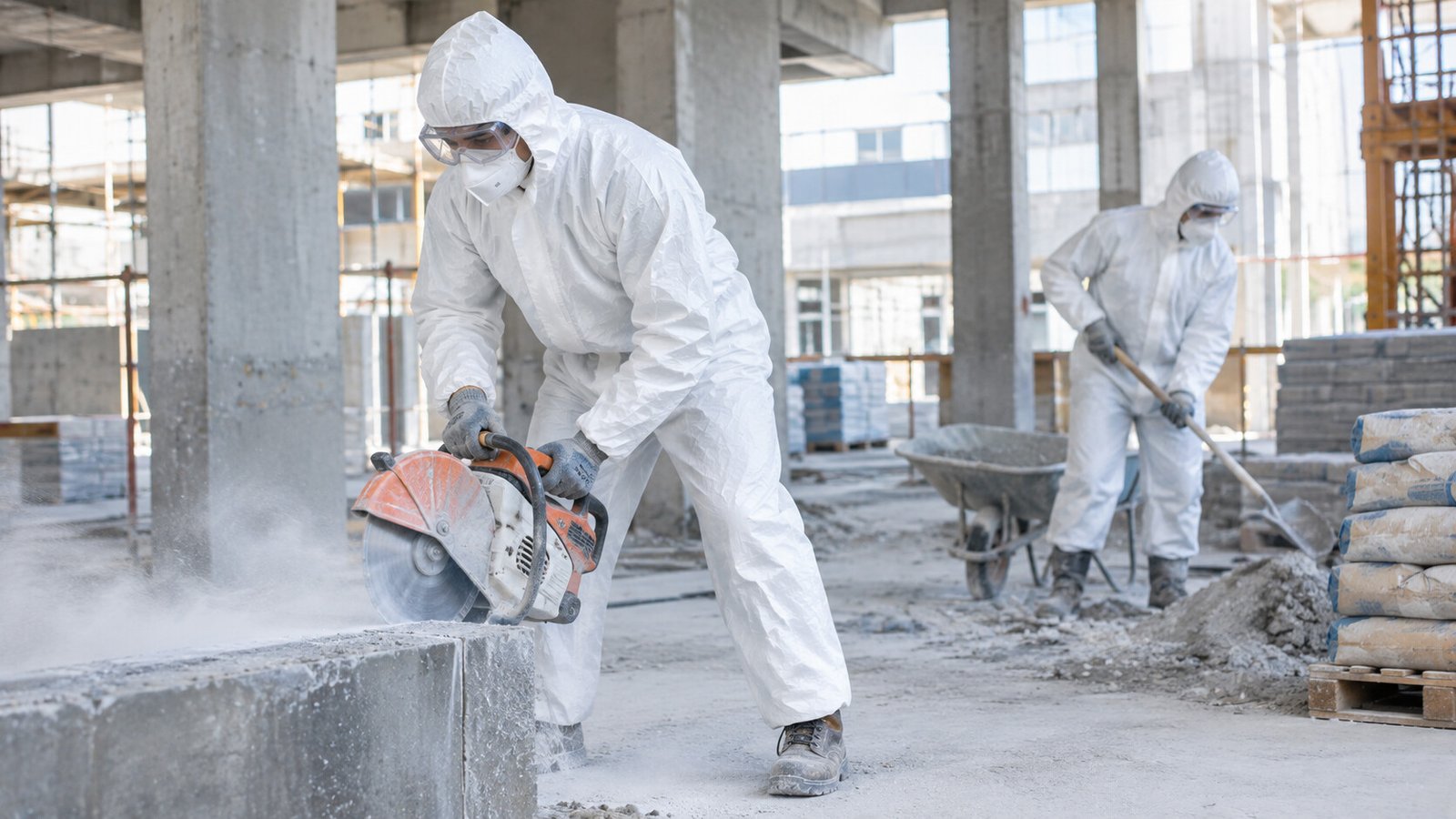
Construction work can generate significant amounts of dust during cutting, drilling, sanding, demolition, insulation work, surface preparation, and material handling.
For workers performing these tasks, disposable coveralls can help protect clothing and exposed skin from dust and particulate contamination while also reducing the amount of dust carried into vehicles, offices, clean areas, or other controlled spaces.
However, not every disposable coverall is designed for the same working environment.
The right choice depends on the type of dust, work activity, expected contamination level, garment design, and required protective performance.
This guide explains what to look for when selecting disposable coveralls for construction.
Why Use Disposable Coveralls on Construction Sites?
Construction environments can become heavily contaminated with dust and debris.
Common sources include:
- Concrete and cement dust
- Drywall and gypsum dust
- Wood dust
- Insulation fibers
- General building dust
- Dust generated during drilling and cutting
- Debris generated during demolition
- Dust from surface preparation
Disposable coveralls create a physical barrier between the worker’s regular clothing and the external work environment.
They can be particularly useful when workers need to move between dusty construction areas and cleaner environments.
For contractors and PPE distributors, disposable garments can also simplify contamination management because the garment can be discarded after use according to the applicable workplace procedures.
What Should You Look for in Construction Dust Coveralls?
When comparing construction dust protective coveralls, consider more than just fabric thickness.
Several design characteristics can affect usability.
1. Full-Body Coverage
A construction coverall should provide coverage across the torso, arms and legs.
A hooded design can provide additional coverage around the head and neck area when the application requires it.
For dusty overhead work, a hood can be particularly useful because dust may settle on the worker’s hair, neck and shoulders.
2. Elasticated Wrists and Ankles
Elasticated cuffs can help create a closer fit around gloves and footwear.
This can also reduce the number of openings through which dust can enter or settle on underlying clothing.
For construction workers who frequently move, bend, kneel or work overhead, a secure cuff design can improve practical wearability.
3. Hood Design
A hood should allow sufficient head movement without creating unnecessary gaps around the face.
Depending on the application, workers may combine the coverall hood with additional PPE such as respirators, goggles or face protection.
The coverall should therefore be evaluated as part of the complete PPE system rather than as an isolated product.
4. Front Closure
A covered or protective zipper design can help reduce exposed areas around the front of the garment.
For dusty work, this can be useful when workers are exposed to airborne particles during activities such as sanding, drilling or demolition.
Which Coverall Material Is Suitable for Dusty Construction Work?
Different construction applications may require different garment materials.
Common disposable coverall materials include:
PP Disposable Coveralls
Polypropylene coveralls can be used for basic, low-risk applications where general protection from dirt and non-hazardous particles is required.
They are typically lightweight and economical.
However, buyers should check the actual performance characteristics of the garment before selecting PP coveralls for more demanding dusty environments.
SMS Disposable Coveralls
SMS construction coveralls combine layers of spunbond and meltblown nonwoven material.
They can provide a useful balance between:
- Breathability
- Lightweight construction
- Particle protection
- Comfort during extended wear
For general construction and maintenance applications, SMS disposable coveralls can be considered when their documented performance matches the intended work environment.
Microporous Disposable Coveralls
Microporous laminate coveralls can provide a different level of barrier performance compared with basic nonwoven garments.
They are commonly considered for applications where workers need greater protection from contamination while maintaining relatively lightweight garment construction.
For applications involving higher levels of dust, dirt or particulate contamination, buyers can review microporous disposable coveralls and compare their documented specifications with the actual job requirements.
When Should You Consider Type 5/6 Coveralls?
For applications involving hazardous dry particles or limited liquid exposure, buyers may need to consider certified protective clothing rather than general-purpose disposable coveralls.
Type 5 and Type 6 garments are designed for specific protective clothing performance categories, but the exact suitability depends on the applicable standard, test results and work environment.
For construction applications involving significant airborne particles, you can review Type 5/6 protective coveralls and verify the garment’s certification and intended use.
The important point is that the phrase “dust protection” alone does not determine the correct protection category.
The actual hazard assessment should come first.
Construction Tasks That May Require Disposable Coveralls
Different construction activities create different contamination conditions.
Demolition Work
Demolition can generate large amounts of airborne dust and debris.
Workers may benefit from full-body disposable garments when the risk assessment identifies a need to protect clothing and skin from particulate contamination.
The coverall should be selected according to the specific material being disturbed and the applicable workplace PPE requirements.
Drywall Installation and Sanding
Drywall sanding can create fine airborne particles.
A hooded disposable coverall may help reduce dust accumulation on the worker’s clothing and body.
However, respiratory protection should be selected separately according to the actual airborne hazard.
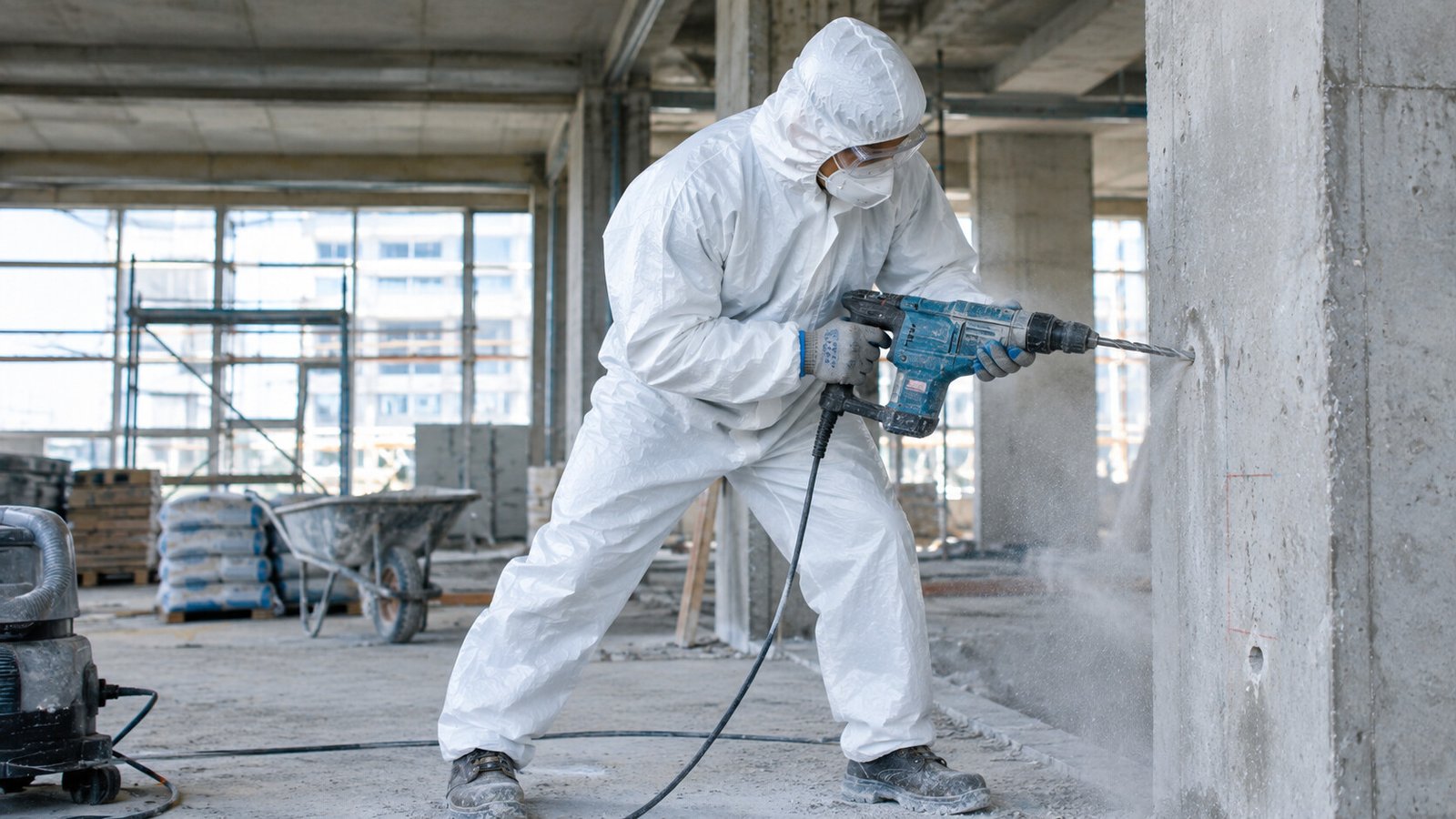
Concrete Drilling and Cutting
Drilling and cutting concrete can generate substantial dust.
Disposable coveralls can help keep work clothing cleaner, but they should not be treated as a substitute for appropriate respiratory protection, eye protection or engineering controls.
Insulation Installation
Some insulation materials can produce fibers or particles during installation.
A full-body garment may help reduce contamination of personal clothing and exposed skin.
The specific garment should be selected based on the insulation material, exposure conditions and relevant safety requirements.
Construction Site Cleaning
Cleaning after construction can involve accumulated dust, debris and fine particulate matter.
Disposable coveralls can be useful when workers need to clean heavily contaminated areas and then leave the work zone without transferring as much dust to their regular clothing.
Disposable Coveralls vs. Reusable Coveralls for Construction
Both disposable and reusable garments can have a role in construction PPE programs.
| Factor | Disposable Coveralls | Reusable Coveralls |
|---|---|---|
| Cleaning | Normally not required | Requires cleaning |
| Contamination control | Convenient for single-use applications | Depends on cleaning procedures |
| Initial garment cost | Generally lower per garment | Generally higher |
| Repeated use | Limited | Designed for repeated use |
| Storage after use | Usually simple disposal process | Requires controlled handling |
| Large temporary projects | Often convenient | May require more logistics |
The appropriate option depends on contamination levels, project duration, cleaning facilities, PPE procedures and total operating costs.
For a broader comparison, see disposable vs. reusable protective coveralls.
How to Choose the Right Disposable Coveralls for Construction
Before purchasing construction coveralls, buyers should evaluate the following factors.
Step 1: Identify the Hazard
Determine whether the primary concern is:
- General dust
- Fine particulate matter
- Fibers
- Dirt and debris
- Chemical contamination
- Limited liquid exposure
- A combination of hazards
Do not select a garment solely because it is advertised as a “construction coverall.”
Step 2: Determine the Required Protection Level
If the application involves only general dirt and low-risk dust, a basic disposable garment may be sufficient.
More demanding environments may require certified protective clothing.
Check the relevant technical documentation and certification rather than relying only on marketing descriptions.
Step 3: Consider Wear Time
Construction workers may wear PPE for several hours.
For longer work periods, consider:
- Breathability
- Garment weight
- Mobility
- Hood design
- Cuff construction
- Seam construction
- Overall fit
Comfort can affect whether workers consistently use PPE correctly.
Step 4: Check Sizing
A coverall that is too small can restrict movement.
A coverall that is too large can interfere with tools, ladders or other equipment.
A suitable size should allow workers to move normally while keeping the garment securely positioned.
Step 5: Review Certifications
For regulated PPE applications, verify:
- Applicable standards
- Product classification
- Test documentation
- Certification information
- Manufacturer information
- Intended application
You can review the available protective coverall certifications before making a purchasing decision.
Buying Disposable Construction Coveralls in Bulk
Construction contractors, distributors and industrial PPE buyers often purchase disposable coveralls in larger quantities.
Before placing a bulk order, it is useful to confirm:
- Fabric specification
- Garment weight
- Available sizes
- Hood configuration
- Cuff design
- Seam construction
- Packaging
- Certification requirements
- Minimum order quantity
- Production capacity
- Customization options
If you need customized packaging, garment specifications or private-label production, review the OEM/ODM protective coverall service.
Working directly with a protective coverall manufacturer can also simplify communication around product specifications, packaging and production requirements.
You can learn more about choosing a protective coverall manufacturer before requesting a quotation.
Frequently Asked Questions
Are disposable coveralls good for construction work?
Disposable coveralls can be useful for construction applications where workers need protection from dust, dirt, debris or particulate contamination.
The appropriate garment depends on the specific hazard and required protection level.
What are the best disposable coveralls for construction dust?
There is no single coverall suitable for every construction dust application.
Basic PP, SMS, microporous and certified Type 5/6 garments offer different performance characteristics.
The selection should be based on the hazard assessment and the manufacturer’s documented specifications.
Are Type 5 coveralls suitable for construction?
Type 5 protective clothing is designed for specific dry-particle protection requirements.
Whether it is suitable for a particular construction task depends on the actual dust hazard, exposure conditions and applicable PPE requirements.
Should construction coveralls have a hood?
A hood can provide additional coverage around the head and neck and may be useful for dusty applications.
The hood should also work appropriately with the other PPE required for the task.
Can disposable coveralls be reused?
Disposable coveralls are generally designed for their intended single-use application.
Reuse should only be considered if the manufacturer specifically permits it and the applicable workplace procedures allow it.
Final Considerations
Choosing disposable coveralls for construction should start with the hazard rather than the garment name.
For general construction dust, lightweight disposable coveralls may provide practical contamination control. For more demanding particulate exposure, buyers may need certified Type 5/6 protective clothing or another appropriate protective category.
Material, hood design, cuffs, closure, sizing, certification and documented performance should all be considered before purchasing.
For contractors and PPE distributors, selecting the right coverall can help create a more consistent and practical PPE program across construction projects.

