PP spunbond nonwoven fabric is one of the most widely used materials for disposable products.
Because it combines relatively low weight, flexibility, tensile strength and scalable production, polypropylene spunbond nonwoven fabric is used in products ranging from disposable medical garments and protective clothing to hygiene products, agricultural materials and industrial applications.
For manufacturers purchasing fabric in rolls, however, choosing the right PP spunbond material involves more than simply selecting a GSM.
Fabric weight, width, color, bonding method, strength, softness, breathability and end-use requirements can all affect the performance of the finished product.
This guide explains what buyers should consider when sourcing PP spunbond nonwoven fabric for disposable products.
What Is PP Spunbond Nonwoven Fabric?
PP spunbond nonwoven fabric is a synthetic nonwoven material made primarily from polypropylene.
Unlike woven fabric, it does not rely on traditional yarns and weaving processes.
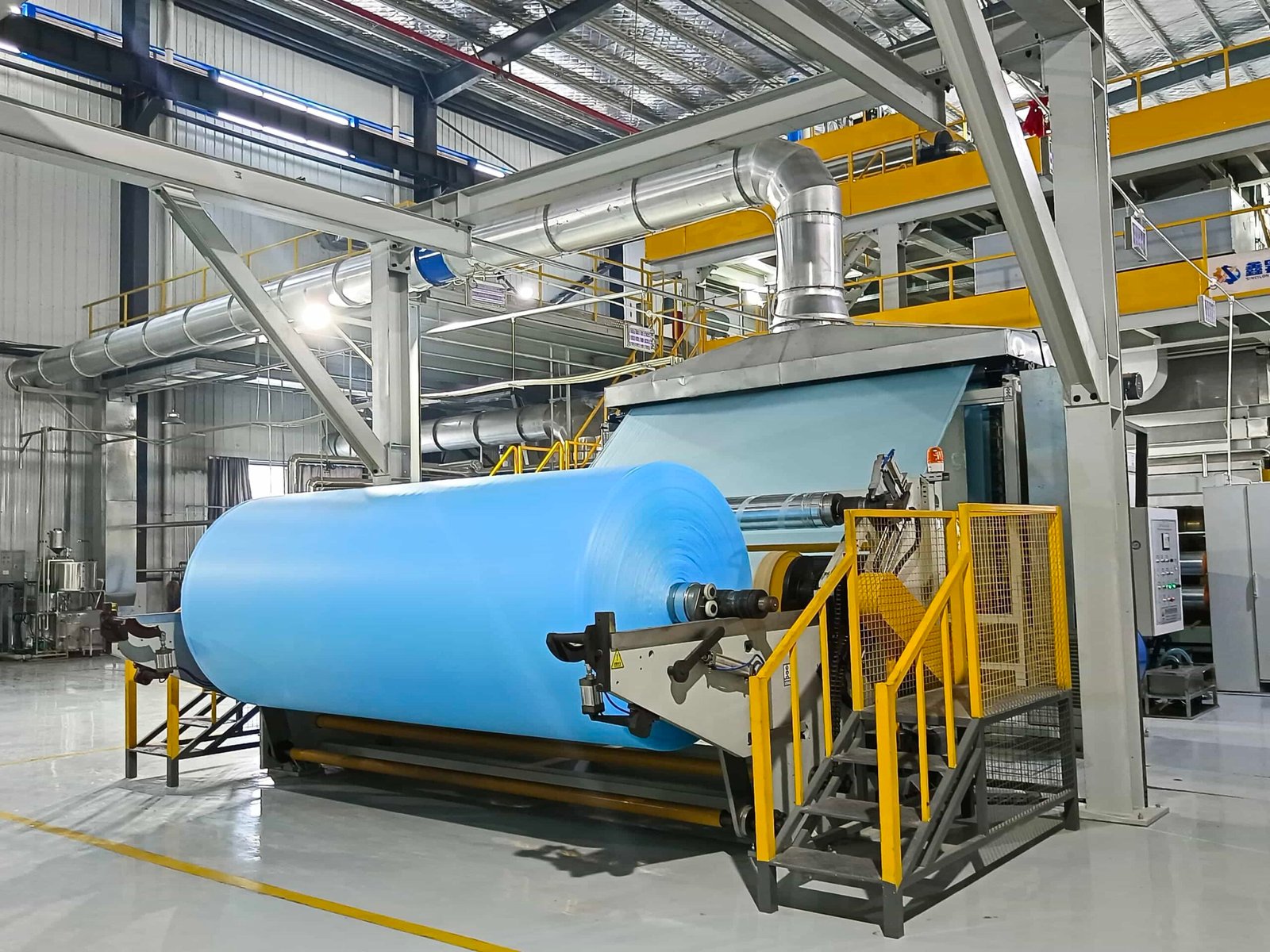
In spunbond production, polypropylene is melted and formed into continuous filaments. These filaments are laid into a web and bonded to create a uniform nonwoven sheet.
The resulting material can be engineered for different weights, widths, colors and end-use requirements.
A commercial PP spunbond product may therefore look simple, but its performance depends on how the material is manufactured and specified.
For buyers looking for a ready-made material source, the PP spunbond nonwoven fabric product page provides specifications and available configurations.
Why Is PP Spunbond Used for Disposable Products?
Manufacturers often choose polypropylene spunbond because it offers a useful combination of performance and production flexibility.
Lightweight Construction
PP spunbond can be manufactured in relatively low GSM grades.
This makes it suitable for disposable products where excessive material weight would increase cost or reduce comfort.
Good Tensile Strength
The continuous-filament structure can provide useful tensile performance for many disposable applications.
The required strength, however, depends on the finished product and its manufacturing process.
Breathability
Spunbond nonwoven structures can allow air permeability, making them useful in products where wearer comfort is important.
This is one reason PP spunbond is widely used in disposable apparel and hygiene-related products.
Easy Processing
PP spunbond can be converted through processes such as:
- Cutting
- Sewing
- Ultrasonic bonding
- Heat sealing
- Lamination
- Folding
- Die cutting
This flexibility makes it suitable for different disposable product manufacturing processes.
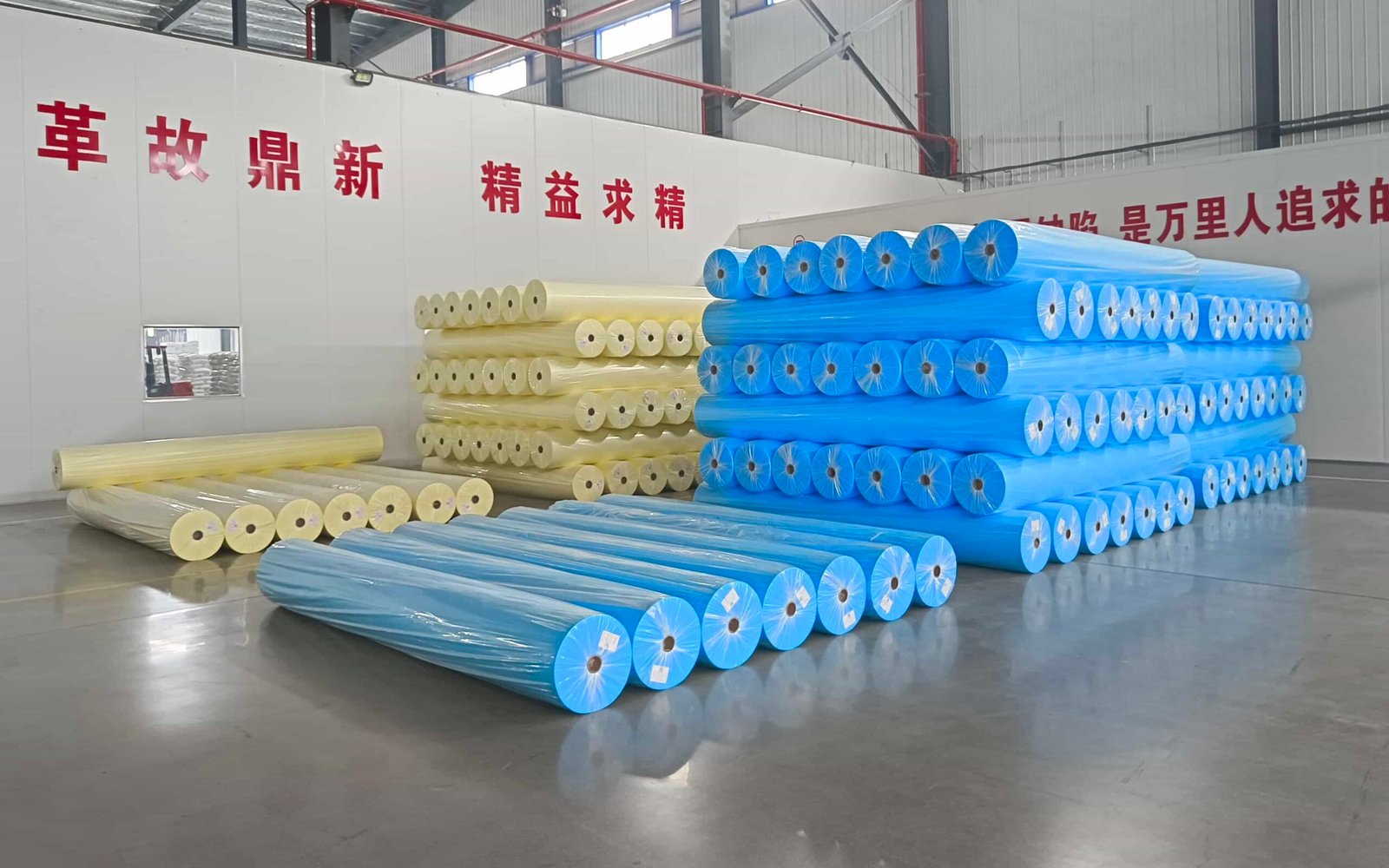
Common Disposable Products Made with PP Spunbond
PP spunbond is used across multiple disposable product categories.
Disposable Protective Clothing
PP spunbond can be used as a material for:
- Disposable coveralls
- Isolation garments
- Protective clothing
- Lab coats
- Shoe covers
- Caps
- Sleeves
The required fabric specification depends on the intended protection level.
For applications requiring a composite barrier material, PP spunbond may also be combined with other layers rather than used alone.
Medical and Healthcare Products
PP spunbond is commonly used in disposable healthcare products.
Examples include:
- Surgical caps
- Disposable gowns
- Protective garments
- Medical packaging components
- Shoe covers
- Other disposable medical accessories
For higher barrier requirements, spunbond can be combined with meltblown or film layers.
This creates opportunities for manufacturers to select a material structure based on the final product rather than treating every disposable garment as a single-material application.
Hygiene Products
PP spunbond can also be used in disposable hygiene products.
Typical applications include:
- Diaper components
- Feminine hygiene products
- Adult incontinence products
- Disposable wipes
- Hygiene-related nonwoven components
In these applications, softness, uniformity, liquid management and converting performance may be more important than simply maximizing tensile strength.
What GSM Should You Choose?
GSM, or grams per square meter, is one of the first specifications B2B buyers should define.
A higher GSM generally means more material is used per square meter, but higher GSM does not automatically mean that the material is better for every application.
The correct GSM depends on:
- Finished product design
- Required strength
- Desired softness
- Breathability
- Barrier requirements
- Production process
- Target cost
- End-user requirements
For example, a lightweight disposable cap may require a very different fabric specification from a protective garment.
Therefore, buyers should define the finished product first and then select the appropriate GSM.
The current PP spunbond fabric offering on the site lists 24–35 GSM as a standard range while also supporting customizable weight and width.
Why Fabric Width Matters
Fabric width directly affects production efficiency.
If the width does not match the cutting layout of the finished product, manufacturers may generate unnecessary material waste.
When ordering PP spunbond rolls, buyers should therefore consider:
- Finished product dimensions
- Cutting layout
- Machine width
- Roll width
- Edge trimming
- Material utilization
For high-volume disposable product manufacturing, optimizing width can have a meaningful effect on total material consumption.
The available PP spunbond material can be supplied in customized widths, allowing buyers to discuss specifications according to their production requirements.
PP Spunbond Fabric vs. SMS Nonwoven Fabric
One common purchasing mistake is treating PP spunbond and SMS as interchangeable materials.
They are related, but they are not the same structure.
PP spunbond is primarily a spunbond polypropylene nonwoven layer.
SMS combines:
Spunbond + Meltblown + Spunbond
The meltblown layer gives SMS a different filtration and barrier structure.
If your finished product requires a multilayer material rather than a single spunbond layer, consider SMS nonwoven fabric instead.
For a detailed comparison, buyers can also review the existing PP vs SMS nonwoven fabric comparison.
The important point is to select the material structure based on the final product requirements.
When Should PP Spunbond Be Combined With Other Materials?
PP spunbond can serve as a standalone material, but some products require additional layers.
PP Spunbond + Meltblown
This combination can be used when the final product requires filtration or additional functional properties.
Meltblown is manufactured using a different fiber-forming process and is characterized by very fine fibers.
For buyers sourcing filtration-related material, see meltblown fabric.
PP Spunbond + PE Film
When a product requires a stronger liquid or moisture barrier, PP spunbond can be laminated with polyethylene film.
The resulting composite can provide a different combination of:
- Surface protection
- Liquid resistance
- Mechanical support
- Processability
For this type of application, buyers can review PE lamination film.
PP Spunbond + Microporous Film
Microporous film laminates are another option when the finished product needs a combination of barrier performance and moisture vapor permeability.
The film structure and laminate construction should be selected according to the application and required performance.
See microporous PE film for more information.
What Should B2B Buyers Ask a PP Spunbond Supplier?
Before requesting a quotation, prepare a basic material specification.
A professional supplier should be able to discuss:
1. Material
Confirm that the material is polypropylene and clarify whether any additional treatment or additives are included.
2. GSM
Specify the target weight and acceptable tolerance.
3. Width
Provide your required roll width or finished-product cutting requirements.
4. Color
Standard white or blue may be sufficient for many applications, while some products require customized colors.
5. Mechanical Properties
Depending on the application, you may need to evaluate:
- Tensile strength
- Elongation
- Tear resistance
- Uniformity
6. Surface Characteristics
Depending on the finished product, buyers may need to evaluate:
- Softness
- Surface feel
- Lint
- Uniformity
- Printability
7. Packaging
For large-volume manufacturing, roll packaging and pallet configuration can affect logistics and storage.
Why Roll Width and GSM Should Be Confirmed Before Ordering Samples
A common purchasing mistake is evaluating a fabric sample without confirming the production specification.
For example, a small sample may feel suitable, but the buyer later discovers that the available roll width does not match the production equipment.
The same problem can occur when the sample’s GSM differs from the mass-production specification.
For B2B purchasing, the sample approval process should therefore record:
- GSM
- Width
- Color
- Roll length
- Material composition
- Production tolerance
- Packaging
- Intended application
This makes the approved sample a clearer reference for future bulk orders.
Buying PP Spunbond Nonwoven Fabric in Bulk
When sourcing PP spunbond nonwoven fabric wholesale, price is only one part of the purchasing decision.
For long-term supply, buyers should also evaluate:
- Production capacity
- Raw material control
- Fabric consistency
- GSM tolerance
- Width tolerance
- Quality control
- Sample approval process
- Packaging
- Lead time
- Export experience
- Customization capability
A supplier that can manufacture the material directly may also provide better control over specifications and production scheduling.
For buyers looking for a direct source, the non-woven fabric manufacturer page provides information about the manufacturer’s nonwoven production capabilities and product range.
Can PP Spunbond Nonwoven Fabric Be Customized?
Yes.
Customization can be particularly useful for manufacturers with fixed production equipment or specific finished-product requirements.
Depending on the supplier’s production capability, customization may include:
- GSM
- Width
- Color
- Roll size
- Packaging
- Surface treatment
- Material structure
- OEM requirements
The available PP spunbond product information specifically states that weight and width can be customized, with multiple colors available.
For larger projects, buyers should provide a technical specification sheet rather than requesting only a generic “PP nonwoven fabric.”
How to Select a PP Spunbond Nonwoven Fabric Supplier
A reliable sourcing process should involve several steps.
Step 1: Define the End Product
Tell the supplier what you are manufacturing.
For example:
- Disposable coveralls
- Surgical gowns
- Diapers
- Shoe covers
- Agricultural fabric
- Packaging
- Industrial products
Step 2: Define the Fabric Specification
Specify:
- GSM
- Width
- Color
- Roll length
- Required properties
Step 3: Request Samples
Evaluate the fabric under your actual converting process whenever possible.
Step 4: Confirm Mass Production Specifications
Make sure the approved sample corresponds to the specifications that will be used for bulk production.
Step 5: Discuss MOQ and Lead Time
Confirm minimum order quantity, production capacity and delivery schedule before placing the order.
Step 6: Verify Quality Documentation
Depending on the application, request relevant test reports and technical documentation.
PP Spunbond Manufacturer or Trading Company?
For manufacturers purchasing nonwoven fabric regularly, the difference between a direct manufacturer and a trading company can matter.
A direct manufacturer may be able to provide:
- More direct technical communication
- Better control over fabric specifications
- Custom GSM and width
- Production scheduling
- OEM packaging
- More direct quality feedback
However, buyers should evaluate suppliers based on actual production capability, quality consistency, documentation and service rather than relying only on the word “manufacturer.”
The non-woven fabric manufacturer page can be used as the commercial conversion point for buyers who want to discuss specifications and bulk supply.
Frequently Asked Questions
What is PP spunbond nonwoven fabric used for?
PP spunbond nonwoven fabric is used in disposable medical products, protective clothing, hygiene products, agriculture, packaging and various industrial applications.
Its final use depends on the fabric specification and required performance.
What GSM is suitable for PP spunbond fabric?
There is no single GSM suitable for every application.
The appropriate GSM depends on the finished product, required strength, softness, breathability, production process and cost target.
Is PP spunbond waterproof?
Standard PP spunbond should not automatically be considered waterproof.
If the final product requires a stronger liquid barrier, a PE-coated or laminated structure may be more appropriate.
What is the difference between PP spunbond and SMS?
PP spunbond is a spunbond polypropylene nonwoven material, while SMS contains spunbond layers combined with a meltblown middle layer.
The additional meltblown layer gives SMS a different functional structure.
Can PP spunbond fabric be customized?
Yes. Depending on the manufacturer’s production capability, GSM, width, color, packaging and other specifications can be customized.
Where can I buy PP spunbond nonwoven fabric in bulk?
B2B buyers should source directly from a manufacturer or qualified supplier that can provide the required GSM, width, quality documentation, samples and production capacity.
PP spunbond nonwoven fabric is a flexible material for manufacturers producing disposable and industrial products.
The most important purchasing decision is not simply choosing the lowest price or highest GSM.
Instead, buyers should define the finished product and then match the fabric specification to its requirements.
GSM, width, strength, softness, breathability, color, roll configuration and customization capability should all be confirmed before bulk production.
For manufacturers that need stable supply, custom specifications or large-volume orders, working directly with a capable non-woven fabric manufacturer can simplify the sourcing process and create a clearer path from sample approval to mass production.