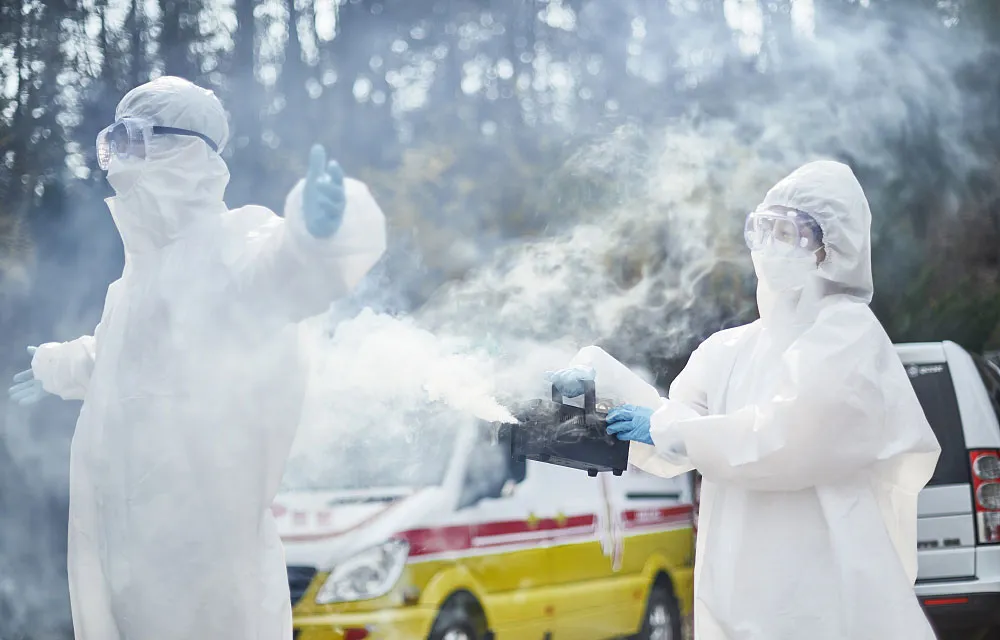
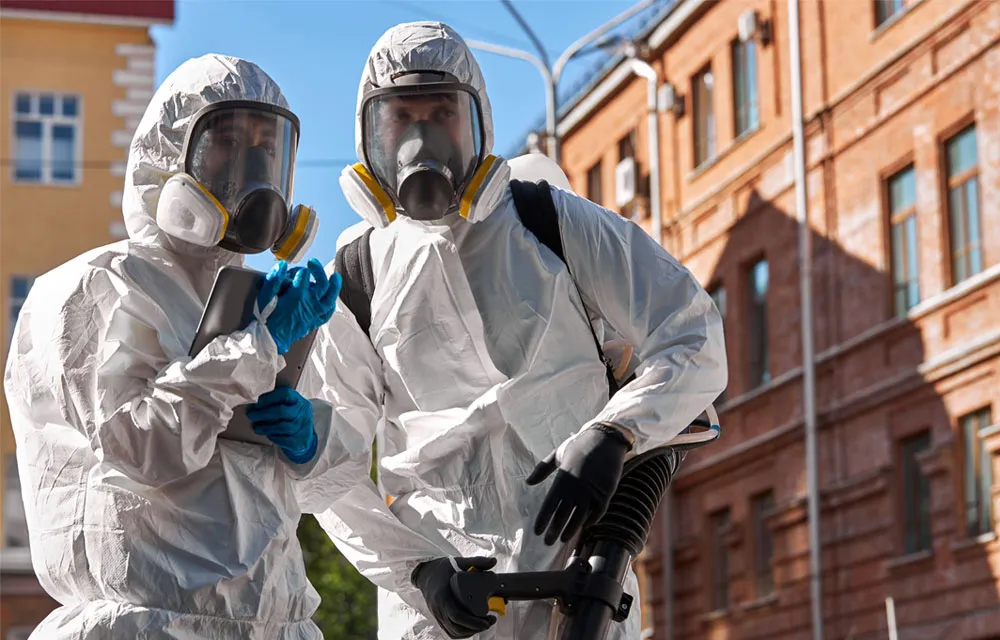
Choosing nonwoven fabric for protective clothing is not simply a matter of selecting a material with a certain GSM or price. The right construction must match the workplace hazards, garment design, required barrier performance, and comfort expectations.
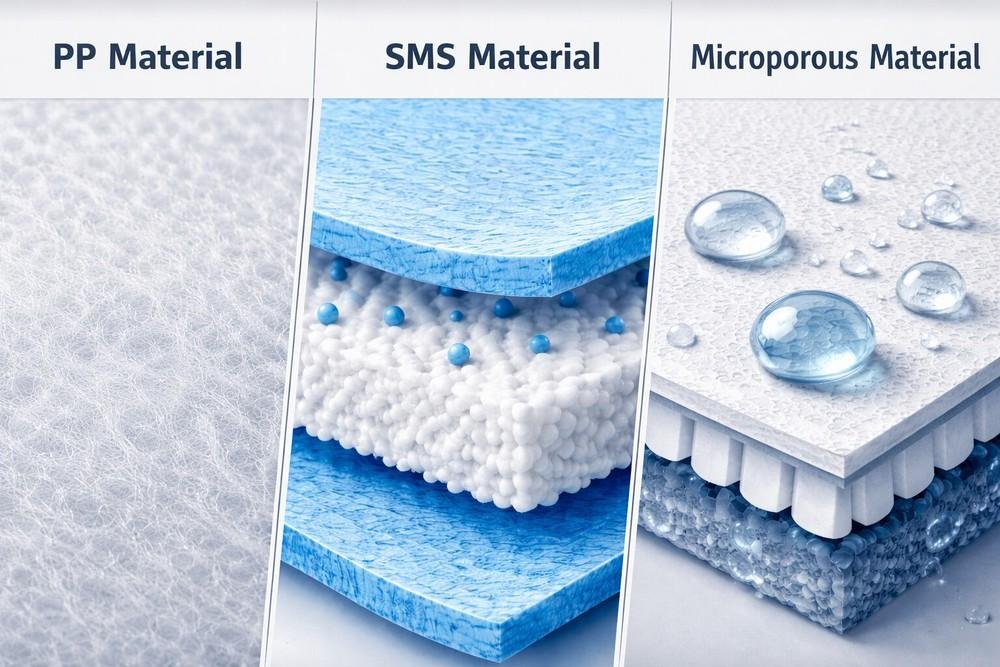
Different nonwoven materials serve different purposes. PP spunbond is often selected for lightweight disposable garments, SMS combines spunbond and meltblown layers, while film-laminated and microporous materials are considered when additional barrier properties are required.
For manufacturers and procurement teams, the challenge is understanding which material structure is appropriate for a specific application and how to verify its performance before bulk production.
This guide explains how to compare common nonwoven materials, assess lamination options, and define purchasing requirements for disposable protective clothing.
1. Start With the Intended Protection Requirements
Before selecting a fabric, identify the hazards the finished garment needs to address.
A material suitable for general workplace clothing may not be appropriate for environments involving liquid splashes, hazardous particles, or chemical exposure.
Consider the following questions:
- Is the garment intended for general hygiene or workplace cleanliness?
- Does the application involve dry particles or dust?
- Could the garment be exposed to liquid splashes or spray?
- Is chemical contact possible?
- Does the user need a particular level of breathability or flexibility?
- Are there applicable product standards or customer-specific test requirements?
The answers determine which material properties need to be evaluated.
Dry Particle and Dust Environments
Some applications require garments designed to reduce the transfer of dry particles or dust. Fabric structure, garment seams, closures, and overall design all influence the finished product’s performance.
SMS and other suitable nonwoven structures may be considered, depending on the required protection and the applicable test results.
Liquid Splash Environments
Where liquid exposure is expected, buyers should evaluate the liquid resistance of the complete garment material and construction.
A standard nonwoven fabric should not automatically be treated as liquid-proof. Film-laminated or other barrier constructions may be more appropriate, depending on the exposure conditions and verified performance.
Chemical Exposure Environments
Chemical protection requires a more specific assessment. The chemical identity, concentration, temperature, exposure duration, and contact conditions all matter.
Do not assume that a PE film or microporous laminate provides universal chemical protection. The finished garment must be tested and selected according to the relevant chemical and protective clothing requirements.
2. Compare the Main Nonwoven Materials for Protective Clothing
Different material structures offer different combinations of strength, softness, breathability, and barrier characteristics.
PP Spunbond Nonwoven Fabric
PP spunbond is made from continuous polypropylene filaments bonded into a nonwoven web.
It is commonly used in disposable products where lightweight construction, fabric strength, and cost-effective production are important.
Typical considerations include:
- Basis weight and thickness
- Tensile strength and elongation
- Softness and handling
- Fabric uniformity
- Cutting and sewing performance
- Width and roll specifications
PP spunbond may be suitable for general disposable garments and selected protective applications where its verified performance meets the requirements.
For material specifications and sourcing options, see our PP spunbond nonwoven fabric product page.
SMS Nonwoven Fabric
SMS stands for spunbond-meltblown-spunbond. It combines spunbond outer layers with a meltblown middle layer.
The composite structure is used in selected disposable garments and medical-related products where a combination of mechanical properties and functional barrier characteristics is required.
When evaluating SMS, buyers should consider:
- Total basis weight
- Layer construction
- Tensile and elongation properties
- Air permeability
- Liquid resistance under relevant test conditions
- Suitability for garment assembly
Standard SMS should not automatically be described as waterproof or suitable for high liquid exposure. Its actual performance depends on the material construction and test results.
Review our SMS nonwoven fabric options when comparing composite nonwoven materials.
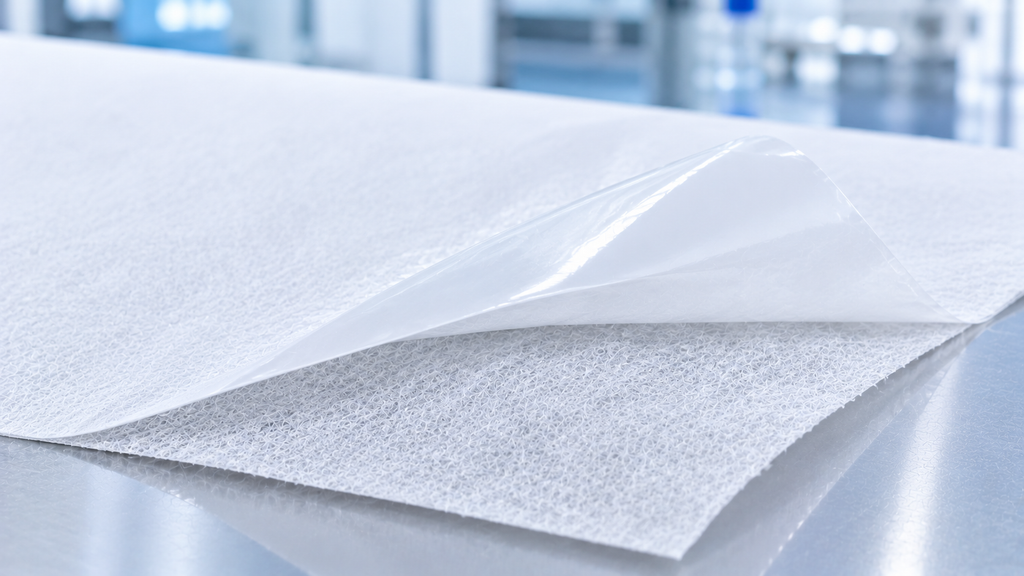
PE Laminated Nonwoven Fabric
PE laminated materials combine a nonwoven substrate with a polyethylene film layer.
The substrate can contribute to flexibility and mechanical support, while the film layer may provide additional resistance to liquid penetration, depending on the laminate design and testing.
Important selection factors include:
- Film thickness and uniformity
- Substrate type and basis weight
- Bonding strength
- Flexibility and handling
- Resistance to the intended liquid exposure
- Compatibility with garment manufacturing processes
The performance of the finished composite should be evaluated rather than relying only on the film specification.
Learn more about our PE lamination film for related material sourcing requirements.
Microporous PE Film Laminated Fabric
Microporous film-based materials are used in selected protective clothing applications where a particular balance of liquid barrier properties and moisture vapor transmission is required.
The microporous structure differs from conventional PE film. However, breathability and barrier performance depend on the complete material construction and must be confirmed through appropriate testing.
Buyers should evaluate:
- Film structure and thickness
- Substrate construction
- Liquid barrier performance
- Moisture vapor transmission
- Mechanical strength
- Seam and garment construction compatibility
Explore our microporous PE film when evaluating film-based material options for protective garments.
3. How to Match Material Structure to the Application
The material should be selected according to the garment’s intended function, not simply because a particular fabric is commonly used in the industry.
The following table provides a starting point for material evaluation.
| Application consideration | Material options to evaluate | Key points to verify |
|---|---|---|
| General disposable workwear | PP spunbond | Strength, softness, durability, and garment design |
| Dry particle environments | SMS or other suitable structures | Particle-related performance, seams, and closures |
| Selected liquid splash applications | PE laminated or other tested barrier materials | Liquid resistance and finished-garment performance |
| Applications requiring a specific balance of barrier and vapor transmission | Microporous laminated materials | Barrier performance, vapor transmission, and mechanical properties |
| Chemical exposure environments | Application-specific certified protective material | Chemical compatibility and relevant protective clothing tests |
This is a preliminary material-selection framework, not a substitute for a hazard assessment or product certification.
A material should only be approved after its performance has been evaluated against the requirements of the intended finished garment.
4. Understand the Role of GSM in Protective Clothing Fabric
GSM refers to grams per square meter and is commonly used to describe the basis weight of nonwoven fabric.
It is an important purchasing specification because it helps define the amount of material used in a given area. However, GSM alone does not establish protective performance.
Two fabrics with the same GSM may differ in fiber structure, thickness, tensile strength, air permeability, and barrier characteristics.
When Comparing GSM, Also Check:
Thickness: Useful for understanding the material structure, but it does not independently prove barrier performance.
Tensile strength: Helps evaluate whether the material can withstand handling and garment manufacturing.
Elongation: Indicates how the fabric behaves under stretching forces.
Air permeability: Relevant when evaluating comfort and airflow requirements.
Barrier performance: Must be evaluated through appropriate tests for the intended application.
Uniformity: Important for consistent cutting, sewing, and finished garment quality.
When requesting a quotation, specify the target GSM and tolerance, but also provide the functional requirements of the finished product.
5. Breathability and Barrier Performance: Finding the Right Balance
Protective clothing often requires a balance between wearer comfort and protection.
A material with stronger barrier characteristics may have different airflow or moisture vapor transmission properties from a lightweight, uncoated nonwoven fabric.
The correct balance depends on the duration of use, workplace temperature, physical activity, and exposure conditions.
Air Permeability
Air permeability describes how easily air passes through a material under specified test conditions.
It can be relevant when assessing comfort, but it should not be used as a substitute for evaluating liquid or chemical barrier performance.
Moisture Vapor Transmission
Moisture vapor transmission describes the movement of water vapor through a material under defined test conditions.
Some film-based materials are designed to provide a particular balance between liquid resistance and vapor transmission. Actual results depend on the film structure, laminate construction, and test method.
Barrier Performance
Barrier performance should be evaluated according to the intended exposure.
For example, a material designed for limited liquid splash exposure should not automatically be considered suitable for pressurized liquid jets or chemical protection.
Buyers should identify the relevant test requirements before choosing the material.
6. Why Lamination Quality Matters
For film-laminated protective clothing, the bonding process is an important part of material quality.
A suitable film and substrate can still produce an unsatisfactory composite if the layers do not bond consistently.
Bond Strength
The bond between film and nonwoven substrate should be appropriate for the intended converting and garment manufacturing processes.
Weak bonding may lead to separation during cutting, sewing, handling, or use.
Surface Uniformity
Wrinkles, bubbles, uneven coating, and other defects can affect appearance and may create problems during garment production.
Define visual inspection criteria and acceptable defect limits before approving bulk production.
Flexibility and Handling
The finished laminate should be compatible with the garment design and manufacturing process.
Excessively stiff or difficult-to-handle material may affect cutting, sewing, movement, and wearer comfort.
Finished Material Testing
Where barrier performance is important, evaluate the complete laminate and finished garment using the relevant test methods.
Do not rely solely on the technical specifications of the unlaminated film or nonwoven substrate.
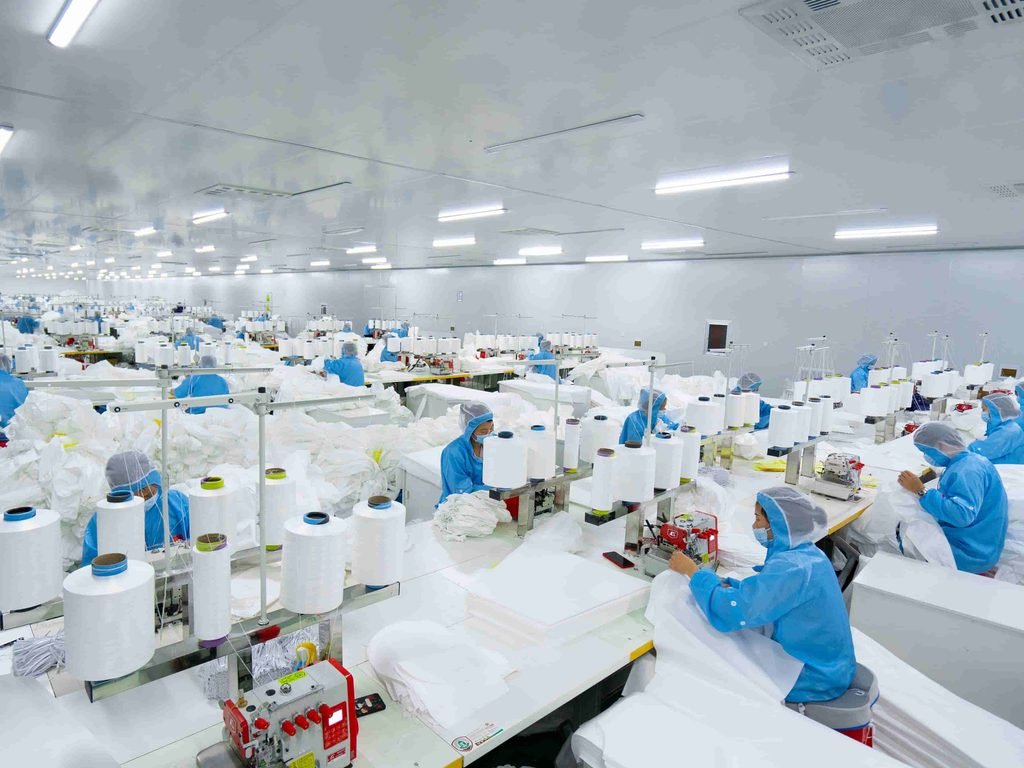
7. Consider Garment Manufacturing Requirements
Material selection should also account for how the fabric will be converted into finished protective clothing.
A material that meets the technical requirements but creates manufacturing difficulties may increase production costs or reduce product consistency.
Cutting and Sewing
Evaluate how the fabric behaves during cutting, sewing, and assembly.
Relevant factors may include material stability, edge behavior, seam strength, and the compatibility of the fabric with the selected production process.
Heat Sealing and Seam Construction
Some protective garments use heat-sealed seams or other specialized construction methods.
If the product requires a particular seam design, confirm that the material is compatible with the process and that the completed seams meet the applicable requirements.
Pattern and Garment Design
The garment’s coverage, closures, elastic components, hood, cuffs, and other design details can influence overall protection.
Fabric selection should therefore be coordinated with the finished garment design rather than handled as an isolated purchasing decision.
8. How to Evaluate a Protective Clothing Fabric Supplier
A suitable supplier should be able to provide more than a price quotation.
B2B buyers should assess technical support, material consistency, manufacturing capability, and documentation.
Request Technical Specifications
Ask for a specification sheet identifying:
- Material composition and construction
- Basis weight and tolerance
- Roll width and dimensions
- Mechanical properties
- Air permeability or other relevant functional properties
- Applicable barrier test results
- Available quality documentation
The documents should correspond to the actual material being offered.
Request Samples for Evaluation
Samples should be tested against the requirements of the intended garment.
Depending on the application, this may include fabric uniformity, tensile properties, liquid resistance, air permeability, bonding performance, and garment assembly trials.
Record the approved material specification so that future orders can be compared against the same reference.
Check Manufacturing and Quality Controls
For repeat orders, ask how the supplier controls production variation and maintains traceability.
Discuss inspection procedures, batch identification, sample retention, and how material changes are communicated.
Confirm Bulk Supply and Customization
Depending on manufacturing capability, buyers may need customized GSM, width, roll dimensions, colors, packaging, or composite structures.
Before placing a bulk order, clarify minimum order quantity, lead time, sample availability, order tolerance, and delivery arrangements.
For a broader overview of available materials and sourcing support, visit our nonwoven fabric manufacturer page.
9. Protective Clothing Fabric RFQ Checklist
A clear request for quotation helps suppliers understand the intended product and recommend suitable material options.
Include the following information wherever possible:
| RFQ item | Information to provide |
|---|---|
| Finished product | Disposable coverall, gown, lab garment, or another product |
| Intended application | General workwear, dust exposure, liquid splash, or specified hazard |
| Material structure | PP spunbond, SMS, PE laminated, microporous laminate, or other requirement |
| GSM | Target basis weight and tolerance |
| Width | Required roll width and tolerance |
| Mechanical properties | Tensile strength, elongation, or other requirements |
| Barrier requirements | Relevant liquid or particle protection requirements |
| Comfort requirements | Air permeability or moisture vapor transmission targets |
| Manufacturing process | Sewing, heat sealing, or other construction method |
| Quantity | Sample requirement and estimated bulk demand |
| Documentation | Technical specifications and relevant test reports |
| Delivery | Destination and expected delivery schedule |
If the final material structure has not yet been decided, provide the intended application and performance requirements first. This allows suppliers to identify candidate materials for further evaluation.
10. Common Mistakes When Choosing Protective Clothing Materials
Selecting materials only by price or GSM. Neither parameter independently establishes the suitability of a fabric for a particular protective application.
Assuming SMS is waterproof. Standard SMS should not automatically be treated as a liquid-proof material.
Treating all PE films as equivalent. Conventional PE film and microporous PE film have different structures and may serve different functions.
Ignoring seams and closures. The performance of the complete garment depends on more than the fabric panel.
Using raw-material results as finished-garment proof. A fabric test does not automatically establish that the finished garment meets a protective clothing standard.
Failing to define the actual hazard. Material selection should begin with the exposure conditions and required protection level.
11. Source Nonwoven Fabric for Protective Clothing
Selecting suitable nonwoven fabric requires a clear understanding of the intended application, required barrier performance, garment construction, and manufacturing process.
Whether you are evaluating PP spunbond, SMS, PE laminated materials, or microporous film-based composites, the final decision should be supported by relevant specifications and performance testing.
Explore our PP spunbond nonwoven fabric, SMS nonwoven fabric, PE lamination film, and microporous PE film options.
For bulk sourcing, material evaluation, or customized nonwoven requirements, contact us through our nonwoven fabric manufacturer page.
Frequently Asked Questions
Which nonwoven fabric is best for disposable protective clothing?
There is no single best material for every application. PP spunbond, SMS, PE laminated materials, and microporous composites have different characteristics. Selection depends on the workplace hazards, garment design, and verified performance requirements.
Is SMS fabric suitable for liquid protection?
SMS may provide certain barrier characteristics, but standard SMS should not automatically be considered waterproof or suitable for every liquid exposure. The specific material and finished garment must be evaluated against the relevant requirements.
What is the difference between PE laminated and microporous laminated fabric?
PE laminated material uses a polyethylene film layer combined with a substrate. Microporous laminated material uses a film with a microporous structure and may provide a different balance of barrier and vapor transmission properties. Actual performance depends on the complete construction and test results.
Does higher GSM mean better protective performance?
No. GSM measures basis weight. Protective performance also depends on fiber structure, film construction, mechanical properties, garment design, and relevant test results.
What should I provide when requesting a quotation?
Provide the finished garment type, intended application, material preference if known, target GSM, roll width, barrier requirements, manufacturing process, estimated quantity, and any required documentation.
Can protective clothing fabric be customized?
Depending on manufacturing capabilities, customization may include GSM, width, color, roll dimensions, material construction, and packaging. The selected material should be tested against the intended finished-product requirements before bulk production.
Choosing nonwoven fabric for protective clothing requires a coordinated assessment of material structure, exposure conditions, barrier requirements, wearer comfort, and garment manufacturing methods.
By defining the intended application first and evaluating the complete material construction, buyers can compare suppliers more effectively and avoid choosing a fabric based only on price or basic specifications.
A clear RFQ, approved samples, and documented acceptance criteria provide a stronger foundation for reliable bulk sourcing and long-term production.