
When purchasing nonwoven fabric in bulk, buyers need more than a competitive price and a product specification sheet. They also need confidence that the delivered material will meet the agreed requirements consistently across rolls, production batches, and repeat orders.
A fabric sample may look and feel suitable, but that does not automatically mean the entire shipment will perform the same way. Differences in basis weight, tensile strength, thickness, surface appearance, or lamination quality can affect downstream converting, garment manufacturing, filtration performance, and final product consistency.
This is why nonwoven fabric quality control should be part of the sourcing process from the initial sample evaluation to final shipment inspection.
For B2B buyers, a reliable quality control process should answer five questions:
- Does the material match the approved specification?
- Are its physical properties consistent?
- Are there visible defects that could affect production?
- Does the material perform as required for its intended application?
- Can the supplier maintain the same quality in repeat orders?
This guide explains the key inspection points buyers should consider before placing large-volume orders.
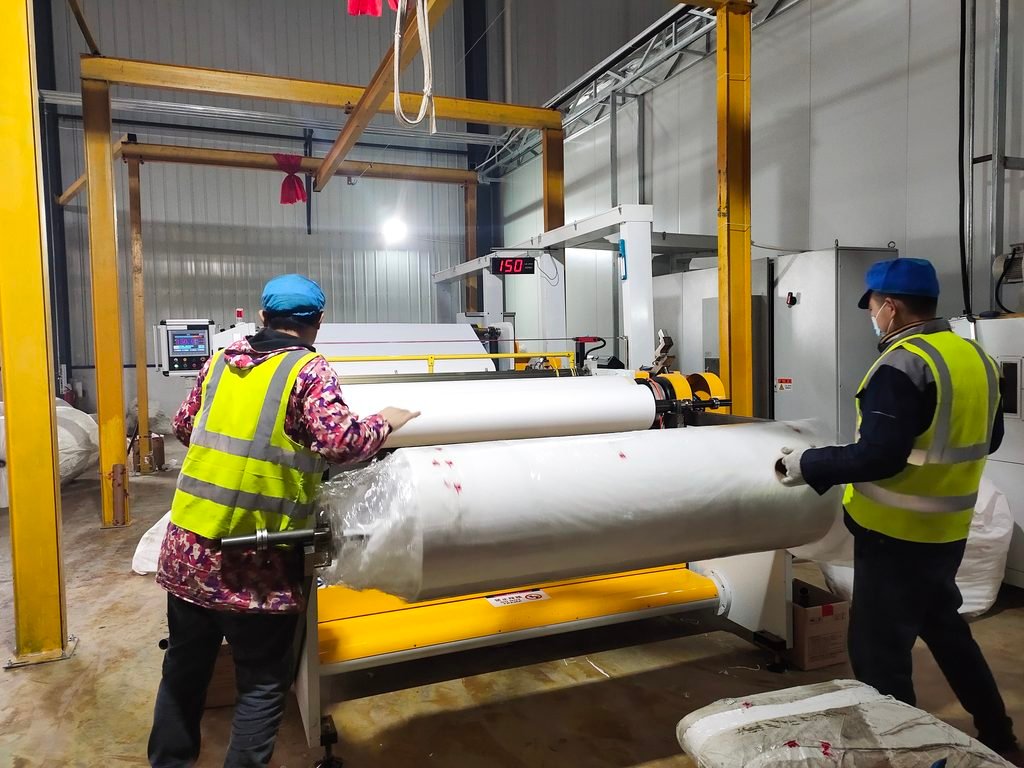
1. Confirm the Material Specification Before Inspection
Quality inspection starts with a clear specification. Without agreed technical requirements, buyers and suppliers may have different expectations of what constitutes acceptable quality.
Before evaluating a sample or bulk shipment, confirm the following information.
Material Type and Structure
Identify the exact material being purchased. Different nonwoven structures have different manufacturing processes and performance characteristics.
Common examples include:
- PP spunbond nonwoven fabric
- SMS nonwoven fabric
- Meltblown nonwoven fabric
- Microporous PE film laminated nonwoven fabric
- PE laminated nonwoven fabric
For example, PP spunbond nonwoven fabric is commonly used in disposable products where lightweight construction and general fabric properties are important. SMS combines spunbond and meltblown layers, while laminated materials introduce additional requirements for film bonding and barrier performance.
The inspection criteria should reflect the actual material structure rather than applying one checklist to every nonwoven product.
Key Technical Parameters
A purchase specification may include:
| Parameter | What Buyers Should Confirm |
|---|---|
| Basis weight | Target GSM and permitted tolerance |
| Width | Nominal width and width tolerance |
| Roll length | Required length per roll |
| Thickness | Target value and measurement method, where applicable |
| Tensile strength | Machine direction (MD) and cross direction (CD) |
| Elongation | Required performance in MD and CD |
| Color | Approved color and acceptable variation |
| Surface appearance | Uniformity, cleanliness, and defect limits |
| Packaging | Roll protection, labeling, and pallet requirements |
Not every parameter is equally important for every application. Buyers should identify critical characteristics based on how the material will be converted or used.
2. Check Basis Weight, Width, and Thickness
Dimensional and weight consistency are among the first things buyers should verify.
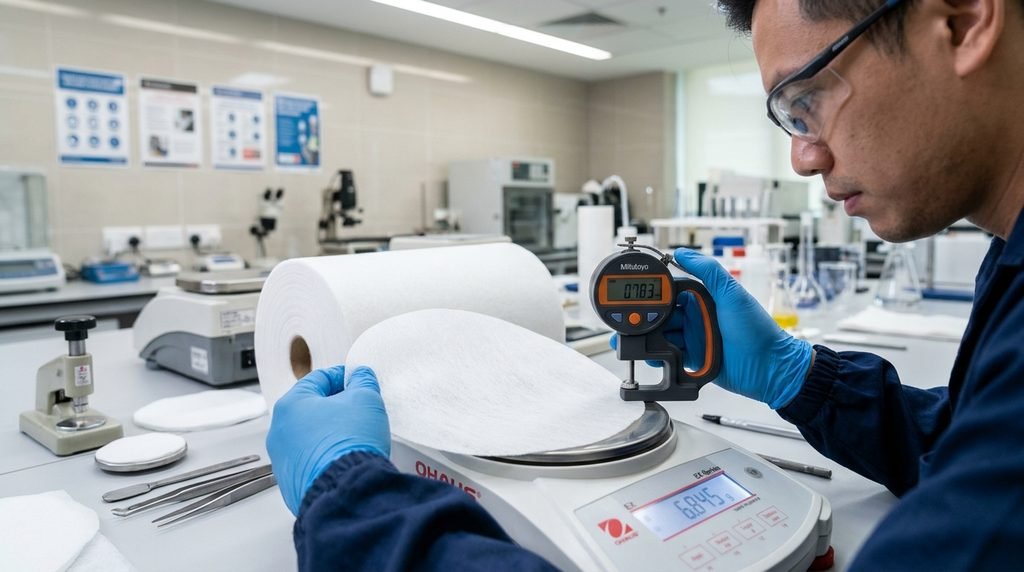
Basis Weight (GSM)
Basis weight refers to the mass of fabric per unit area, expressed in grams per square meter (g/m² or GSM).
It affects material consumption and may influence properties such as coverage, thickness, and mechanical performance. However, GSM alone does not establish fabric quality or suitability.
A practical inspection process includes:
- Take samples from representative rolls.
- Cut specimens using a suitable area template.
- Weigh them with a calibrated balance.
- Calculate the mass per square meter.
- Compare the results with the agreed specification and tolerance.
For bulk orders, buyers should not rely on a single measurement from one roll. Sampling should cover different rolls and, where practical, different positions within a roll.
Fabric Width
Incorrect fabric width can create problems during cutting, slitting, and downstream production.
Measure the usable width using an appropriate measuring tool. Confirm whether the agreed width refers to the full roll width or usable material width, especially when edge trimming is part of the production process.
Thickness
Thickness may be important for applications involving material handling, converting, layering, or specific product construction.
Because nonwoven fabrics are compressible, measurement pressure and testing conditions can affect the result. Buyers should agree on a measurement method before comparing results between suppliers.
3. Evaluate Mechanical Properties
Mechanical performance helps determine whether the fabric can withstand handling, converting, and use in its intended application.
Tensile Strength
Tensile strength measures the force required to break a fabric specimen under specified test conditions.
It is commonly evaluated in two directions:
- Machine Direction (MD): The direction in which the fabric moves during production.
- Cross Direction (CD): The direction perpendicular to the machine direction.
Both directions matter because fabric may experience stress from different orientations during converting and use.
Elongation at Break
Elongation measures how much the material stretches before breaking.
A fabric with adequate tensile strength but unsuitable elongation may still create problems in cutting, sewing, forming, or other manufacturing processes.
Tear Resistance
Tear resistance can be relevant when materials are exposed to localized damage or handling stress.
The required test method and acceptance level should be selected according to the application. Buyers should avoid comparing results obtained using different test methods as though they were directly interchangeable.
4. Inspect Surface Appearance and Visual Defects
Visual inspection is a straightforward way to identify manufacturing or handling issues before material enters production.
However, acceptable appearance should be defined clearly. Terms such as “clean,” “uniform,” or “defect-free” are too subjective unless supported by agreed inspection criteria.
Common Defects to Look For
| Defect | Potential Concern |
|---|---|
| Holes or pinholes | Reduced material continuity |
| Uneven color | Visible inconsistency in finished products |
| Oil or dirt stains | Contamination and appearance problems |
| Wrinkles and creases | Feeding or converting difficulties |
| Foreign particles | Product cleanliness concerns |
| Uneven surface texture | Inconsistent appearance or processing |
| Edge damage | Reduced usable width |
| Excessive roll telescoping | Handling and unwinding difficulties |
For roll goods, inspect both the outer surface and representative material from inside the roll. A clean outer layer does not guarantee that the entire roll is free from defects.
Establish an Acceptable Defect Limit
Buyers should agree on how defects will be classified and measured.
For example, a purchase agreement can define:
- Critical defects that require rejection
- Major defects that affect production or product function
- Minor defects that do not materially affect usability
- Maximum permitted defect frequency or affected area
- Procedures for documenting and reporting nonconformities
The exact limits should be agreed between the buyer and supplier before mass production.
5. Test Special Properties According to Material Type
Some nonwoven materials require additional testing because their intended applications depend on properties beyond basic weight and strength.
SMS Nonwoven Fabric
For SMS nonwoven fabric, buyers may evaluate:
- Basis weight and thickness
- Tensile strength and elongation
- Surface uniformity
- Liquid resistance where relevant
- Hydrostatic pressure performance where specified
- Consistency between production batches
The appropriate tests depend on the intended product and its performance requirements. Standard SMS fabric should not automatically be treated as waterproof or assumed to meet a particular protective clothing classification.
Microporous and PE-Laminated Materials
For laminated materials, inspection should include both the base fabric and the laminated structure.
Relevant checks may include:
- Film coverage and surface uniformity
- Bonding strength between layers
- Delamination or peeling
- Pinholes and visible film damage
- Liquid barrier performance
- Water vapor transmission or breathability, when required
For microporous PE film laminated fabric, barrier and breathability requirements should be evaluated using suitable test methods rather than judged by appearance alone.
A material’s test results also do not automatically establish the protection level of a finished garment. Finished-product performance depends on the complete garment design, seams, closures, construction, and applicable testing.
Meltblown Filter Media
For meltblown materials used in filtration, the inspection criteria may be more specialized.
Depending on the application, buyers may need to evaluate:
- Filtration efficiency
- Pressure drop
- Air permeability
- Fiber web uniformity
- Electret treatment, where applicable
- Performance stability after storage or handling
A visual inspection or GSM measurement cannot replace functional filtration testing.
6. Verify Roll-to-Roll and Batch Consistency
A material can pass an individual sample inspection but still show unacceptable variation across a large shipment.
For bulk buyers, consistency is often as important as the performance of a single sample.
What to Compare Across Rolls
Check whether representative rolls meet the same requirements for:
- GSM
- Width and roll length
- Color and surface appearance
- Mechanical properties
- Thickness, where specified
- Special performance characteristics
- Packaging and labeling
Where the order includes multiple production batches, record the batch number and inspection results for each batch.
Why Batch Traceability Matters
Batch traceability helps buyers and suppliers identify the production source of a nonconforming roll.
A practical roll identification system should make it possible to connect each roll with relevant production and inspection records.
Useful information includes:
- Product code
- Material specification
- Production batch or lot number
- Roll number
- Net weight or roll length
- Production date
- Inspection status
This information is particularly valuable for repeat orders, quality investigations, and claims management.
7. Review the Supplier’s Quality Control Documents
A professional supplier should be able to explain how quality is controlled and provide relevant documentation when agreed or required.
Depending on the material and order, buyers may request:
Product Specification Sheet
The specification sheet should describe the material type, nominal GSM, width, available formats, and other agreed technical characteristics.
Inspection Report
An inspection report should identify the tested batch or sample and record the relevant test results.
Buyers should check whether the reported values correspond to the actual material specification and agreed test methods.
Certificate of Analysis (COA)
Where available, a Certificate of Analysis can summarize test results for a specific batch or production lot.
A COA is most useful when it identifies the material, batch, tested parameters, results, and relevant acceptance criteria.
Relevant Management System or Product Certificates
Depending on the application, buyers may also request applicable management system certificates, product certificates, or third-party test reports.
Always verify the scope, validity, issuing organization, and relevance of any certificate. A management system certificate does not by itself prove that every fabric batch meets a specific performance requirement.
8. Create a Practical Bulk Inspection Plan
Before production begins, buyers and suppliers should agree on an inspection plan.
A practical process can be divided into four stages.
Stage 1: Sample Approval
Evaluate samples against the agreed technical specification.
Record the approved sample’s:
- Material structure
- GSM and width
- Color and appearance
- Mechanical properties
- Application-specific performance
- Packaging or presentation requirements
The approved sample should serve as a reference for subsequent production.
Stage 2: Pre-Production Confirmation
Before mass production, reconfirm the specification, raw material requirements, production quantity, tolerances, and testing requirements.
This step helps prevent misunderstandings after the order has entered production.
Stage 3: In-Process and Final Inspection
The supplier should conduct appropriate production checks and final inspection.
For larger orders, buyers may also arrange an independent inspection based on an agreed sampling plan.
Sampling quantity and acceptance criteria should be established in advance. If the buyer requires a formal statistical sampling method, the parties can agree on an applicable standard, such as ISO 2859-1, and specify the inspection level and acceptance quality limit (AQL).
Stage 4: Shipment Release
Before shipment, confirm that:
- The inspected goods match the purchase order.
- Roll labels and batch information are correct.
- Packaging protects the material during transportation.
- Required inspection records are available.
- Any nonconformities have been resolved or formally accepted.
A documented release process reduces the risk of receiving material that differs from the approved requirements.
9. Questions to Ask a Nonwoven Fabric Supplier
A supplier’s quality control capability should be evaluated before a large order is placed.
Consider asking the following questions:
- What parameters are checked for each production batch?
- How do you control GSM and width variation?
- Can you provide batch-specific inspection reports?
- What test methods are used for tensile strength and other mechanical properties?
- How are visual defects identified and recorded?
- Can each roll be traced to its production batch?
- How do you handle nonconforming products?
- Can you retain an approved reference sample for repeat orders?
- What packaging methods are used to protect the fabric during transportation?
- Can you support customized inspection requirements?
A reliable supplier should be able to explain its quality procedures clearly and provide evidence that matches the buyer’s requirements.
10. Common Quality Control Mistakes to Avoid
Even experienced buyers can overlook important details when sourcing nonwoven materials.
Relying Only on GSM
GSM is an important specification, but it does not describe all aspects of material performance. Two fabrics with similar basis weights may have different strength, uniformity, filtration properties, or barrier characteristics.
Inspecting Only One Sample
A single sample cannot represent every roll in a large production order. Buyers should define a representative sampling plan.
Using Unclear Acceptance Criteria
Terms such as “good quality” or “same as sample” should be supported by measurable requirements, tolerances, and documented reference samples.
Ignoring Application-Specific Tests
A material may meet basic physical specifications but still be unsuitable for its intended application. Buyers should identify the performance characteristics that matter most before placing an order.
Failing to Define Responsibility for Defects
The purchase agreement should explain how nonconforming material is reported, investigated, replaced, or otherwise resolved.
11. How to Prepare a Nonwoven Fabric Quality Specification for RFQ
A clear Request for Quotation (RFQ) helps suppliers understand both the commercial requirements and the expected quality level.
Before requesting a quotation, prepare the following information:
| RFQ Item | Information to Provide |
|---|---|
| Material type | PP spunbond, SMS, meltblown, or laminated material |
| Application | Intended product or manufacturing process |
| GSM | Target basis weight and tolerance |
| Width | Required width and tolerance |
| Roll format | Roll length, core size, and winding requirements |
| Color | Required color and acceptable variation |
| Mechanical properties | Required tensile, elongation, or tear performance |
| Special properties | Barrier, filtration, or other application-specific requirements |
| Testing | Required methods and acceptance criteria |
| Quantity | Trial order and estimated repeat-order volume |
| Packaging | Individual roll protection, labels, and pallet requirements |
| Documentation | Inspection report, COA, or other agreed documents |
The more clearly these requirements are defined, the easier it is to compare quotations and evaluate whether a supplier can meet the order.
If you are sourcing multiple material types, you can also review the nonwoven fabric product range to identify suitable material options before preparing your RFQ.
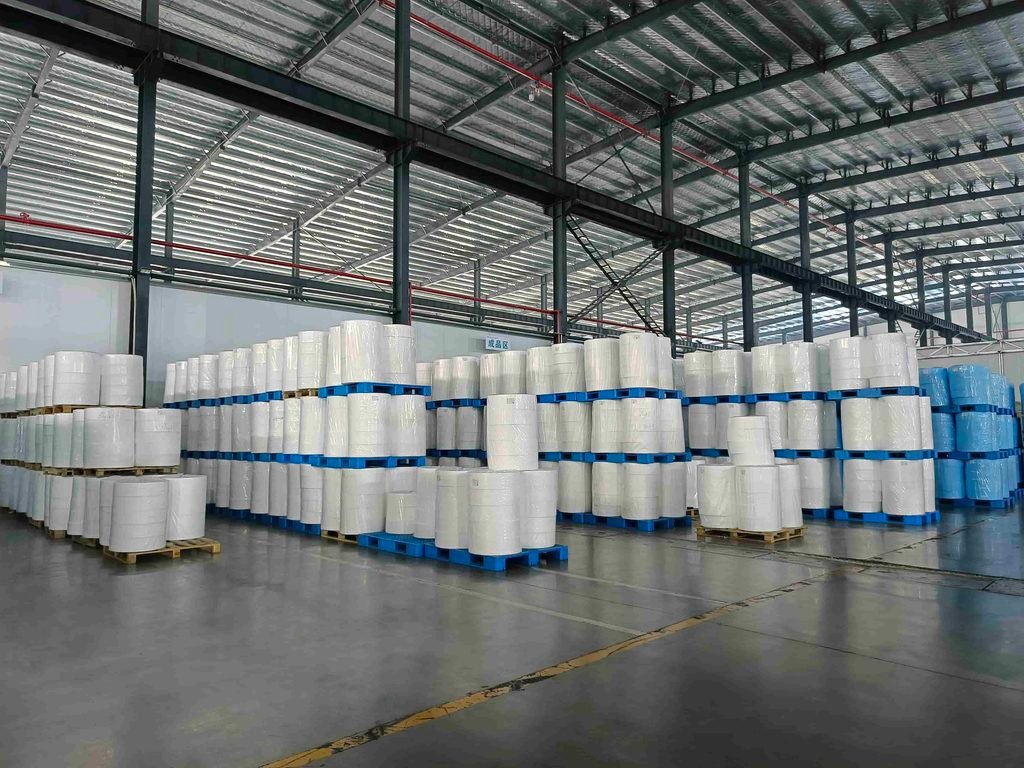
Effective nonwoven fabric quality control is not limited to checking whether a sample looks acceptable. It requires clear specifications, appropriate testing, visual inspection, batch consistency checks, traceability, and documented acceptance criteria.
For B2B buyers, the best approach is to establish quality requirements before production, approve a reference sample, and apply a consistent inspection process to bulk orders.
A capable manufacturing partner should be able to explain its quality control procedures, provide relevant inspection records, and work with buyers to define material requirements for specific applications.
Before placing your next bulk order, make sure that the material specification, testing requirements, and acceptance criteria are agreed in writing.
Frequently Asked Questions
1. How do you check the quality of nonwoven fabric?
Start by checking the material type, GSM, width, thickness where relevant, surface appearance, and mechanical properties. Add application-specific tests such as filtration efficiency, liquid barrier performance, or lamination bonding strength when required.
2. What is the most important test for nonwoven fabric?
There is no single test that applies to every nonwoven fabric. Tensile strength, GSM, width, and appearance are common inspection points, while filtration, barrier, or bonding tests may be essential for specialized materials.
3. How can buyers ensure consistent quality in bulk orders?
Approve a reference sample, establish measurable specifications and tolerances, inspect representative rolls, record batch information, and request relevant inspection documentation.
4. Should buyers request a Certificate of Analysis?
A COA can be useful when it provides batch-specific test results for agreed parameters. Buyers should confirm which tests are included and whether the results correspond to the actual production batch.
5. Can visual inspection confirm the performance of protective nonwoven fabric?
No. Visual inspection can identify visible defects, but it cannot confirm properties such as liquid barrier performance, filtration efficiency, or finished-garment protection classification. These require appropriate testing.

