
Construction demolition projects generate large amounts of dust, debris, and airborne particles that can expose workers to multiple occupational hazards. Whether removing interior walls, dismantling structures, or preparing buildings for renovation, proper personal protective equipment (PPE) is essential.
Unlike new construction projects, demolition work may involve exposure to concrete dust, insulation fibers, lead paint residues, and other contaminants. Selecting the right disposable coveralls helps reduce contamination while improving worker safety and jobsite compliance.
For older structures, contractors frequently encounter both lead-based coatings and asbestos-containing materials, making protective coveralls for asbestos removal an important consideration during project planning.
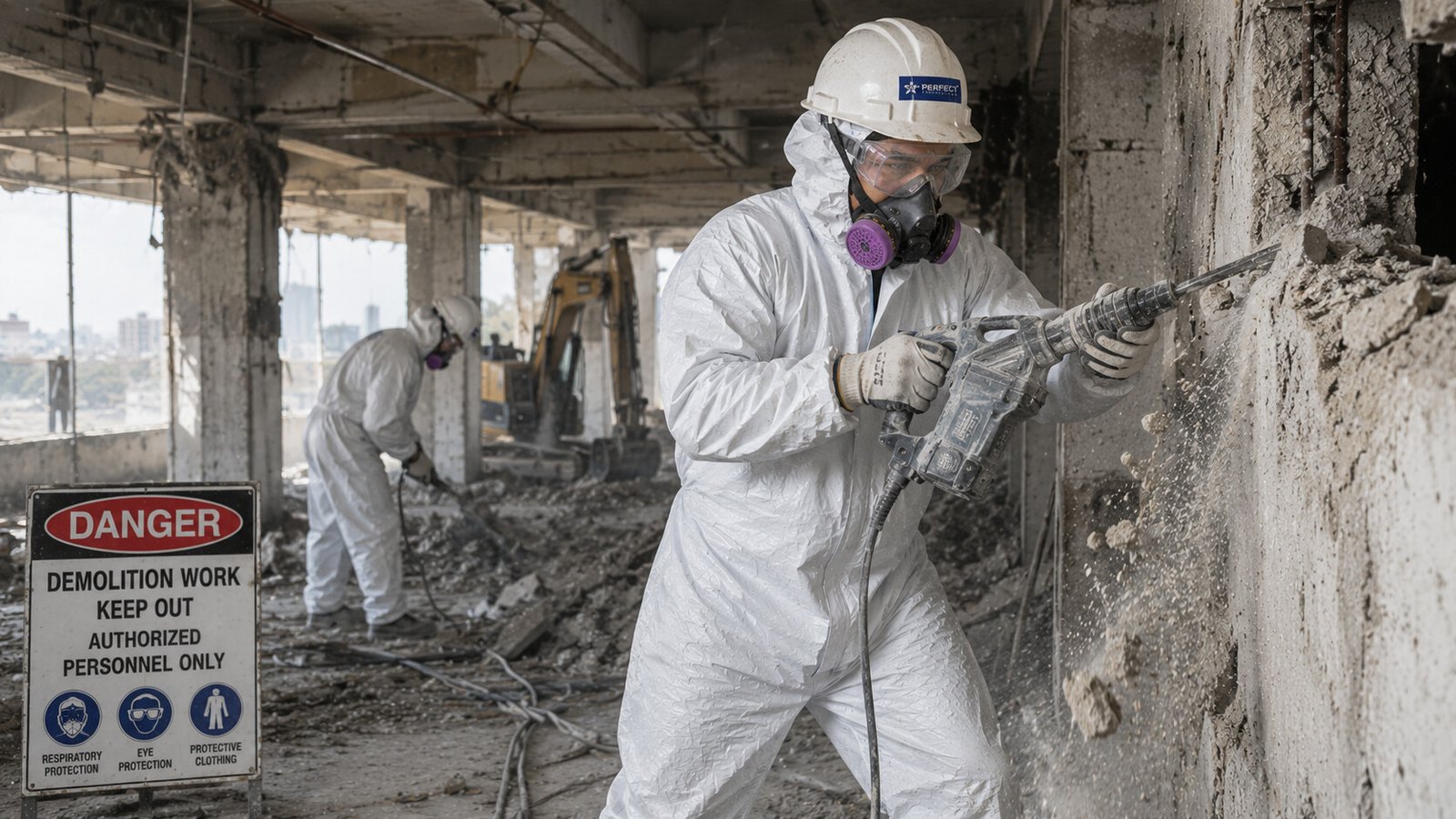
Why Demolition Work Requires Protective Coveralls
Demolition activities can release various airborne particles, including:
- Concrete dust
- Drywall dust
- Wood particles
- Fiberglass insulation fibers
- Lead paint dust
- Silica particles
Without proper protective clothing, these contaminants can settle on workers’ skin, clothing, and personal belongings.
Disposable coveralls provide a barrier that helps reduce direct exposure and limits contamination transfer outside the work area.
Common Hazards Found During Demolition
Silica Dust
Cutting, grinding, or breaking concrete materials releases respirable crystalline silica.
Long-term exposure may contribute to serious respiratory health concerns.
Fiberglass Insulation
Many buildings contain fiberglass insulation within walls and ceilings.
Workers performing demolition often require protection from airborne fibers.
Lead-Based Paint
Structures built before modern regulations may contain lead coatings.
Dust generated during demolition can spread rapidly throughout the worksite.
General Construction Dust
Drywall, cement, plaster, and masonry materials create significant airborne particle exposure.
What Type of Coverall Is Best for Demolition Work?
Type 5 Disposable Coveralls
Type 5 garments are specifically designed to protect against hazardous dry particles.
Benefits include:
- Fine particle protection
- Full-body coverage
- Lightweight construction
- Reduced contamination transfer
Many contractors consider Type 5 garments the standard hazardous dust protective coveralls solution for demolition environments.
Recommended Coverall Materials
Microporous Film Laminate
Advantages:
- Excellent particle barrier
- Strong protection against fine dust
- Lightweight comfort
- Suitable for extended wear
Many demolition contractors prefer coveralls manufactured with microporous protective fabric because of its balance between protection and breathability.
SMS Nonwoven Fabric
Advantages:
- Cost-effective
- Comfortable
- Breathable
Suitable for low-risk demolition or general cleanup work.
Important Design Features
When selecting demolition coveralls, look for:
Hooded Protection
Provides additional coverage for the head and neck.
Elastic Wrists and Ankles
Helps reduce particle entry points.
Storm Flap Zipper
Improves front-body protection.
Low-Lint Construction
Supports cleaner work environments.
Additional PPE Required
Disposable coveralls should always be combined with:
Respiratory Protection
- N95 respirators
- P100 respirators
- Half-face respirators
Eye Protection
- Safety goggles
- Sealed eyewear
Hand Protection
- Nitrile gloves
- Heavy-duty work gloves
Foot Protection
- Safety boots
- Disposable boot covers
Benefits of Disposable Coveralls in Demolition Projects
Reduced Cross-Contamination
Workers can remove contaminated garments before leaving the work zone.
Improved Jobsite Compliance
Disposable PPE supports workplace safety programs.
Greater Convenience
No laundering or decontamination process is required.
Cost-Effective Protection
Disposable garments provide efficient protection for short-term and high-dust projects.
Construction demolition projects expose workers to a wide range of airborne contaminants, including dust, insulation fibers, silica particles, and lead residues. Disposable Type 5 coveralls provide an effective protective barrier while supporting safer contamination control practices.
Choosing the right material, fit, and protective features helps improve worker comfort and safety throughout demolition operations.
If your company is sourcing PPE for demolition, renovation, or industrial cleanup projects, working with an experienced disposable protective coverall manufacturer can help ensure reliable supply, certification compliance, and consistent product quality.

