
Best Disposable Coveralls for Food Processing
Food processing facilities must maintain strict hygiene standards to ensure product quality and consumer safety. Workers handling raw materials, packaging, and finished products need protective clothing that minimizes contamination while remaining comfortable throughout long production shifts.
Disposable protective coveralls are widely used in food manufacturing because they help prevent hair, fibers, dust, and other contaminants from reaching food products.
Whether producing meat, dairy products, baked goods, beverages, or frozen foods, selecting the right protective clothing is an important part of an effective food safety program.
Why Food Processing Requires Disposable Coveralls
Unlike construction or industrial manufacturing, the primary objective in food processing is protecting the product rather than the worker.
Disposable coveralls help:
- Reduce product contamination
- Minimize fiber shedding
- Prevent hair from contacting food
- Improve workplace hygiene
- Simplify garment management
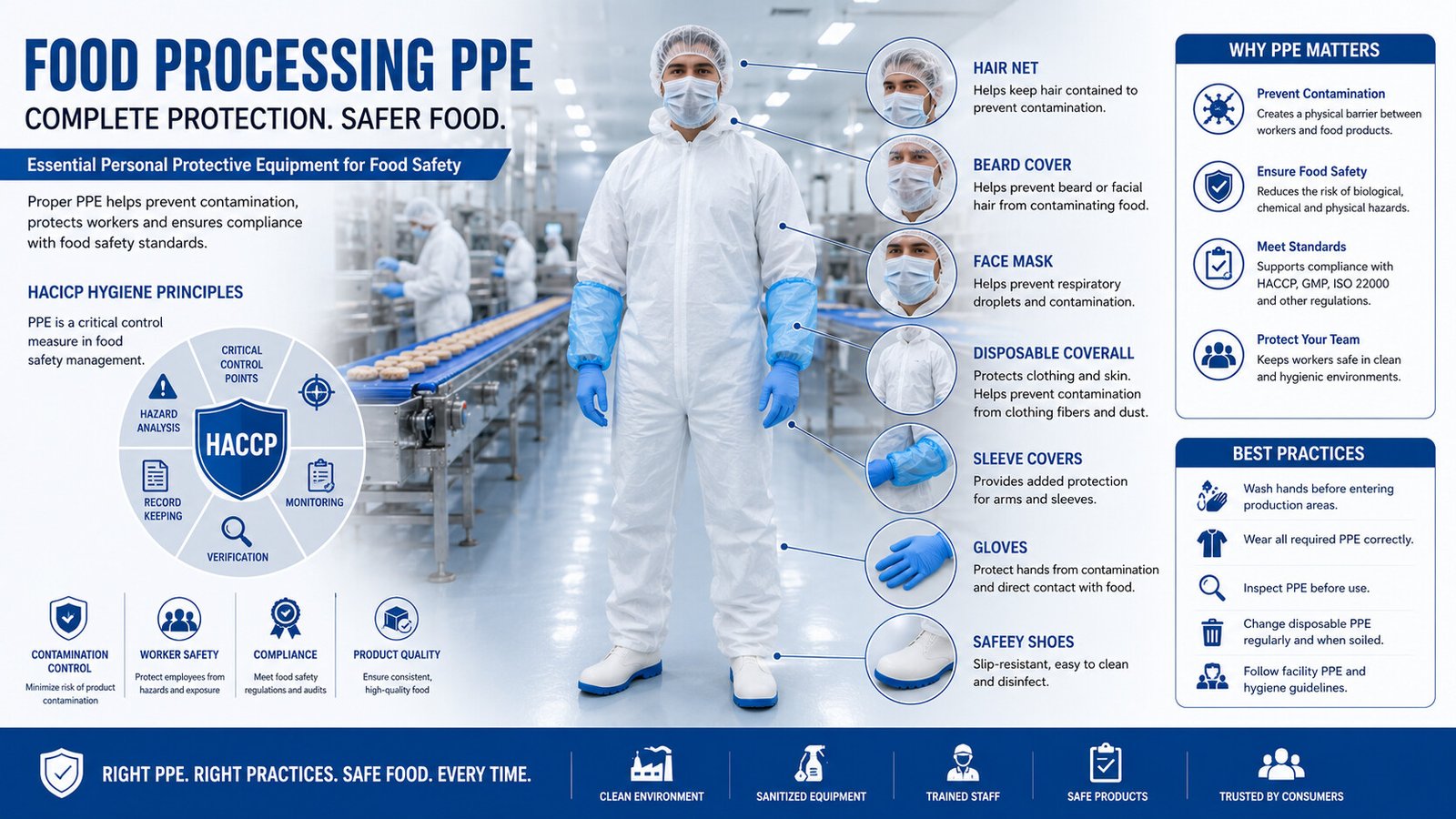
Many manufacturers also combine disposable coveralls with hair nets, beard covers, sleeve protectors, and gloves to strengthen hygiene controls.
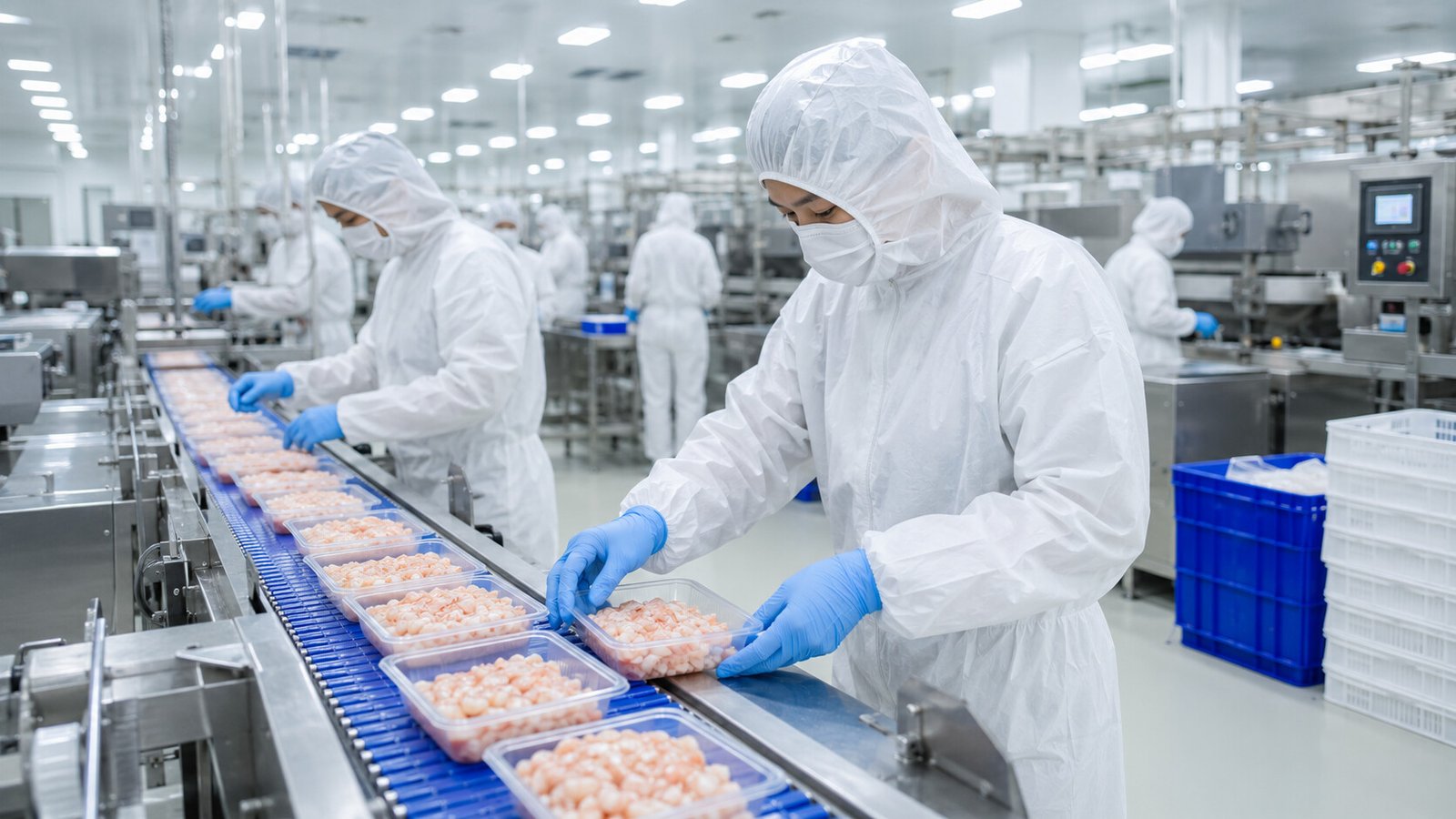
Common Areas Where Coveralls Are Used
Disposable protective clothing is commonly worn in:
- Raw material receiving
- Food preparation
- Meat processing
- Seafood processing
- Dairy production
- Bakery manufacturing
- Beverage filling
- Frozen food packaging
- Dry food production
- Quality inspection areas
These applications require protective garments that balance cleanliness, comfort, and productivity.
What Features Should Food Processing Coveralls Have?
Low-Lint Materials
One of the most important requirements is minimizing fiber shedding.
Low-lint disposable materials help reduce contamination risks during food production.
Lightweight and Breathable
Food production often involves long working hours in temperature-controlled environments.
Breathable materials improve comfort and reduce worker fatigue.
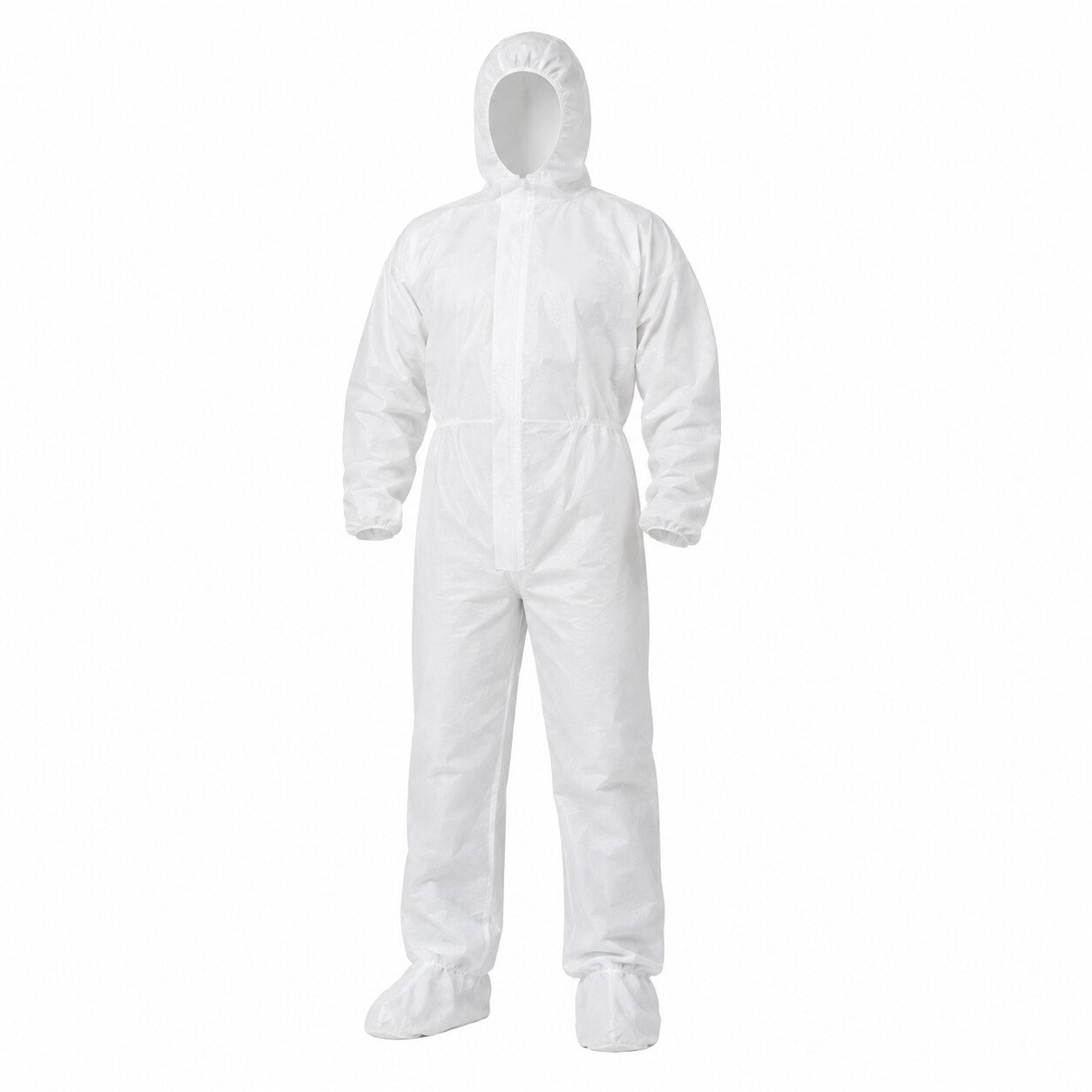
Hooded Design
Attached hoods help contain hair and improve hygiene management.
Elastic Cuffs and Ankles
Elastic closures reduce openings where contaminants may escape or enter.
Front Zipper with Storm Flap
Covered zippers provide cleaner garment surfaces and additional protection.
Choosing the Right Material
SMS Nonwoven Fabric
SMS coveralls are widely used in food factories because they provide:
- Excellent breathability
- Low lint generation
- Comfortable wear
- Cost-effective protection
Many food manufacturers select SMS protective coveralls for general production environments.
Microporous Film Laminate
Microporous coveralls provide:
- Better particle barrier performance
- Enhanced contamination control
- Lightweight construction
For higher hygiene requirements, many facilities choose microporous protective fabric because it combines protection with comfort.
Disposable vs Reusable Coveralls in Food Manufacturing
Disposable coveralls offer several advantages:
Better Hygiene
Fresh garments are used for each shift or production cycle.
Reduced Laundry Costs
No washing or garment maintenance is required.
Lower Cross-Contamination Risk
Contaminated garments are discarded after use.
Simplified Inventory Management
Disposable PPE eliminates garment collection and redistribution.
For a broader comparison, see disposable vs reusable protective coveralls.
Additional PPE for Food Processing
Disposable coveralls are typically used together with:
- Hair nets
- Beard covers
- Disposable gloves
- Face masks
- Safety shoes
- Sleeve protectors
Together, these items create a comprehensive hygiene system.
Best Practices for Using Disposable Coveralls
To maximize hygiene:
- Put on clean coveralls before entering production areas.
- Replace damaged garments immediately.
- Remove contaminated coveralls before leaving controlled zones.
- Store unused garments in clean, dry environments.
- Follow facility hygiene procedures for disposal.
Why Food Manufacturers Choose Disposable Coveralls
Disposable coveralls help food processors:
- Improve food safety
- Support hygiene compliance
- Increase production efficiency
- Reduce contamination incidents
- Enhance customer confidence
They have become standard PPE in many modern food production facilities.
Food processing environments demand high standards of cleanliness and contamination control. Disposable protective coveralls help manufacturers maintain hygienic production conditions while improving worker comfort and operational efficiency.
Whether producing meat, dairy products, beverages, or packaged foods, selecting appropriate disposable protective clothing is an important investment in food safety and product quality.
If you are looking for a reliable disposable protective coverall manufacturer for food processing applications, choosing a supplier with stable production capacity, quality certifications, and OEM capabilities can help ensure consistent product performance and supply.
FAQ
Are disposable coveralls required in food processing?
Many food manufacturers require disposable protective clothing as part of their hygiene and food safety procedures, especially in high-risk production areas.
What color coveralls are commonly used in food factories?
White is the most common color because contamination is easier to identify visually.
Are SMS coveralls suitable for food production?
Yes. SMS coveralls are widely used because they are breathable, lightweight, and produce low lint.
Are microporous coveralls better than SMS?
Microporous coveralls generally provide better particle barrier performance, while SMS coveralls offer greater breathability. The appropriate choice depends on the production environment.

