
When comparing disposable coveralls and Tyvek coveralls, the best choice depends on the application. Tyvek coveralls provide superior durability and particle protection, while SMS and microporous disposable coveralls offer excellent cost efficiency and breathable protection for many industrial applications.
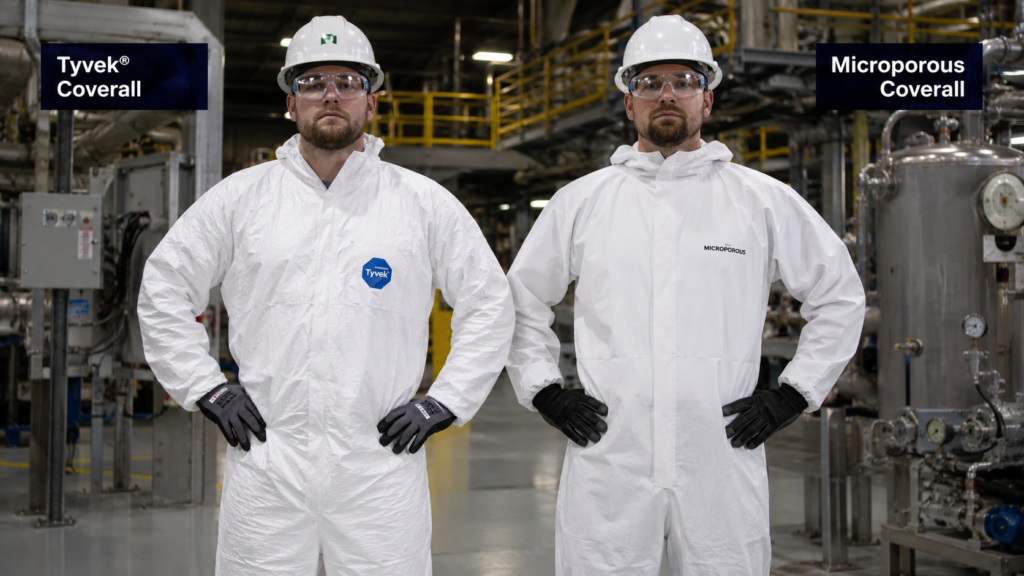
Disposable Coverall vs Tyvek Coverall: Which Is Better?
Many PPE buyers search for Tyvek® coveralls because they are widely recognized in industrial safety markets.
However, Tyvek is not the only option available.
Today, many factories, distributors, and importers compare:
- Tyvek coveralls
- Microporous coveralls
- SMS coveralls
- PP disposable coveralls
to find the best balance between protection and cost.
In this guide, we’ll compare them side by side.
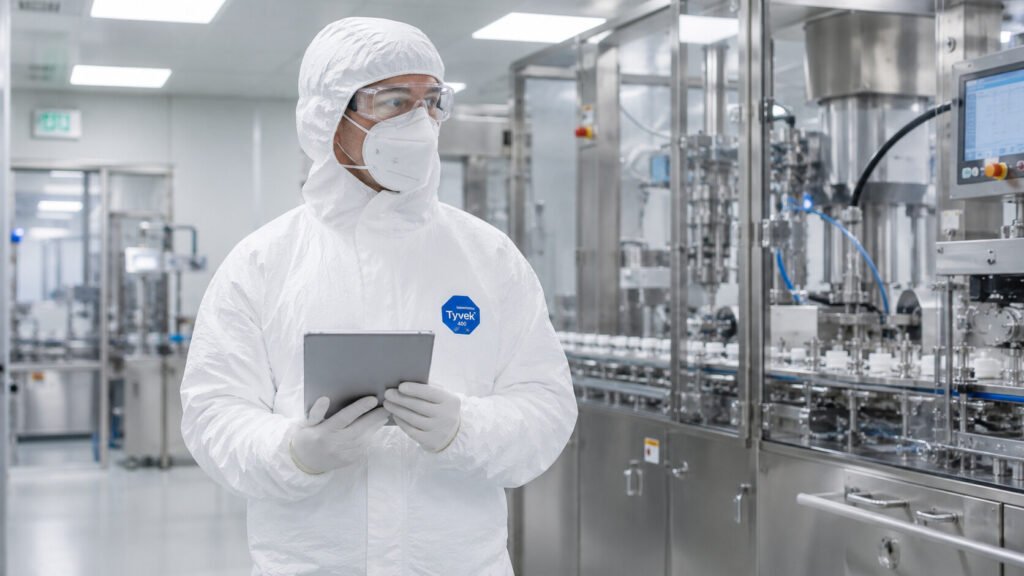
What Is a Tyvek Coverall?
Tyvek is a flash-spun high-density polyethylene material developed by:
DuPont
Tyvek garments are known for:
- High tensile strength
- Excellent particle barrier
- Low lint generation
- Lightweight comfort
They are commonly used in:
- Pharmaceutical manufacturing
- Cleanrooms
- Asbestos removal
- Hazardous dust environments
What Is a Standard Disposable Coverall?
Disposable coverall is a broad category that includes:
- PP Coveralls
- SMS Coveralls
- Microporous Coveralls
- PE Laminated Coveralls
The protection level depends on fabric construction.
Fabric Comparison
| Feature | Tyvek | Microporous | SMS |
|---|---|---|---|
| Particle Protection | Excellent | Excellent | Good |
| Liquid Splash Resistance | Moderate | Excellent | Moderate |
| Breathability | Good | Good | Excellent |
| Durability | Excellent | Good | Moderate |
| Cost | High | Medium | Low |
| Cleanroom Use | Excellent | Excellent | Good |
When Is Tyvek Better?
Tyvek is often preferred when:
High Particle Protection Is Required
Examples:
- Asbestos removal
- Hazardous dust handling
- Pharmaceutical cleanrooms
Durability Matters
Tyvek fabric is more tear resistant than many disposable alternatives.
Long Working Hours
The material remains lightweight despite its strength.
When Is Microporous Better?
Microporous coveralls are often preferred when:
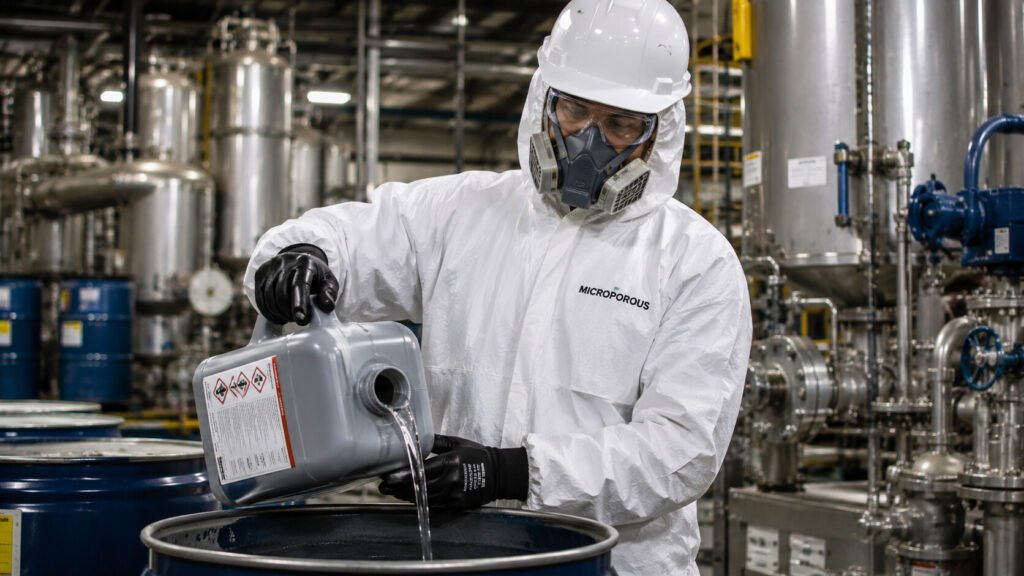
Liquid Splash Protection Is Important
Microporous film blocks:
- Paint mist
- Water-based chemicals
- Light liquid splashes
Cost Efficiency Matters
Many buyers achieve similar protection performance at lower cost.
Large Volume Procurement
Microporous suits are often chosen for:
- OEM programs
- Distributor brands
- Government tenders
Related article: What Is a Microporous Coverall
When Is SMS Better?
SMS coveralls are ideal for:
- Pharmaceutical packaging
- Food processing
- Electronics manufacturing
- General industrial protection
Benefits include:
- Excellent breathability
- Low lint generation
- Lower cost
Tyvek Coverall vs Microporous Coverall
This comparison generates thousands of searches every year.
| Feature | Tyvek | Microporous |
|---|---|---|
| Dust Barrier | Excellent | Excellent |
| Liquid Resistance | Good | Better |
| Breathability | Good | Good |
| Tear Resistance | Better | Good |
| Price | Higher | Lower |
Winner
For chemical splash environments:
✅ Microporous
For high-durability applications:
✅ Tyvek
Tyvek Coverall vs SMS Coverall
| Feature | Tyvek | SMS |
|---|---|---|
| Particle Protection | Excellent | Good |
| Breathability | Good | Excellent |
| Strength | Excellent | Moderate |
| Cost | High | Low |
Winner
For budget-sensitive projects:
✅ SMS
For high-risk contamination environments:
✅ Tyvek
Why Many Buyers Search for Tyvek Alternatives
Importers often look for alternatives because:
- Lower procurement cost
- Better OEM opportunities
- Flexible MOQ
- Faster delivery
Modern microporous coveralls can often satisfy the same application requirements at significantly lower cost.
Industries Using Tyvek and Alternative Coveralls
Pharmaceutical Industry
White low-lint Pharmaceutical Protective Coveralls garments.
Spray Painting
Microporous suits dominate this sector. See this guide:
Best Coveralls for Spray Painting
Construction & Asbestos Removal
Both Tyvek and Type 5 microporous garments are widely used.
Chemical Manufacturing
Microporous Type 5/6 suits are frequently selected.
Common Buyer Mistakes
❌ Buying based only on brand
❌ Ignoring application requirements
❌ Not checking EN certifications
❌ Over-specifying protection
❌ Paying for unnecessary performance
How to Choose the Right Coverall
Ask these questions:
Is liquid splash protection required?
Choose:
Microporous
Is maximum durability required?
Choose:
Tyvek
Is low-cost breathable protection needed?
Choose:
SMS
Is this a pharmaceutical cleanroom?
Choose:
Tyvek or Cleanroom Microporous
FAQ
Is Tyvek better than Microporous?
Not always. Tyvek is stronger, while microporous often provides better liquid splash protection and lower cost.
Is Tyvek waterproof?
Tyvek resists particles and some liquids, but microporous laminated fabrics often provide better splash resistance.
Why do buyers choose microporous instead of Tyvek?
Lower cost, easier OEM production, and strong Type 5/6 protection.
Can SMS replace Tyvek?
For many low-risk industrial applications, yes.
For hazardous particle environments, Tyvek or microporous solutions are generally preferred.
Tyvek coveralls remain a respected solution for high-performance disposable protection.
However, modern microporous and SMS coveralls provide excellent alternatives for buyers seeking:
- Lower cost
- Flexible MOQ
- OEM customization
- Reliable industrial protection
For most distributors and importers, choosing the right coverall depends on application requirements rather than brand recognition alone.
Looking for a Tyvek Alternative Manufacturer?
HuBei Wanli supplies:
- SMS Coveralls
- Microporous Coveralls
- Type 5/6 Protective Suits
- Pharmaceutical PPE
- OEM & Private Label Programs
Contact us for:
- Free samples
- Factory pricing
- Product catalogs
- OEM quotations

