Fiberglass insulation is widely used in residential, commercial, and industrial construction projects. While it provides excellent thermal and acoustic performance, handling fiberglass materials can expose workers to airborne fibers that cause skin irritation, eye discomfort, and respiratory issues.
Choosing the right industrial protective coveralls help reduce worker exposure and improves comfort during insulation installation, removal, and maintenance tasks.
In this guide, we’ll explain the risks of fiberglass exposure and how to select the best coveralls for insulation work.
Why Fiberglass Can Be Hazardous
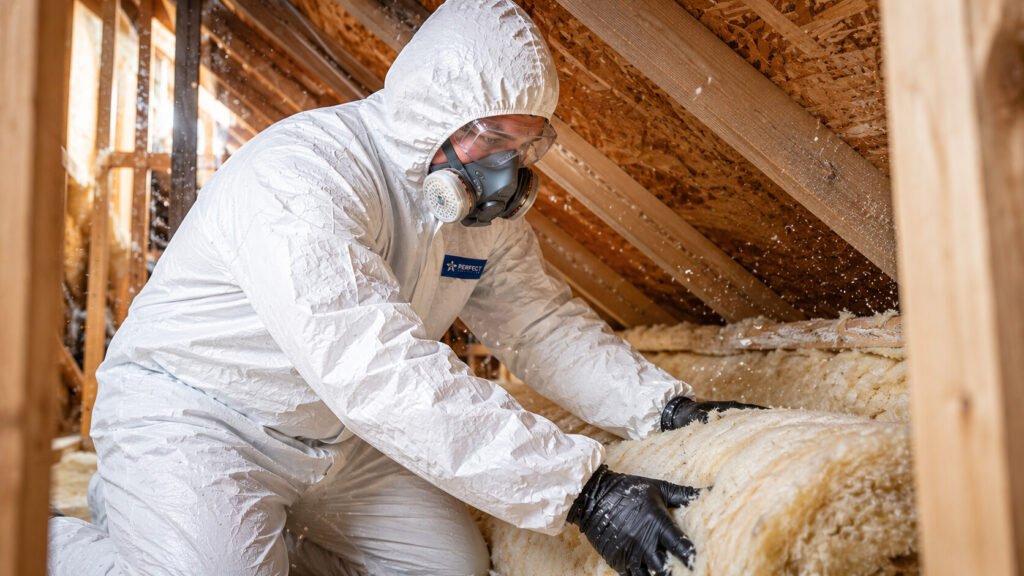
Fiberglass consists of extremely fine glass fibers.
When insulation materials are cut, installed, or removed, fibers can become airborne and settle on exposed skin or clothing.
Common issues include:
- Skin itching and irritation
- Eye irritation
- Respiratory discomfort
- Secondary contamination carried on work clothing
Although fiberglass is generally considered less hazardous than asbestos, proper protective clothing remains essential.
What Features Should a Fiberglass Coverall Have?
Particle Protection
The coverall should effectively block fine airborne fibers.
Recommended:
- Type 5 protective coveralls
- Low-lint materials
- High particle filtration efficiency
Full Body Coverage
Fiberglass fibers can easily enter clothing openings.
Important features include:
- Attached hood
- Elastic wrists
- Elastic ankles
- Front zipper with storm flap
Breathability
Insulation installation often takes place in hot environments such as:
- Attics
- Roof spaces
- Construction sites
Breathable materials help reduce heat stress and improve worker comfort.
Recommended Coverall Materials
Microporous Film Laminate
Advantages:
- Excellent particle barrier
- Good comfort
- Lightweight design
Commonly used in:
- Construction
- Insulation installation
- Renovation projects
SMS Nonwoven Fabric
Advantages:
- Breathable
- Economical
- Comfortable for low-risk applications
Suitable for:
- General maintenance
- Light insulation handling
Why Type 5 Coveralls Are Commonly Used
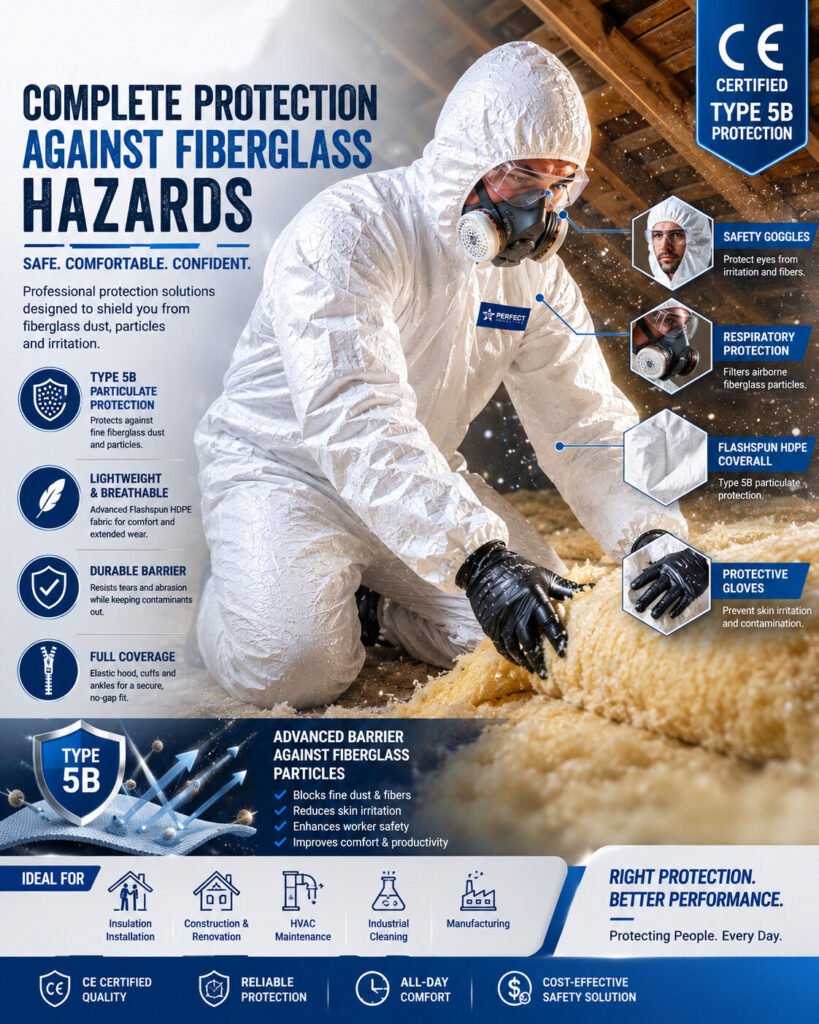
Type 5 coveralls are specifically designed to protect against hazardous airborne dry particles.
Benefits include:
- Dust protection
- Fiber protection
- Lightweight construction
- Compliance with industrial PPE requirements
For fiberglass installation, Type 5 garments are typically the preferred choice.
Additional PPE for Fiberglass Work
Disposable coveralls should be combined with:
Respiratory Protection
- N95 respirator
- P2 respirator
- Dust mask (depending on risk assessment)
Hand Protection
- Nitrile gloves
- Cut-resistant gloves
Eye Protection
- Safety goggles
- Sealed protective eyewear
Industries That Use Fiberglass Coveralls
Common industries include:
Construction
Installation of wall and ceiling insulation.
HVAC Systems
Handling duct insulation materials.
Shipbuilding
Thermal and acoustic insulation installation.
Industrial Manufacturing
Equipment insulation maintenance.
How to Dispose of Fiberglass Coveralls
After completing work:
- Remove coveralls carefully.
- Avoid shaking contaminated garments.
- Place disposable coveralls into designated waste bags.
- Wash exposed skin thoroughly.
Proper disposal helps prevent fibers from spreading to clean areas.
Fiberglass insulation work may seem routine, but airborne fibers can cause significant worker discomfort and contamination. Disposable Type 5 protective coveralls provide an effective barrier against fiberglass particles while maintaining comfort during long working hours.
Selecting the appropriate coverall material and combining it with suitable respiratory and eye protection helps create a safer working environment for insulation professionals.