
Chemical handling environments require protective clothing that can help reduce exposure risks from hazardous substances, liquid splashes, and accidental spills.
Workers involved in:
- Chemical manufacturing
- Chemical transfer operations
- Laboratory processes
- Industrial cleaning
- Maintenance activities
may face exposure to acids, solvents, cleaning agents, and other hazardous chemicals.
Choosing the right disposable chemical protective coverall is essential because different chemical risks require different levels of protection.
For high-risk applications, companies typically evaluate Type 3 chemical protective coveralls and Type 4 protective coveralls based on the expected exposure conditions.
Why Chemical Handling Requires Specialized Coveralls
Chemical environments are different from ordinary industrial workplaces.
Potential hazards include:
- Liquid chemical splashes
- Pressurized chemical leaks
- Hazardous cleaning solutions
- Solvent exposure
- Chemical contamination on surfaces
Regular workwear may absorb liquids or allow chemicals to penetrate.
Disposable chemical protective coveralls are designed to provide a controlled barrier between workers and hazardous substances.
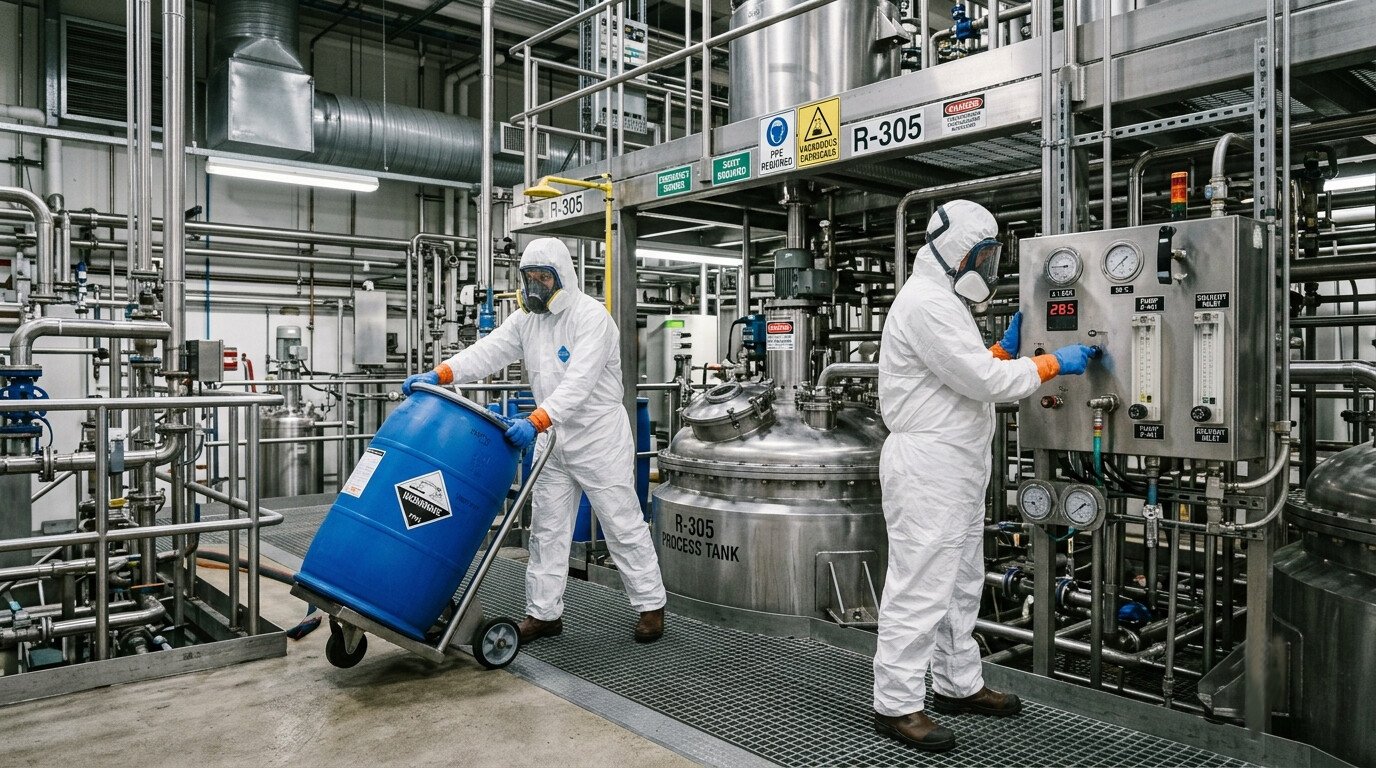
Common Applications for Chemical Protective Coveralls
Chemical Manufacturing
Used during:
- Raw material handling
- Chemical mixing
- Production line maintenance
Laboratory and Research Facilities
Used when workers handle:
- Chemical reagents
- Laboratory solutions
- Experimental materials
Industrial Cleaning
Applicable for:
- Equipment cleaning
- Chemical washing procedures
- Maintenance operations
Chemical Transportation and Transfer
Used during:
- Drum handling
- Chemical filling
- Storage operations
How to Choose the Right Chemical Coverall
The correct coverall depends on:
Chemical Exposure Type
The first consideration is whether workers face:
- Liquid splash
- Pressurized liquid spray
- Chemical mist
- Particle contamination
Different hazards require different protection levels.
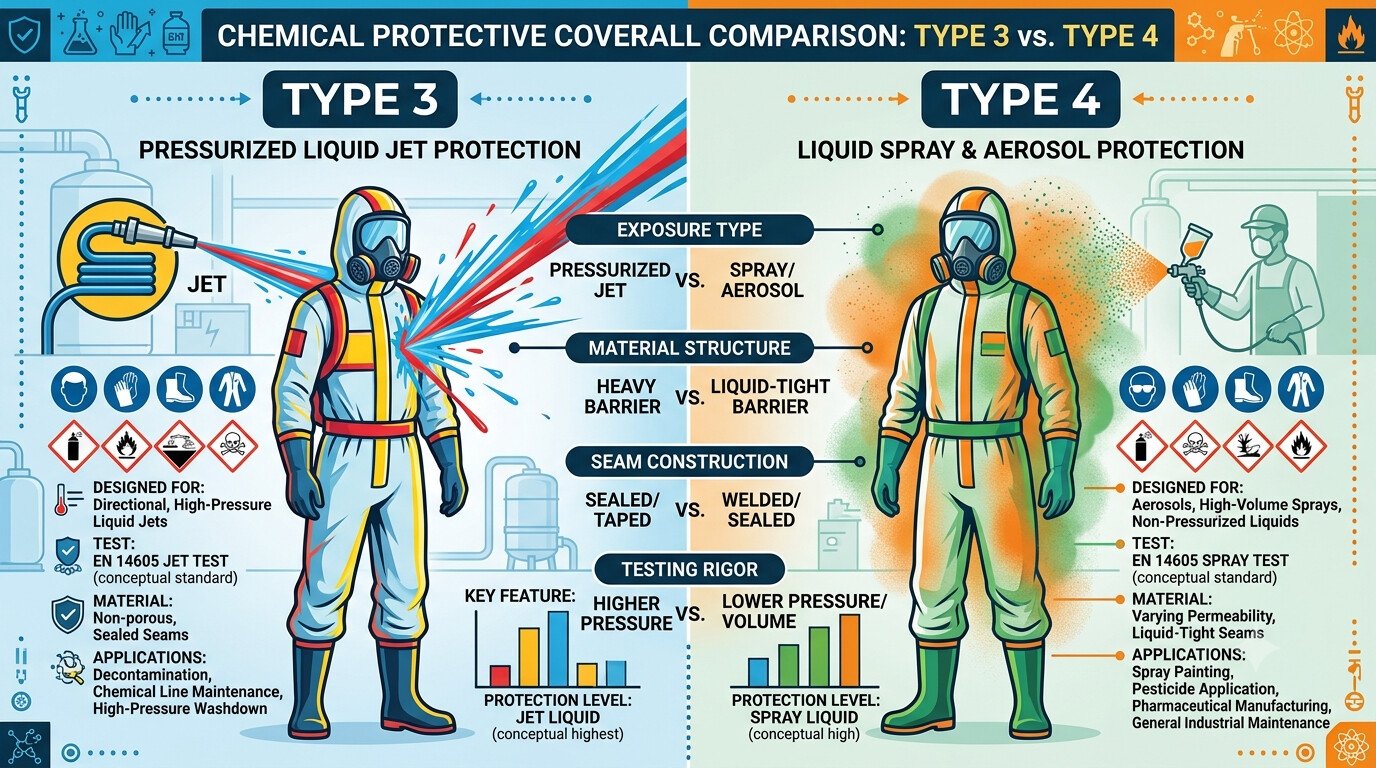
Type 3 vs Type 4 Chemical Coveralls
Type 3 Chemical Protective Coveralls
Type 3 coveralls provide protection against pressurized liquid chemicals.
They are suitable for environments where workers may experience:
- Chemical leaks
- High-pressure liquid exposure
- Hazardous liquid handling
Applications include:
- Chemical processing
- Emergency response
- Industrial maintenance
Learn more about Type 3 protective coveralls.
Type 4 Chemical Protective Coveralls
Type 4 coveralls provide protection against liquid spray exposure.
They are commonly used for:
- Chemical spraying
- Cleaning operations
- Industrial applications
Learn more about Type 4 protective coveralls.
What Materials Are Used for Chemical Coveralls?
Microporous Coveralls
Microporous laminate materials are widely used for disposable protective clothing because they provide:
- Liquid resistance
- Particle protection
- Lightweight comfort
They are suitable for many industrial applications where workers need protection from contamination and light chemical splash.
Explore our microporous protective coveralls.
Multi-layer Protective Materials
Higher protection applications often require specialized multi-layer structures designed for improved barrier performance.
Material selection should always consider:
- Chemical compatibility
- Exposure duration
- Temperature
- Contact pressure
Important Features of Chemical Protective Coveralls
Sealed or Reinforced Seams
Seams are a critical factor because chemicals can penetrate through weak garment construction areas.
Hooded Design
A hood helps protect:
- Head
- Neck
- Hair area
Elastic Wrist and Ankle Closures
These improve compatibility with:
- Gloves
- Boots
- Other PPE
Zipper Protection Flap
A covered zipper helps provide additional front-body protection.
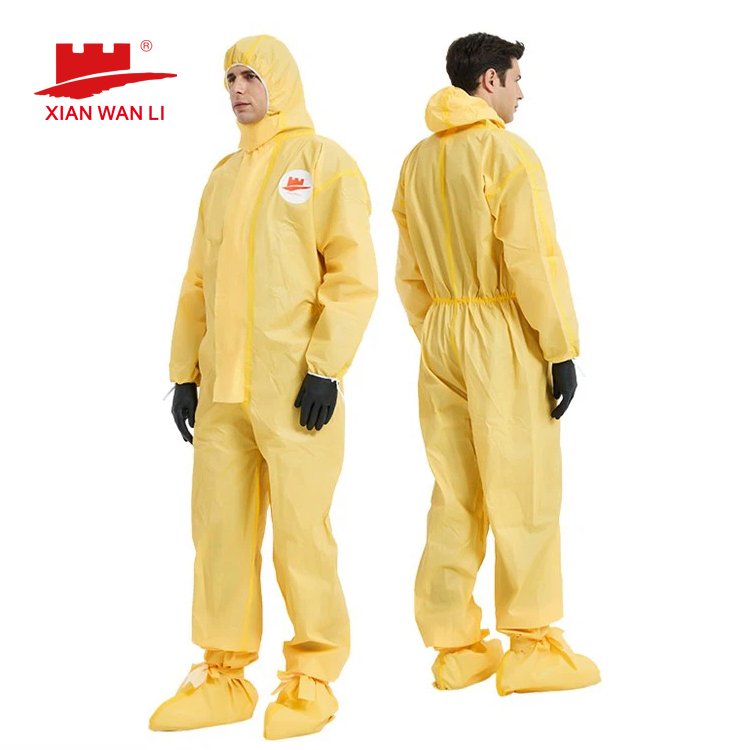
Additional PPE for Chemical Handling
Chemical coveralls should normally be combined with:
- Chemical-resistant gloves
- Safety goggles
- Face shields
- Respiratory protection
- Safety boots
Protective clothing should always be selected as part of a complete PPE system.
How to Verify Chemical Protective Coveralls
Before purchasing, buyers should check:
Certification
Confirm applicable standards and documentation.
You can review our CE certified protective coveralls.
Manufacturer Capability
A reliable supplier should provide:
- Production information
- Quality control procedures
- Testing documents
- OEM support
Learn more about our disposable coverall manufacturer capabilities.
Custom Requirements
Different industries may require:
- Custom packaging
- Logo printing
- Special sizes
- Color options
For customized solutions, explore our OEM/ODM service.
Disposable vs Reusable Chemical Coveralls
Disposable coveralls are often selected when companies need:
Reduced Contamination Risk
Used garments can be discarded after exposure.
Easier Management
No laundering process is required.
Better Hygiene Control
New garments provide consistent protection.
However, reusable chemical suits may be preferred for repeated heavy-duty applications.
The correct choice depends on:
- Exposure level
- Chemical type
- Working duration
- Cost requirements
Chemical Handling Coverall Selection Checklist
Before purchasing, consider:
✓ Chemical type
✓ Exposure method
✓ Required protection level
✓ Certification requirements
✓ Seam construction
✓ Material performance
✓ Worker comfort
✓ Supplier capability
Selecting the right disposable coveralls for chemical handling requires understanding the specific chemical hazards and required protection level.
For liquid chemical risks, Type 3 and Type 4 chemical protective coveralls provide targeted protection solutions for different exposure scenarios.
Working with an experienced protective coverall manufacturer helps companies obtain reliable products, technical support, and customized PPE solutions.
FAQ
What type of coveralls are used for chemical handling?
Chemical handling commonly requires Type 3 or Type 4 protective coveralls depending on whether exposure involves pressurized liquid chemicals or liquid spray.
Are disposable coveralls chemical resistant?
Some disposable coveralls provide chemical resistance, but performance depends on material, design, seams, and the specific chemical involved.
What is the difference between Type 3 and Type 4 coveralls?
Type 3 protects against pressurized liquid chemicals, while Type 4 protects against liquid spray exposure.
Can microporous coveralls be used for chemical protection?
Microporous coveralls can be suitable for certain chemical splash and contamination applications, but chemical compatibility should always be verified.

