
Seafood processing facilities operate in some of the most demanding food manufacturing environments. Workers frequently handle fresh fish, shellfish, and frozen seafood while operating in cold temperatures and high-humidity production areas.
Disposable protective coveralls help maintain hygienic working conditions by minimizing contamination from clothing, fibers, and external particles. They also support efficient garment changes between production zones and sanitation procedures.
Many manufacturers first establish a complete food processing protective clothing program before selecting PPE tailored to seafood production.
Why Seafood Processing Requires Specialized Coveralls
Seafood production differs from many other food industries because workers are exposed to:
- Constant moisture
- Cold-chain operations
- Frequent equipment washdowns
- Organic residues
- Fish scales and particles
- High sanitation requirements
Protective clothing must remain comfortable while supporting food safety throughout long production shifts.
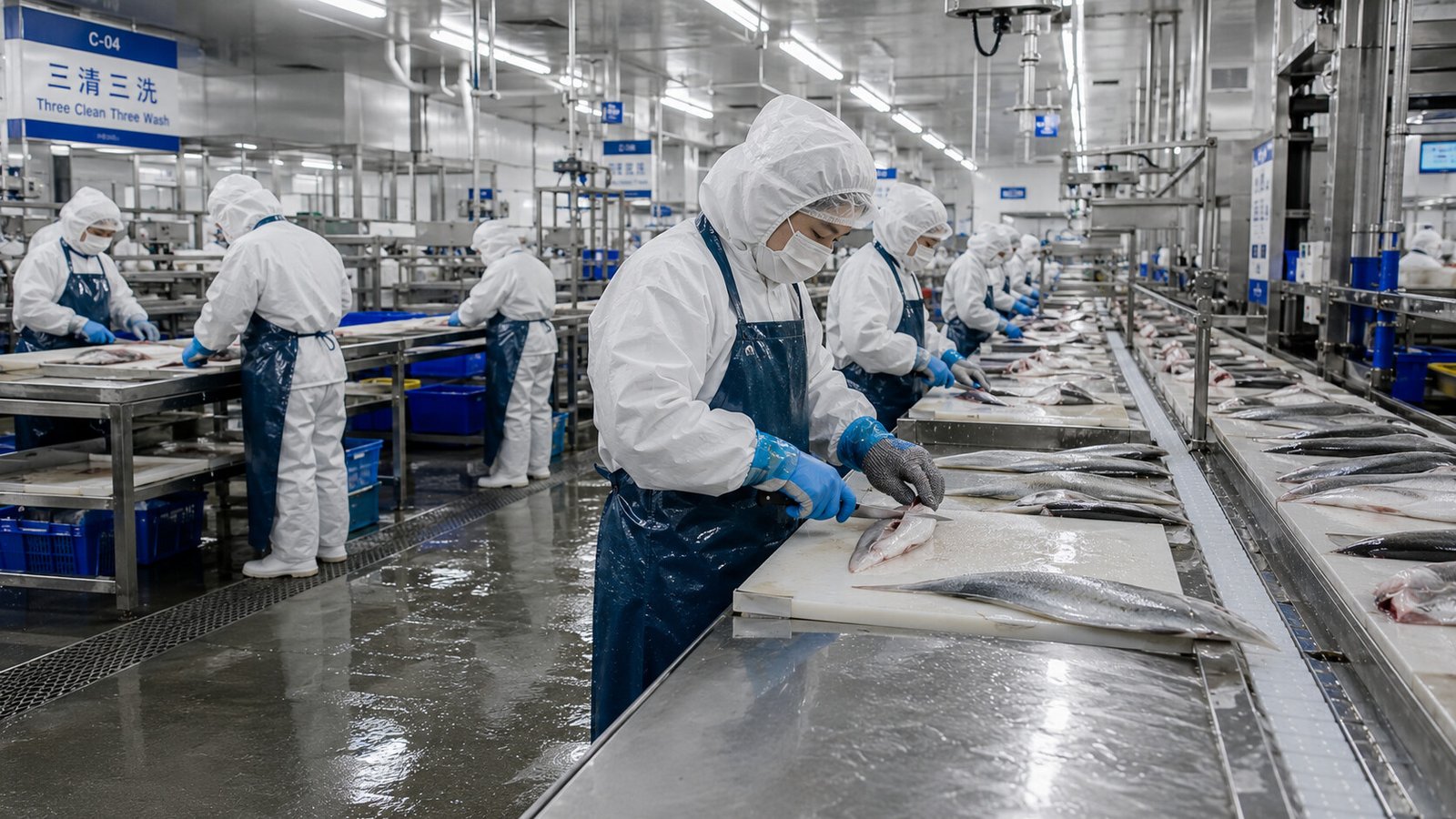
Typical Applications
Disposable coveralls are commonly used in:
Fish Filleting
Maintaining hygiene during cutting and trimming operations.
Shellfish Processing
Reducing contamination during sorting and cleaning.
Frozen Seafood Packaging
Supporting clean packaging environments.
Quality Inspection
Helping maintain hygienic conditions in inspection areas.
Cleaning and Sanitation
Providing an additional protective layer during equipment cleaning and washdowns.
Key Features to Look For
Low-Lint Materials
Low-lint fabrics help minimize the release of fibers that could contaminate seafood products.
Lightweight and Breathable
Even in cold environments, workers perform physically demanding tasks. Breathable materials improve comfort during extended shifts.
Hooded Design
An integrated hood helps contain hair and supports food hygiene programs.
Elastic Cuffs and Ankles
Elastic closures work together with gloves and boots to reduce contamination pathways.
Storm Flap Zipper
A covered zipper provides a cleaner front surface and helps prevent particles from collecting around the zipper area.
Choosing the Right Material
SMS Protective Coveralls
SMS fabric is commonly used because it provides:
- Breathability
- Low lint
- Comfortable wear
- Cost-effective protection
Learn more about SMS protective coveralls.
Microporous Film Laminate
Microporous materials provide enhanced particle protection and are suitable for production areas with stricter hygiene requirements.
Learn more about microporous protective fabric.
Recommended PPE for Seafood Processing
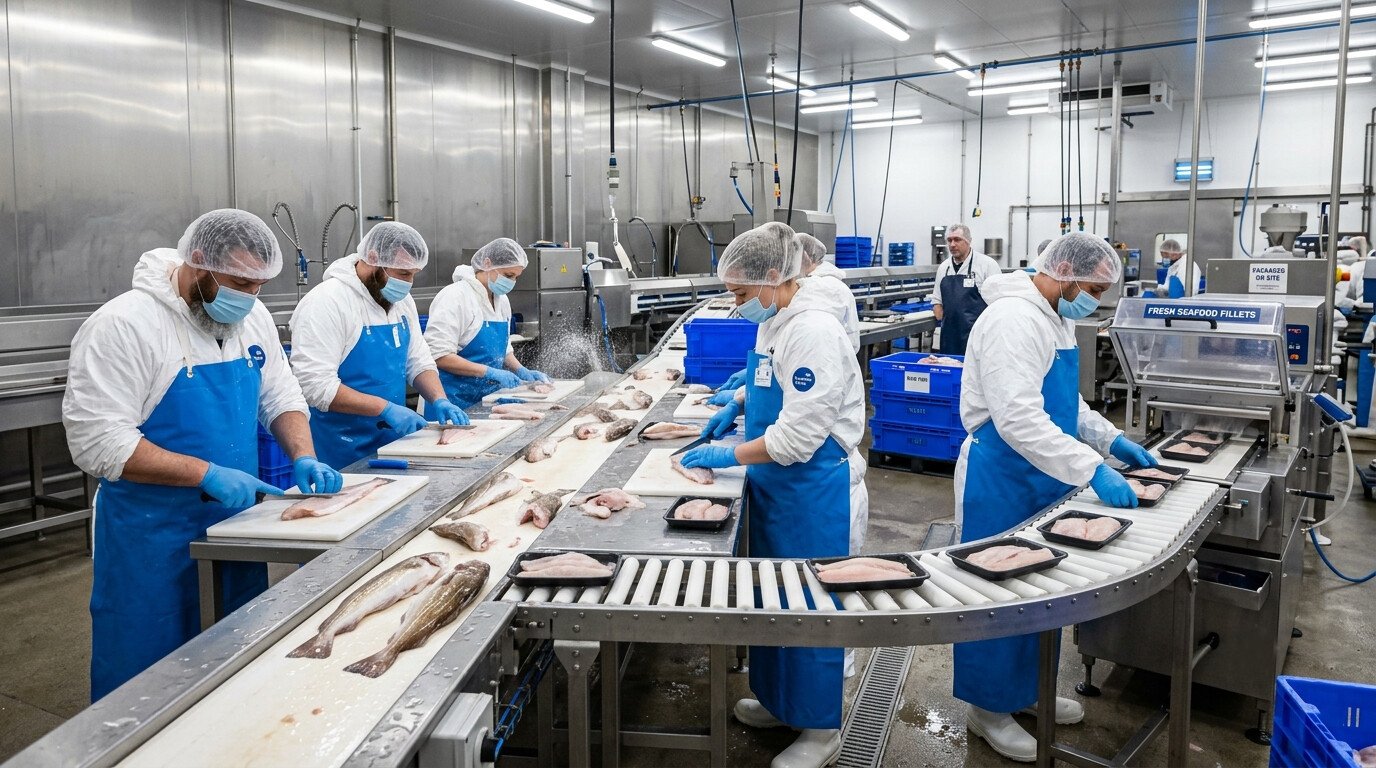
Disposable coveralls should be combined with:
- Hair nets
- Beard covers
- Face masks
- Waterproof aprons
- Cut-resistant gloves
- Waterproof or slip-resistant safety boots
Using multiple layers of PPE helps maintain food hygiene while protecting workers from moisture and sharp processing tools.
Hygiene Best Practices
Seafood processing facilities should:
- Change disposable coveralls before entering production zones.
- Replace contaminated garments immediately.
- Store unused PPE in clean, dry storage areas.
- Separate raw and cooked product processing areas.
- Remove disposable garments before leaving controlled production environments.
These practices support HACCP programs and reduce cross-contamination risks.
Why Disposable Coveralls Are Preferred
Compared with reusable garments, disposable coveralls offer:
Better Contamination Control
Fresh garments reduce the risk of transferring contaminants between production batches.
Faster Garment Changes
Workers can quickly replace contaminated clothing without waiting for laundering.
Improved Hygiene Management
Disposable garments simplify sanitation procedures and reduce handling of soiled clothing.
Cost-Effective Operations
Eliminating garment washing and repair helps reduce operational complexity.
Seafood processing plants require protective clothing that supports hygiene, worker comfort, and efficient contamination control in cold and humid environments. Disposable SMS and microporous coveralls provide practical solutions for maintaining food safety throughout seafood production.
For seafood manufacturers, distributors, and processors seeking reliable PPE, working with an experienced disposable protective coverall manufacturer helps ensure consistent product quality, regulatory compliance, and dependable supply.
FAQ
Why are disposable coveralls used in seafood processing?
They help reduce contamination, improve hygiene, and simplify garment management in food production environments.
Are SMS coveralls suitable for seafood factories?
Yes. SMS coveralls are widely used because they are lightweight, breathable, and produce low lint.
Should seafood workers also wear waterproof aprons?
Yes. Waterproof aprons are commonly worn over disposable coveralls in wet processing areas to improve protection and extend garment usability.
Can disposable coveralls be used in cold-chain production?
Yes. Disposable coveralls are often worn as an outer protective layer over insulated work clothing in refrigerated processing environments.

