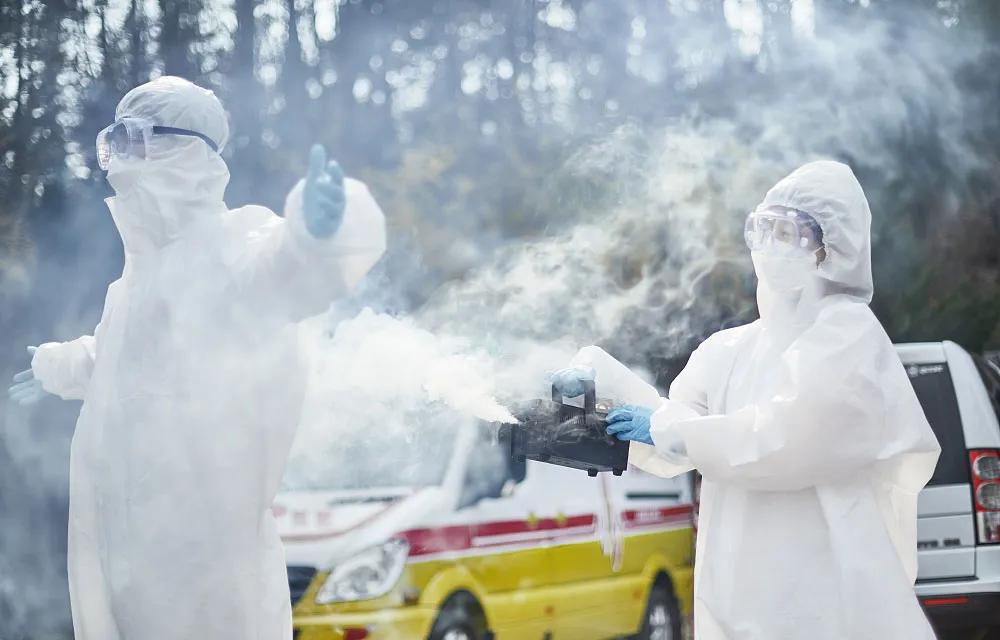
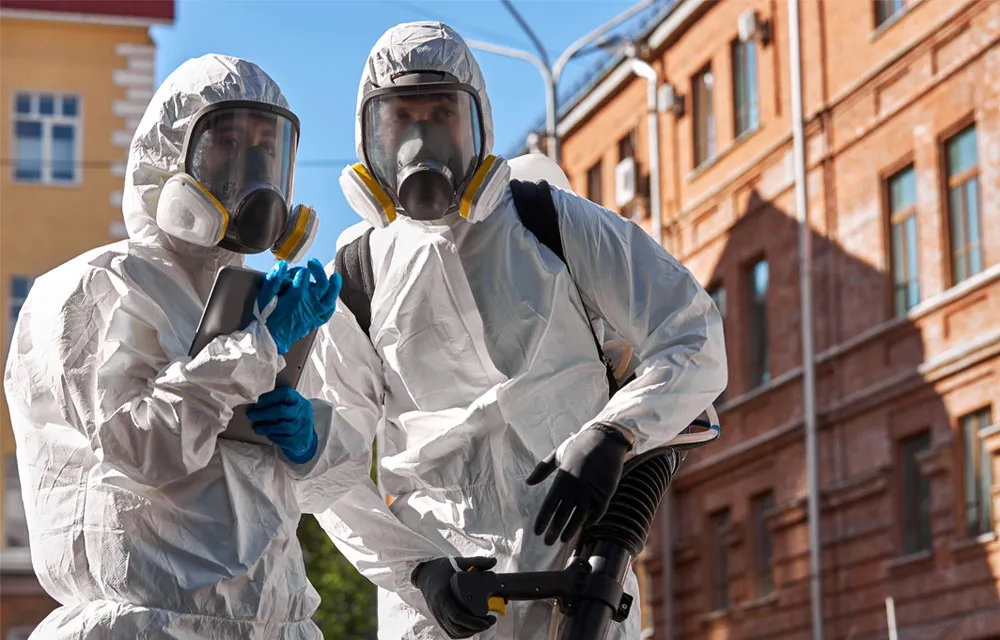
Industrial cleaning operations often involve more than ordinary dirt and dust. Workers may handle chemical detergents, cleaning agents, disinfectants, solvents, and high-pressure washing equipment.
Industries such as:
- Manufacturing
- Chemical plants
- Food processing facilities
- Pharmaceutical factories
- Automotive plants
require protective clothing that helps reduce exposure risks during cleaning and maintenance activities.
Disposable protective coveralls provide a convenient solution by creating a barrier between workers and chemical contaminants while simplifying garment management after use.
For chemical washing environments, companies commonly evaluate Type 4 protective coveralls and Type 3 protective coveralls according to exposure conditions.
Why Industrial Cleaning Requires Protective Coveralls
Industrial cleaning workers may face:
- Chemical splashes
- Cleaning solution exposure
- Pressurized water spray
- Contaminated surfaces
- Residual chemicals on equipment
Unlike normal maintenance work, cleaning activities often create direct contact risks because workers operate close to contaminated machinery and surfaces.
Protective coveralls help reduce contamination transfer and improve workplace hygiene.
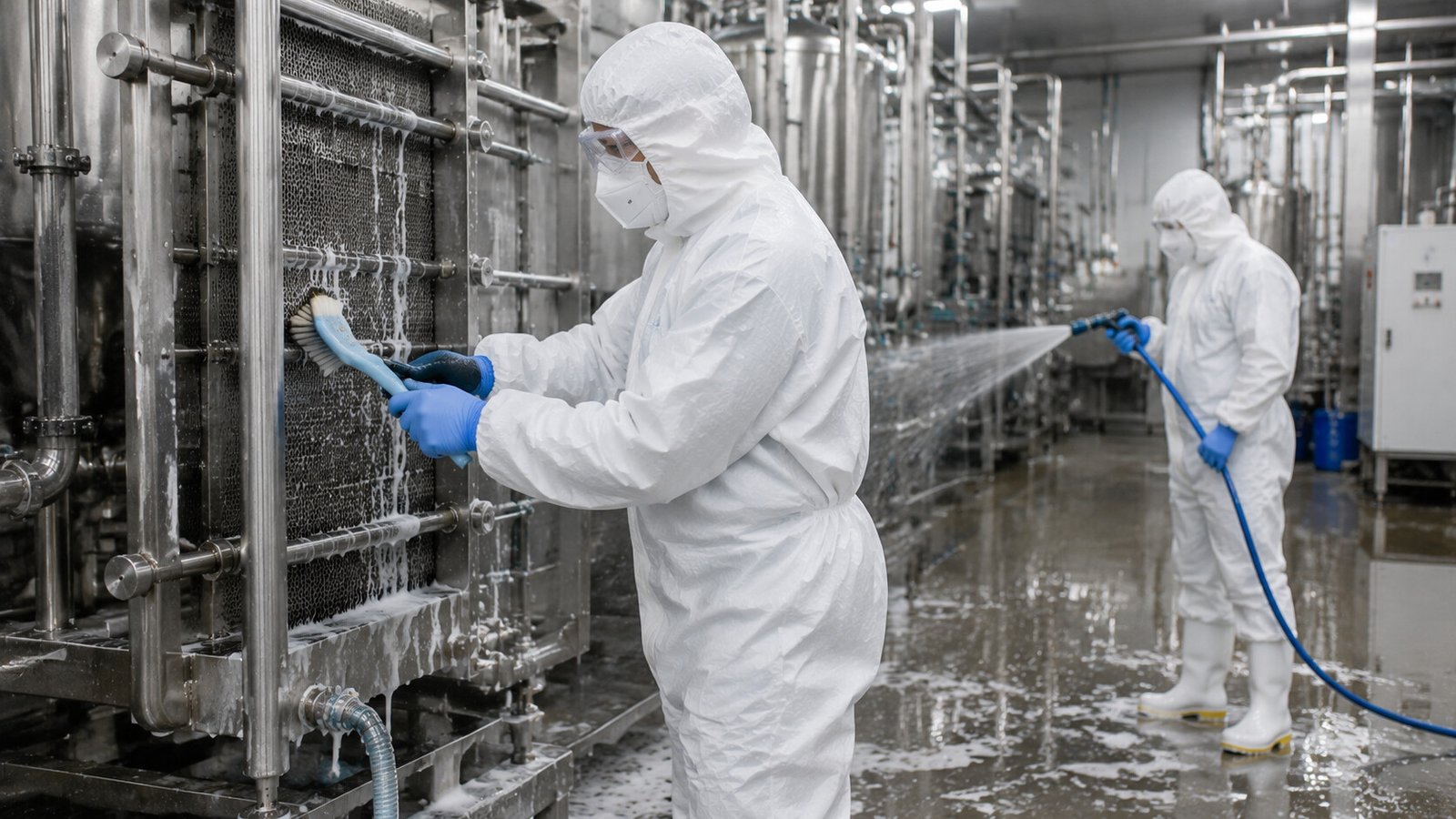
Common Applications
Equipment Cleaning
Used during:
- Machine cleaning
- Production line maintenance
- Equipment decontamination
Chemical Plant Maintenance
Applications include:
- Tank cleaning
- Pipeline maintenance
- Chemical residue removal
Manufacturing Facility Cleaning
Used for:
- Factory floor cleaning
- Production area sanitation
- Industrial maintenance
High-Humidity Washdown Operations
Suitable for environments involving:
- Water spray
- Cleaning chemicals
- Frequent washing procedures
Choosing the Right Protection Level
Type 4 Protective Coveralls
Type 4 coveralls are designed for protection against liquid spray exposure.
They are commonly used for:
- Chemical washing
- Industrial cleaning
- Disinfection procedures
- Maintenance operations
Explore:
Type 3 Protective Coveralls
Type 3 coveralls provide a higher level of protection against pressurized liquid chemicals.
Suitable for:
- Chemical leaks
- Hazardous liquid handling
- Emergency response situations
Explore:
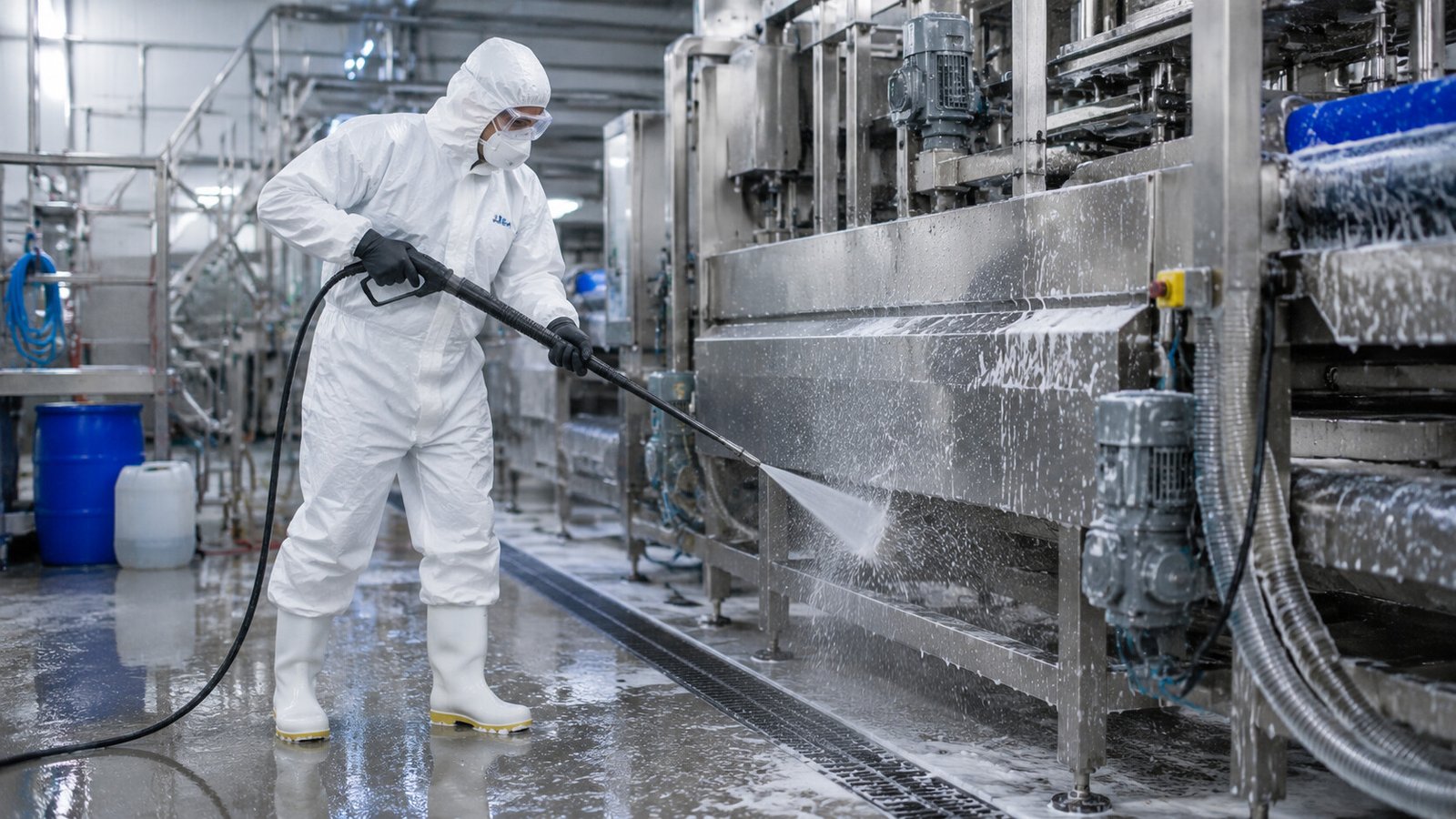
Material Selection for Industrial Cleaning
Microporous Coveralls
Microporous coveralls are widely used for general industrial cleaning because they provide:
- Lightweight comfort
- Particle protection
- Liquid resistance
- Disposable convenience
Learn more:
Microporous protective coveralls
Chemical Protective Multi-layer Materials
For higher-risk environments, buyers should evaluate:
- Chemical compatibility
- Barrier performance
- Seam construction
- Exposure duration
Material selection should always match the actual cleaning chemicals used.
Important Features for Cleaning Coveralls
Liquid-resistant Fabric
Cleaning operations often involve direct exposure to water-based solutions and chemical sprays.
Reinforced Seams
Seams are important because liquid penetration may occur through weak construction points.
Hooded Design
A hood helps protect:
- Hair
- Head
- Neck
Elastic Closures
Elastic wrists and ankles improve compatibility with:
- Chemical gloves
- Safety boots
- Other PPE
Covered Zipper
A zipper flap provides additional protection during liquid spray exposure.
Additional PPE for Industrial Cleaning
Disposable coveralls should be combined with:
- Chemical-resistant gloves
- Safety goggles
- Face shields
- Respiratory protection
- Chemical-resistant boots
A complete PPE system provides better protection than relying on coveralls alone.
Disposable Coveralls vs Reusable Cleaning Suits
Disposable coveralls are often preferred when companies require:
Easy Contamination Control
Used garments can be discarded after cleaning tasks.
Reduced Laundry Management
No washing, repair, or redistribution process.
Faster Worker Replacement
Employees can quickly change contaminated PPE.
For a broader comparison:
Disposable vs reusable protective coveralls
How to Select an Industrial Cleaning Coverall Supplier
Before purchasing, buyers should evaluate:
Product Certification
Check:
- Applicable standards
- Test documentation
- Quality control process
View:
CE certified protective coveralls
Manufacturing Capability
A professional supplier should provide:
- Stable production capacity
- Quality inspection
- OEM support
Learn more:
Disposable coverall manufacturer
Custom Solutions
Large buyers may require:
- Customized packaging
- Logo printing
- Special sizing
- Private labeling
Explore:
Industrial Cleaning Coverall Selection Checklist
Before purchasing, consider:
- Type of cleaning chemical
- Spray pressure level
- Exposure frequency
- Required protection type
- Seam construction
- Worker comfort
- Certification requirements
- Supplier capability
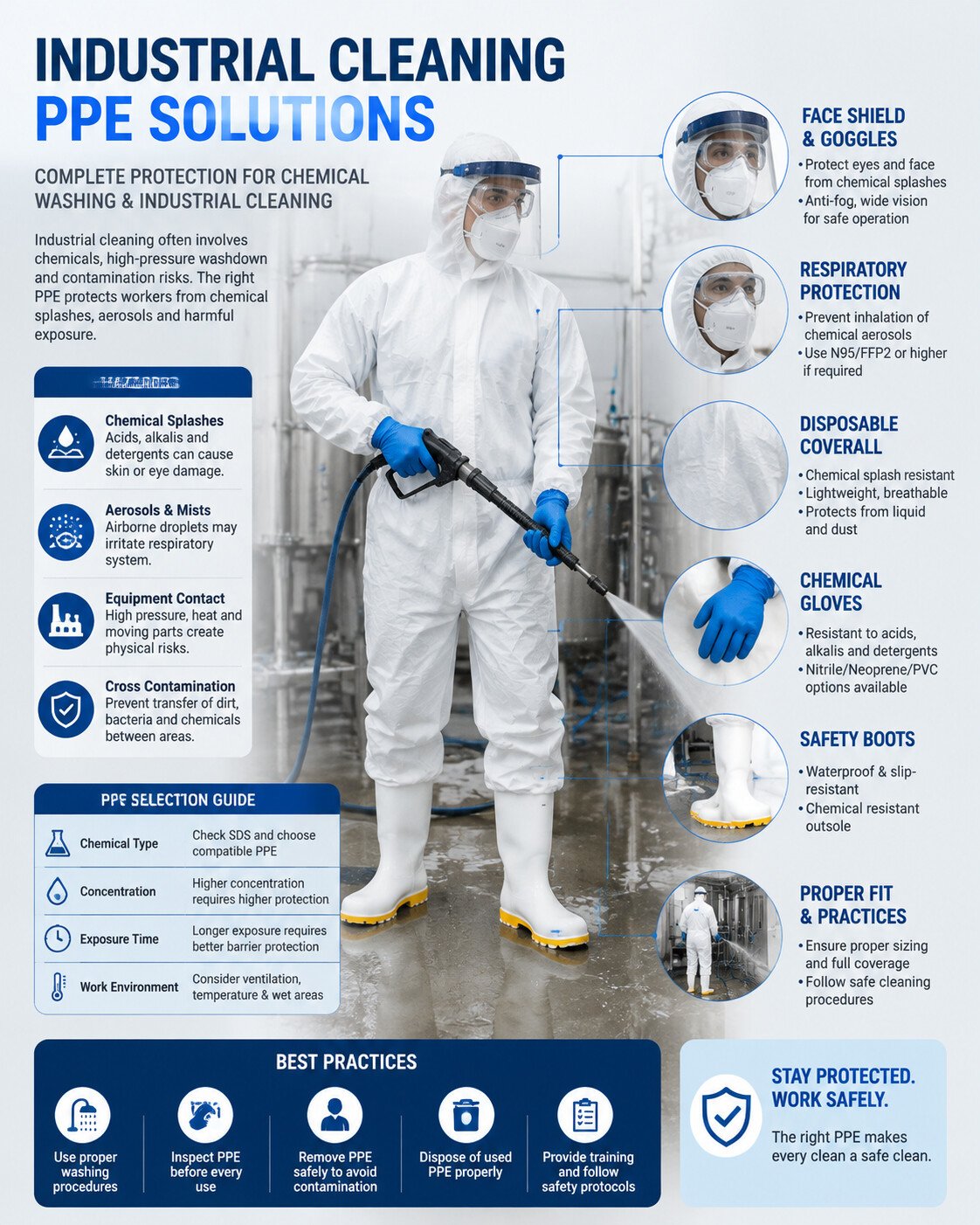
Industrial cleaning environments require protective clothing that can handle chemical exposure, liquid spray, and contamination risks.
Selecting the correct disposable coverall depends on the cleaning process and exposure level. Type 4 protective coveralls are commonly used for liquid spray applications, while Type 3 coveralls provide enhanced protection for higher-risk chemical exposure.
Working with an experienced protective coverall manufacturer allows companies to obtain reliable products, technical support, and customized PPE solutions.
FAQ
Are disposable coveralls suitable for industrial cleaning?
Yes. Disposable coveralls are commonly used for industrial cleaning because they help reduce contamination and simplify PPE management.
What type of coverall is used for chemical washing?
Type 4 coveralls are commonly selected for chemical washing and liquid spray environments. Higher-risk applications may require Type 3 protection.
Can microporous coveralls be used for cleaning?
Microporous coveralls can be suitable for many industrial cleaning tasks, but chemical compatibility should always be confirmed.
Why use disposable coveralls instead of work clothes?
Disposable coveralls reduce contamination transfer and eliminate the need for laundering after exposure.