
Handling acids requires careful selection of protective clothing because workers may encounter liquid splashes, leaks, spray, or contaminated surfaces.
Applications can include:
- Chemical manufacturing
- Laboratory operations
- Industrial maintenance
- Chemical transfer
- Battery manufacturing
- Metal treatment
- Equipment cleaning
The right coverall depends on the acid involved, its concentration, temperature, exposure method, and expected duration of contact.
For higher-risk liquid chemical applications, buyers can evaluate our Type 3 chemical protective coveralls and Type 4 protective coveralls.
Why Acid Handling Requires Specialized Protective Clothing
Acids can create serious chemical exposure hazards through:
- Liquid splashes
- Pressurized leaks
- Chemical spray
- Contaminated equipment
- Accidental spills
- Residual chemicals on work surfaces
Ordinary workwear may not provide an appropriate chemical barrier.
Chemical protective coveralls can form an additional protective layer between the worker and the chemical environment.
However, no single disposable coverall should be assumed to protect against every acid.
Chemical compatibility must always be verified against the specific substance and exposure conditions.
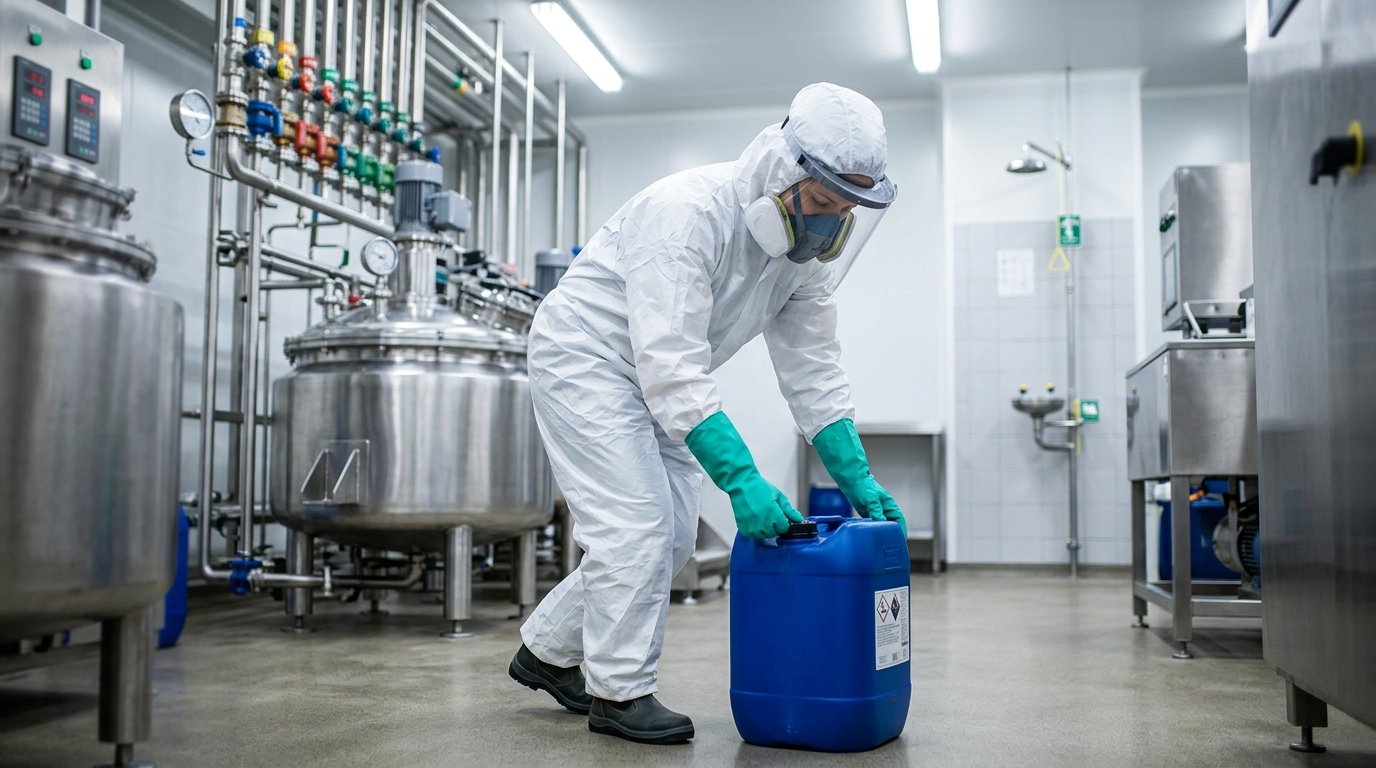
Where Are Acid Protective Coveralls Used?
Chemical Manufacturing
Workers may handle acids during:
- Chemical production
- Mixing
- Filling
- Transfer
- Equipment maintenance
Metal Treatment and Surface Processing
Acid solutions may be used for:
- Surface preparation
- Pickling
- Cleaning
- Treatment processes
Workers can encounter splashes during handling and maintenance operations.
Battery Manufacturing
Certain battery production processes involve corrosive chemicals.
Protective clothing may be required during:
- Chemical handling
- Maintenance
- Cleaning
- Waste management
The exact PPE requirements depend on the battery chemistry and process.
Industrial Maintenance
Maintenance personnel may work around equipment containing residual chemicals.
Coveralls can help reduce contamination of underlying clothing during inspection and maintenance.
Chemical Cleaning
Acid-based cleaning products may be used to remove deposits or contamination from industrial equipment.
Where spray or liquid exposure is possible, the appropriate chemical protective garment should be selected based on the actual hazard.
What Type of Coverall Is Best for Acid Handling?
There is no universal answer.
The correct garment depends on the exposure scenario.
Type 3 Chemical Protective Coveralls
Type 3 protective clothing is designed for protection against pressurized liquid chemicals.
This makes it relevant to higher-risk acid handling situations where pressurized liquid exposure is possible.
Explore our Type 3 protective coveralls.
Type 4 Chemical Protective Coveralls
Type 4 protective clothing is designed for protection against liquid spray.
It may be appropriate for certain acid spraying, cleaning, and maintenance operations when the garment’s chemical compatibility and certification match the application.
Explore our Type 4 protective coveralls.
Type 3 vs Type 4 for Acid Handling
The decision should be based on the exposure method rather than simply the name of the chemical.
| Exposure Scenario | Possible Protection Approach |
|---|---|
| Pressurized acid liquid | Type 3 |
| Acid spray | Type 4 |
| Routine low-pressure liquid exposure | Evaluate application-specific requirements |
| Unknown chemical exposure | Conduct a formal hazard assessment |
| High-risk chemical emergency | Follow site emergency PPE procedures |
The actual product selection should always be confirmed using the manufacturer’s technical documentation and the workplace risk assessment.
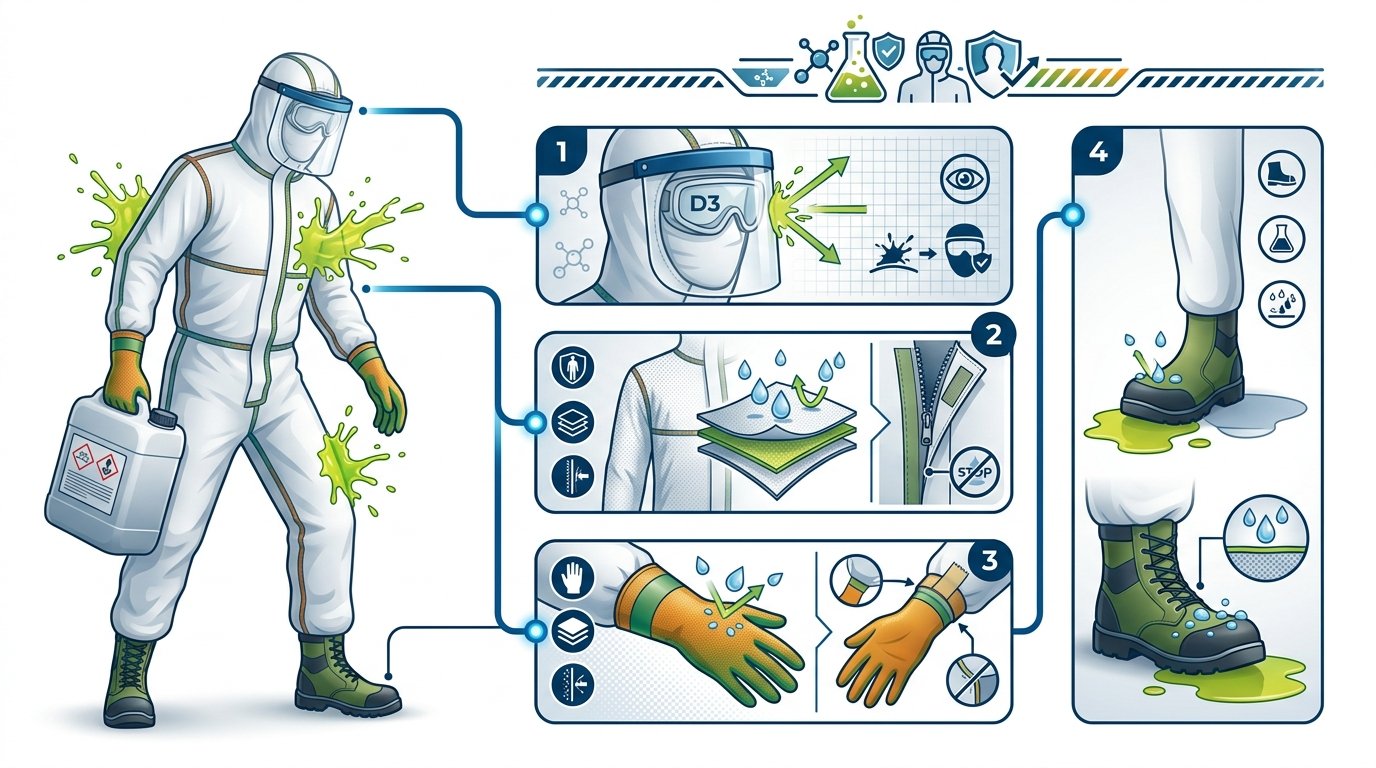
What Materials Are Used for Acid Protective Coveralls?
Material selection is particularly important when handling corrosive substances.
Microporous Protective Materials
Microporous laminate materials can provide a lightweight barrier against particles and certain liquid exposures.
Our microporous protective coveralls can be considered for suitable industrial applications.
However, a microporous material should not automatically be described as “acid resistant” without chemical compatibility data.
Chemical Compatibility Is Critical
When sourcing acid protective clothing, buyers should identify:
Chemical Name
For example:
- Hydrochloric acid
- Sulfuric acid
- Nitric acid
- Phosphoric acid
- Other process-specific acids
Concentration
A material’s performance can vary significantly with chemical concentration.
Temperature
Chemical behavior and material performance can change at elevated temperatures.
Exposure Duration
Short accidental splash exposure is different from prolonged contact.
Exposure Method
Determine whether workers face:
- Splash
- Spray
- Pressurized liquid
- Immersion
- Contaminated surfaces
These factors should be reviewed before choosing a protective garment.
Important Coverall Features for Acid Handling
Hood
An integrated hood helps protect the head and neck area and works as part of the overall protective system.
Covered Zipper
A zipper flap can provide an additional barrier over the front closure.
Elastic Wrist and Ankle Closures
These features help integrate the garment with gloves and protective boots.
Appropriate Seam Construction
Chemical exposure can occur through garment seams as well as the main fabric.
Buyers should review seam design and relevant test information rather than evaluating fabric alone.
What Other PPE Is Needed for Acid Handling?
Chemical protective coveralls are only one component of an acid handling PPE system.
Depending on the hazard assessment, workers may require:
- Chemical-resistant gloves
- Chemical-resistant boots
- Safety goggles
- Face shield
- Respiratory protection
- Appropriate head protection
- Emergency eyewash and shower access
The selected PPE should work together as a complete system.
For example, gloves should provide appropriate chemical protection and form a suitable interface with the coverall sleeves.
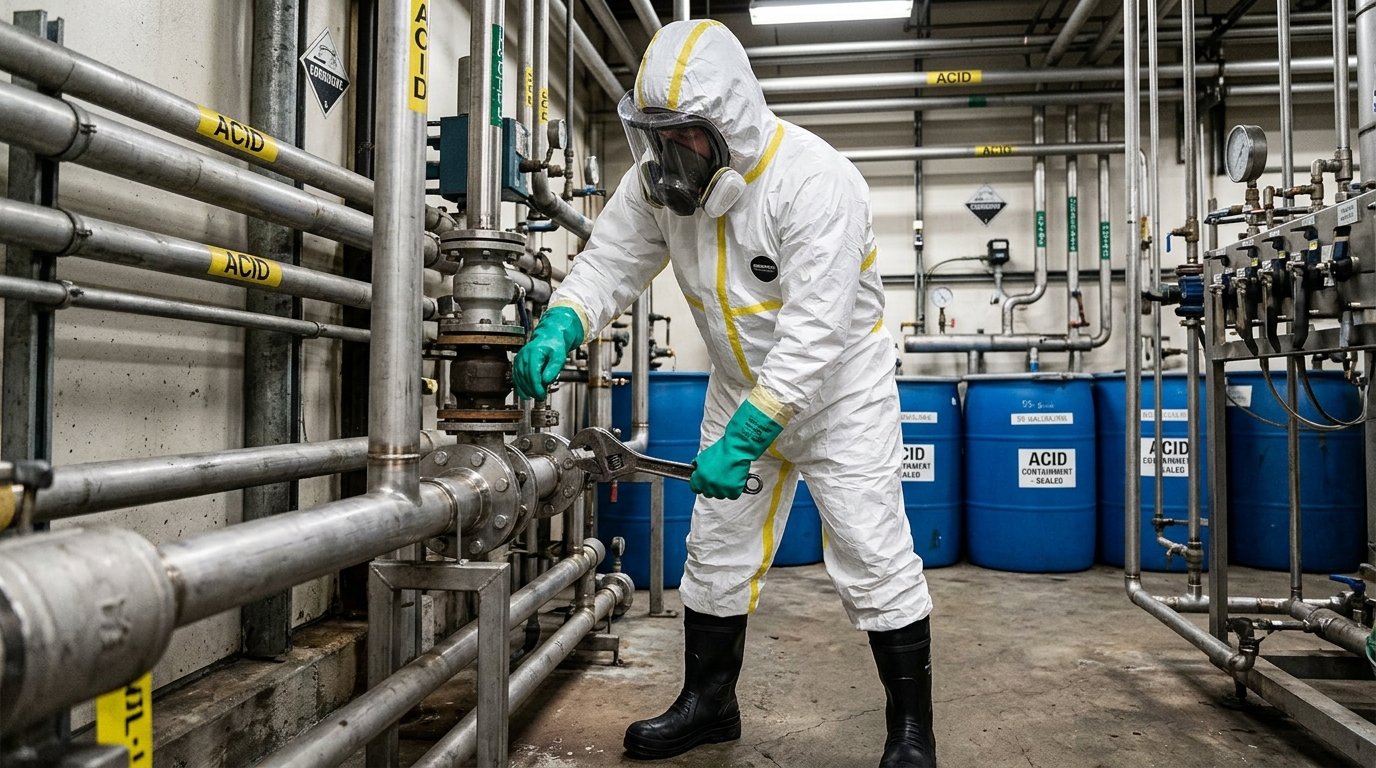
How to Choose Acid Protective Coveralls for Bulk Purchasing
For distributors, manufacturers, and industrial buyers, product selection should go beyond unit price.
1. Identify the Application
Explain exactly what workers will be doing.
For example:
Acid transfer during chemical production
is more useful than simply stating:
Chemical protection.
2. Provide Chemical Information
Give the supplier:
- Chemical name
- Concentration
- Temperature
- Exposure method
- Expected contact duration
This allows the supplier to recommend the appropriate garment specifications.
3. Check Certification
Request relevant:
- Certificates
- Test reports
- Technical datasheets
- Product specifications
Review our CE certified protective coveralls for certification information.
4. Evaluate Manufacturer Capability
For bulk orders, buyers should consider:
- Production capacity
- Quality control
- Product consistency
- Packaging
- Lead time
- OEM/ODM capability
Our disposable coverall manufacturer page provides information about our manufacturing capabilities.
OEM Acid Protective Coveralls
Large distributors and industrial buyers may require customized solutions such as:
- Private labeling
- Custom packaging
- Customized sizes
- Product specifications
- Bulk production
Our OEM/ODM protective coverall service can support customized purchasing requirements.
Acid Handling Coverall Purchasing Checklist
Before placing an order, buyers should confirm:
- Chemical name identified
- Chemical concentration identified
- Exposure method identified
- Exposure pressure evaluated
- Exposure duration evaluated
- Required protection type determined
- Chemical compatibility reviewed
- Certification documentation checked
- Seam and closure construction reviewed
- Glove and boot compatibility considered
- Supplier production capability evaluated
Common Mistakes When Buying Acid Protective Coveralls
Choosing Based Only on the Word “Chemical Resistant”
“Chemical resistant” is too broad to determine whether a garment is suitable for a particular acid.
Always identify the exact chemical and exposure conditions.
Choosing the Highest Type Automatically
A higher classification is not automatically the correct solution for every application.
The garment should match the actual hazard.
Ignoring Seams and Closures
The protective performance of a garment depends on its complete construction.
Focusing Only on Unit Price
For B2B buyers, consistency, certification, testing, production capacity, and delivery reliability can be just as important as unit cost.
Choosing chemical protective coveralls for acid handling requires more than selecting a garment labeled “chemical resistant.”
Buyers should consider the specific acid, concentration, temperature, exposure method, pressure, duration, garment construction, chemical compatibility, and applicable certification.
For pressurized liquid chemical exposure, Type 3 protective coveralls may be appropriate. For liquid spray exposure, Type 4 protective coveralls may be considered when the product’s specifications support the intended application.
If you are sourcing acid handling coveralls in bulk, provide your chemical and application details to an experienced protective coverall manufacturer so the appropriate product specifications can be evaluated.
FAQ
What coveralls are best for acid handling?
The appropriate coverall depends on the acid, concentration, exposure method, pressure, temperature, and duration. Type 3 or Type 4 protection may be considered for different liquid exposure scenarios.
Are disposable coveralls acid resistant?
Some disposable chemical protective coveralls may provide protection against specific acids, but performance must be verified against the exact chemical and concentration.
Can Type 4 coveralls be used for acid spray?
They may be suitable for certain acid spray applications when the garment is certified and chemically compatible with the specific substance.
When should Type 3 coveralls be used?
Type 3 protective clothing is designed for pressurized liquid chemical exposure and may be considered for higher-risk liquid acid handling applications.
Are microporous coveralls suitable for acids?
Microporous materials can be suitable for certain applications, but they should not automatically be assumed to protect against all acids. Always verify chemical compatibility data.

