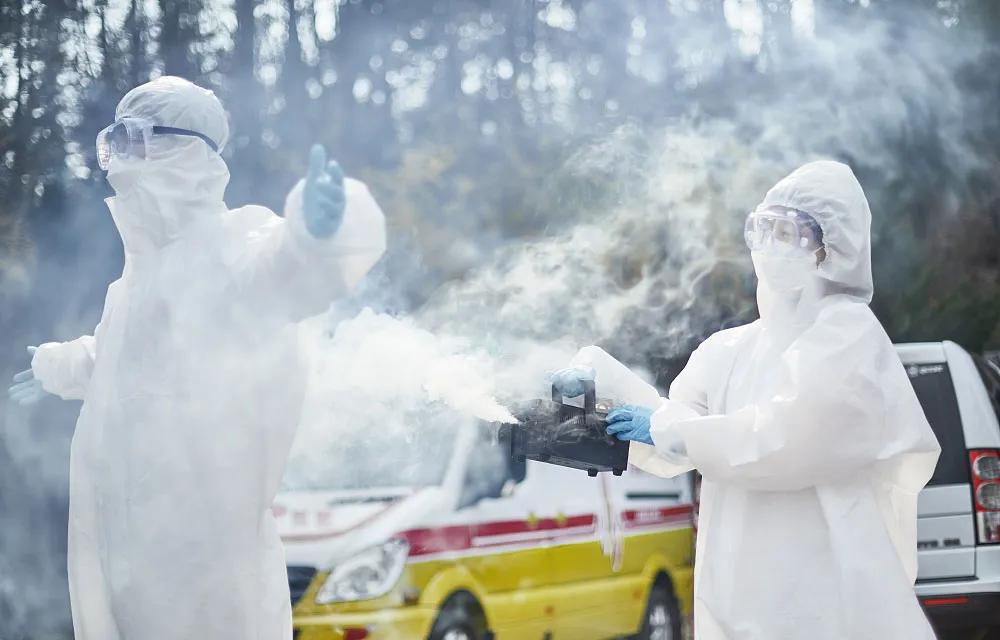
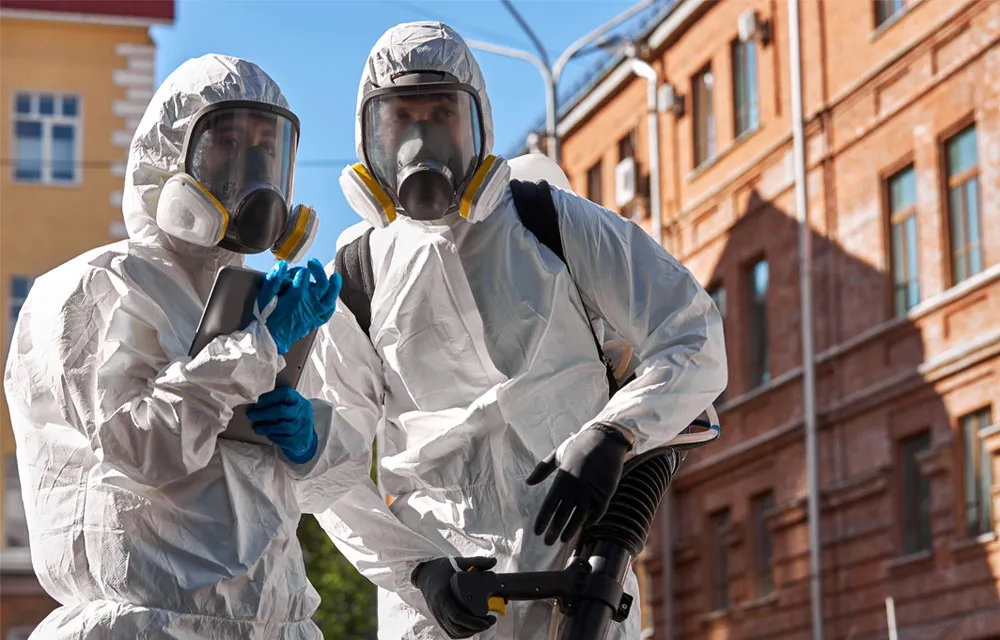
Solvents are widely used in chemical manufacturing, industrial cleaning, coatings, printing, electronics, automotive maintenance, and laboratory operations.
Workers handling solvents may encounter:
- Liquid splashes
- Chemical spray
- Contaminated surfaces
- Spills and leaks
- Solvent vapors
- Residual chemicals during equipment maintenance
Because different solvents can interact very differently with protective materials, choosing a suitable coverall requires more than simply looking for a product described as “chemical resistant.”
The correct solution depends on the specific solvent, concentration, temperature, exposure method, and expected duration of contact.
For higher-risk liquid chemical applications, buyers can evaluate Type 3 chemical protective coveralls and Type 4 protective coveralls according to the actual exposure scenario.
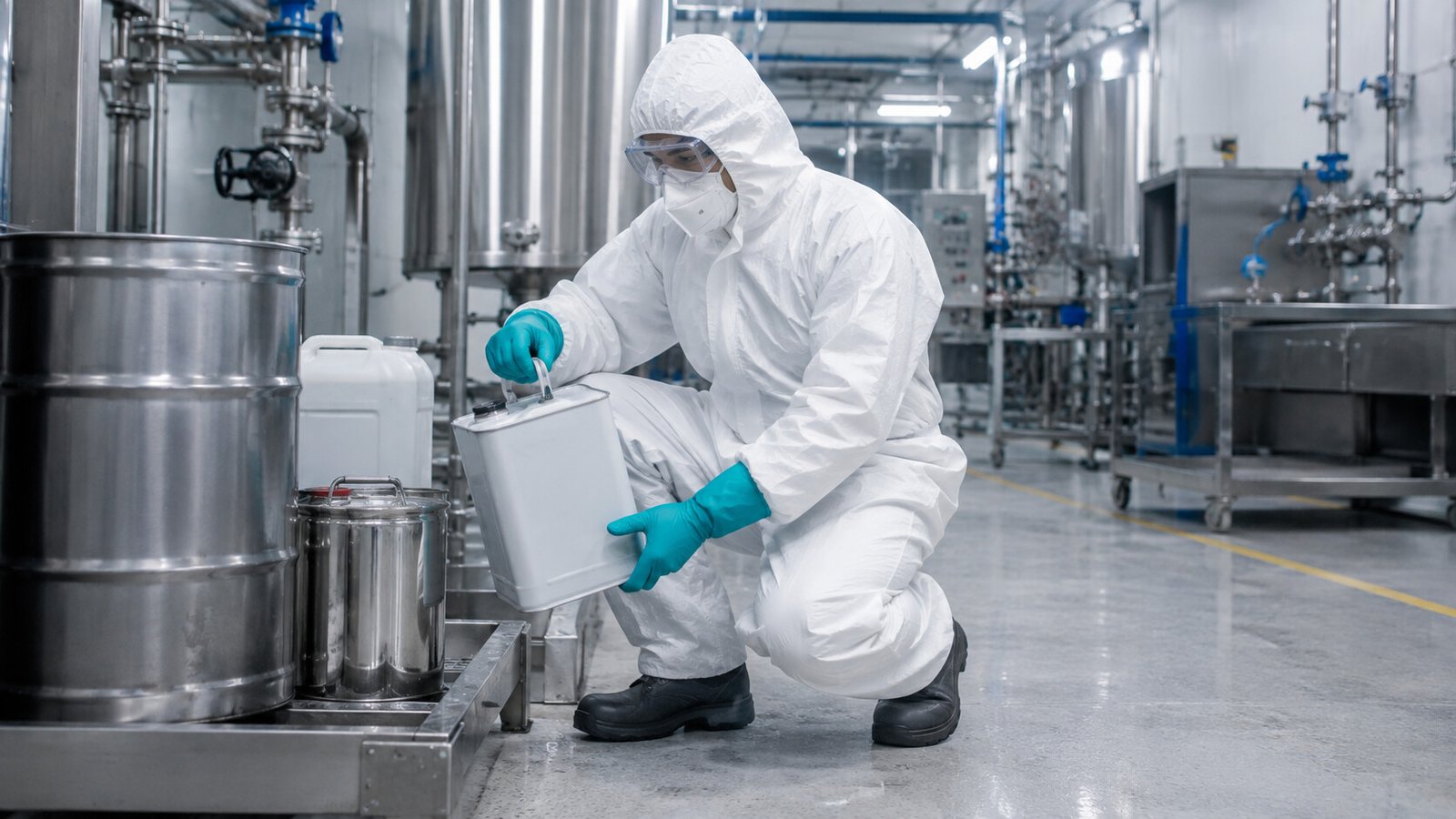
Why Solvent Handling Requires Specialized Coveralls
Solvents can present different hazards depending on their chemical properties.
Workers may be exposed while:
- Pouring solvents
- Transferring containers
- Mixing formulations
- Cleaning equipment
- Removing contaminated parts
- Handling solvent-soaked materials
A disposable protective coverall can help reduce direct contamination of the worker’s underlying clothing.
However, the garment should be selected based on the actual solvent and exposure conditions rather than relying only on a generic PPE category.
Common Industries That Use Solvents
Chemical Manufacturing
Solvents may be used during formulation, processing, cleaning, and material transfer.
Paint and Coating Production
Solvent-based coatings can require protective clothing during mixing, filling, and equipment cleaning.
Automotive Maintenance
Workers may encounter solvents while cleaning components, removing residues, or maintaining equipment.
Printing and Industrial Coatings
Solvent-based inks and coatings can create splash and contamination risks.
Electronics Manufacturing
Certain production and cleaning processes use solvents to remove contaminants or residues.
Laboratory Applications
Laboratory personnel may handle solvents during testing, research, sample preparation, and cleaning.
What Type of Coverall Should Be Used for Solvent Handling?
There is no single coverall that is automatically suitable for every solvent.
The first step is identifying the exposure method.
Type 3 Chemical Protective Coveralls
Type 3 protective clothing is designed for protection against pressurized liquid chemicals.
It may be relevant where solvent handling involves higher-risk liquid exposure or pressurized chemical release.
View our Type 3 protective coveralls
Type 4 Chemical Protective Coveralls
Type 4 protective clothing is designed for protection against liquid spray.
It may be appropriate for certain solvent spraying, cleaning, or maintenance applications when the garment’s specifications support the intended chemical exposure.
View our Type 4 protective coveralls.
How to Select Solvent Protective Coveralls
1. Identify the Exact Solvent
Do not evaluate PPE using the word “solvent” alone.
Identify the exact chemical, such as:
- Acetone
- Isopropyl alcohol
- Ethyl acetate
- Toluene
- Xylene
- Other process-specific solvents
Different chemicals can have very different effects on protective materials.
2. Check Concentration
Chemical compatibility can vary with concentration.
A garment suitable for a diluted solution may not provide the same performance against a concentrated chemical.
3. Evaluate Exposure Method
Determine whether workers may encounter:
- Accidental splash
- Continuous spray
- Pressurized liquid
- Spills
- Contaminated surfaces
- Prolonged contact
This information helps determine the appropriate protection level.
4. Consider Exposure Duration
Short incidental contact and prolonged exposure are very different scenarios.
The longer the expected exposure, the more important chemical compatibility and penetration data become.
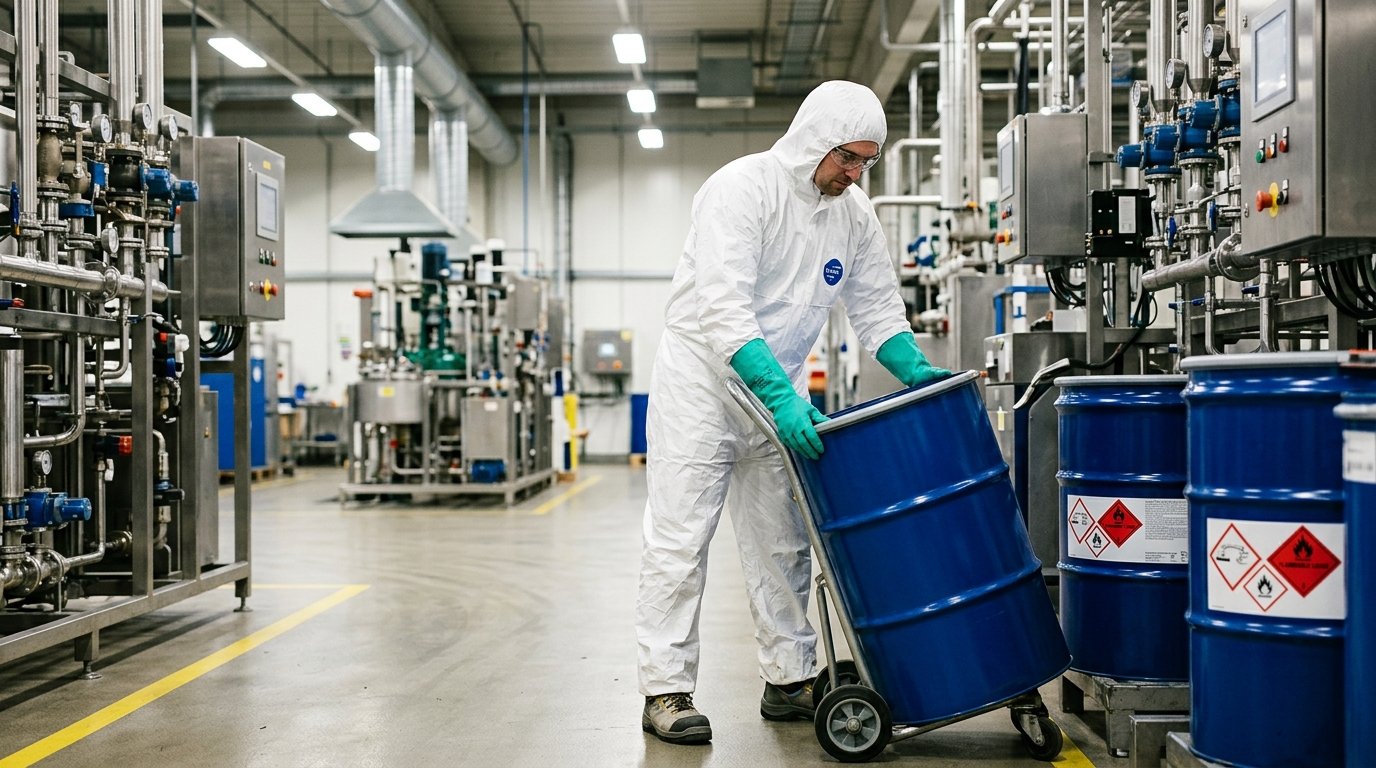
Are Microporous Coveralls Suitable for Solvent Handling?
Microporous laminate materials are widely used in disposable protective clothing because they can provide lightweight protection against particles and certain liquid exposures.
Our microporous protective coveralls can be considered for suitable industrial applications.
However, buyers should not assume that a microporous coverall is resistant to every solvent.
For solvent applications, always check the garment’s chemical compatibility information against the specific substance.
Important Features of Solvent Protective Coveralls
Hooded Construction
An integrated hood can help protect the head and neck area and reduce exposed clothing around the upper body.
Covered Zipper
A protective zipper flap can provide an additional barrier over the front closure.
Elastic Wrist Closures
Elastic cuffs help create a better interface with protective gloves.
Elastic Ankle Closures
Ankle closures can improve compatibility with chemical-resistant boots.
Appropriate Seam Construction
The garment’s seams are important because chemical penetration can occur through weak construction points.
For higher-risk applications, buyers should request relevant technical and test documentation.
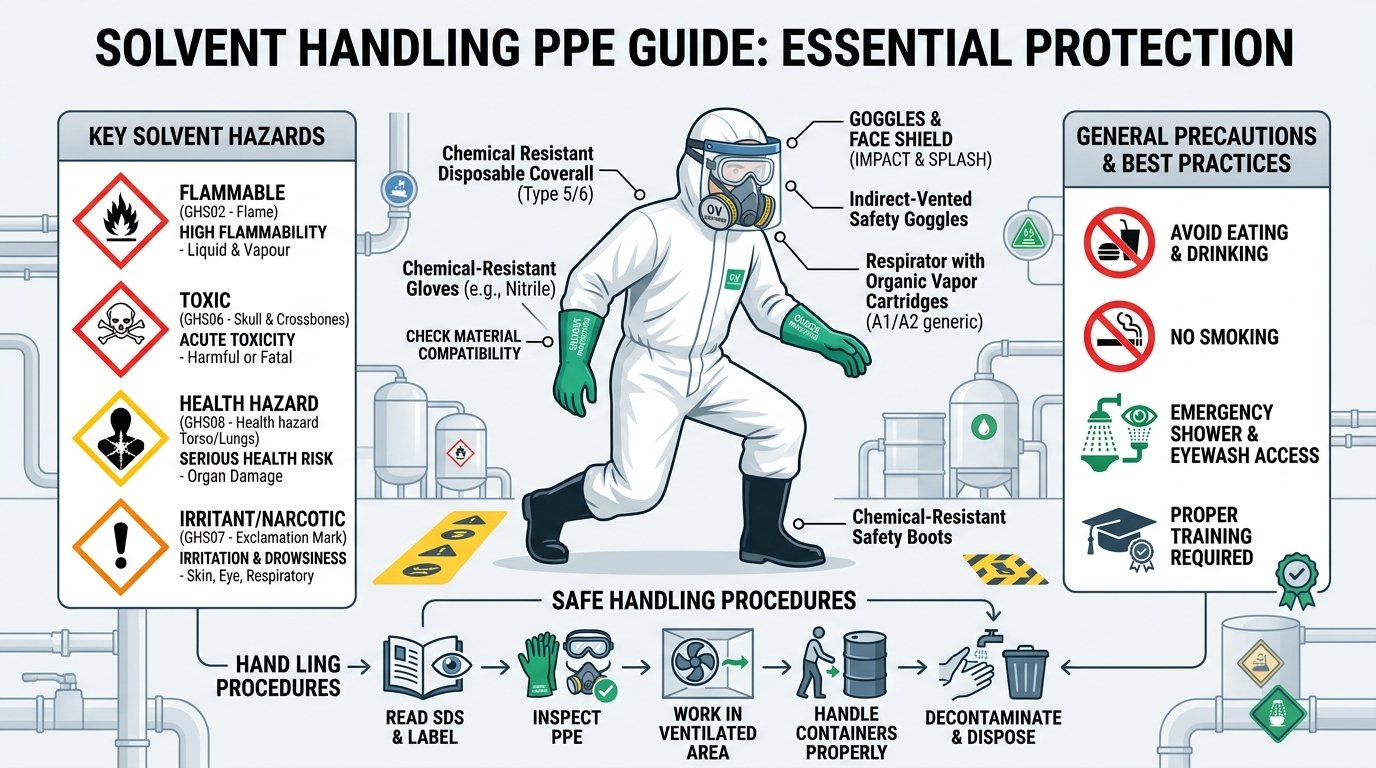
Solvent Handling PPE: What Else Is Required?
Protective coveralls are only one component of a complete PPE system.
Depending on the workplace risk assessment, workers may also require:
- Chemical-resistant gloves
- Chemical-resistant boots
- Safety goggles
- Face shields
- Respiratory protection
- Appropriate head protection
Solvent exposure may also involve inhalation or flammability hazards, so garment selection should be integrated into the facility’s broader safety procedures.
Disposable vs Reusable Solvent Protective Clothing
Disposable coveralls can be useful when contamination is frequent or when garments need to be changed quickly.
Advantages may include:
- Simple garment replacement
- Reduced laundering requirements
- Easier contamination management
- Consistent garment condition
- Convenient bulk storage
Reusable chemical suits may be preferred for certain heavy-duty or repeated applications.
The decision should be based on the hazard assessment, chemical compatibility, exposure frequency, and operating requirements.
For a broader comparison, see disposable vs reusable protective coveralls.
Solvent Handling in Painting and Coating Operation
Solvents are commonly associated with paint and coating processes.
Workers may encounter solvent exposure during:
- Paint mixing
- Coating application
- Equipment cleaning
- Spray gun maintenance
- Spill cleanup
Disposable coveralls can help prevent paint and solvent contamination from reaching underlying clothing.
For general painting applications, our microporous protective coveralls can be evaluated alongside the specific chemical requirements.
The garment should still be checked for compatibility with the actual solvents being used.
Solvent Handling in Industrial Cleaning
Solvent-based cleaning can involve direct liquid exposure and contaminated equipment surfaces.
Common tasks include:
- Degreasing
- Parts cleaning
- Equipment maintenance
- Residue removal
Where liquid spray is involved, buyers can evaluate Type 4 protective coveralls according to the chemical and exposure conditions.
For a broader application guide, see Best Coveralls for Industrial Cleaning.
How to Verify Solvent Compatibility
Before placing a bulk order, ask the supplier for relevant information.
Important documentation may include:
- Product technical datasheet
- Chemical compatibility information
- Test reports
- Certification documents
- Garment specifications
Do not rely solely on marketing descriptions such as “chemical resistant” or “solvent resistant.”
The actual solvent and exposure conditions should be evaluated.
Our CE certified protective coveralls page provides additional information about certification.
Buying Solvent Protective Coveralls in Bulk
For distributors and industrial buyers, procurement should consider more than the unit price.
Important factors include:
Product Consistency
Bulk orders should maintain consistent material and garment specifications.
Production Capacity
The manufacturer should be able to support the required order volume.
Packaging
Custom packaging may be important for distributors and private-label buyers.
Customization
Buyers may require:
- Custom sizes
- Packaging
- Logos
- Private labels
Our OEM/ODM protective coverall service can support customized requirements.
Supplier Experience
An experienced disposable coverall manufacturer can help buyers evaluate product specifications and production requirements.
Solvent Handling Coverall Checklist
Before purchasing, confirm:
- Exact solvent identified
- Concentration identified
- Exposure method identified
- Exposure duration evaluated
- Chemical compatibility reviewed
- Required protection level determined
- Seam construction reviewed
- Certification documents checked
- Additional PPE identified
- Supplier production capability evaluated
- OEM requirements confirmed if necessary
Common Mistakes When Buying Solvent Coveralls
Assuming All Chemical Coveralls Protect Against All Solvents
Chemical compatibility varies between materials and chemicals.
Choosing Based Only on Coverall Type
Type 3 or Type 4 describes a protection category, but it does not mean the garment is compatible with every solvent.
Ignoring Vapor Hazards
Coveralls primarily address skin and clothing exposure. Solvent vapor may require separate respiratory and ventilation controls.
Choosing Only by Price
A low-cost garment is not a suitable solution if it does not meet the application’s chemical and protection requirements.
The best disposable coveralls for solvent handling depend on the specific solvent, concentration, exposure method, pressure, duration, and required protection level.
Type 3 protective coveralls may be considered for pressurized liquid chemical exposure, while Type 4 coveralls may be suitable for certain liquid spray applications.
Microporous coveralls can provide practical protection for selected industrial applications, but chemical compatibility must always be confirmed before use with a specific solvent.
For bulk purchasing, distributors and industrial users should request technical documentation and work with an experienced protective coverall manufacturer to evaluate the appropriate product for their application.
FAQ
What are the best coveralls for solvent handling?
The best coverall depends on the specific solvent and exposure conditions. Buyers should evaluate chemical compatibility, exposure method, protection level, and garment certification.
Are microporous coveralls resistant to solvents?
Some microporous materials may be suitable for certain solvent applications, but they should not be considered universally solvent resistant. Always verify compatibility with the specific solvent.
Can Type 4 coveralls be used with solvents?
They may be suitable for certain liquid spray applications when the garment is compatible with the specific solvent and meets the required protection standards.
Are disposable coveralls suitable for paint and solvent work?
They can be useful for many painting and coating applications because they help prevent contamination of underlying clothing. Chemical compatibility should still be checked.
What PPE should be worn when handling solvents?
Depending on the hazard assessment, workers may need chemical protective coveralls, chemical-resistant gloves, eye and face protection, suitable footwear, and respiratory protection.