
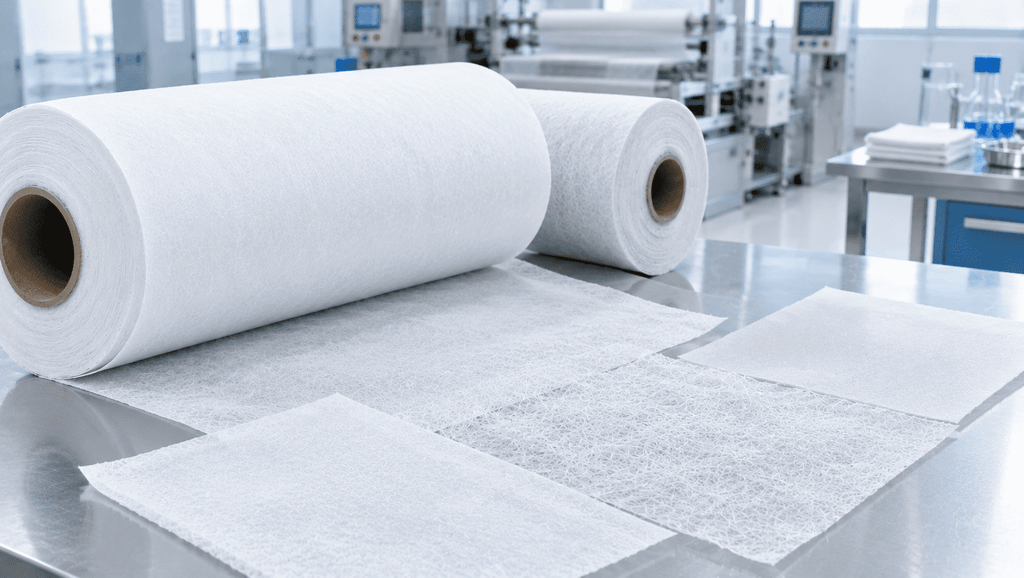
Choosing nonwoven filter media requires more than comparing material prices or selecting a fabric with a particular basis weight. The right material must match the intended filtration task, equipment requirements, operating conditions, and finished-product specifications.
Different nonwoven structures offer different combinations of fiber diameter, web uniformity, strength, permeability, and particle-capture performance. A material suitable for one filtration application may not be appropriate for another, even when both products are described as nonwoven filter media.
For procurement teams, product designers, and filtration manufacturers, understanding the relationship between GSM, fiber structure, filtration efficiency, and pressure drop can make supplier evaluation more effective.
This guide explains how to define your requirements, compare material options, and prepare a more useful request for quotation when sourcing nonwoven filter media in bulk.
1. Start With the Filtration Application
Before comparing materials, define what the filter needs to do. The intended application determines which properties matter most and which tests should be used for evaluation.
Air Filtration
Air filtration media are selected according to factors such as particle characteristics, airflow rate, filtration efficiency, pressure drop, and service conditions.
For disposable masks and respirators, material selection must be considered alongside the finished product’s design and applicable performance requirements. A filter layer’s standalone test result does not automatically establish that the finished product complies with a particular standard.
Meltblown polypropylene fabric is commonly used as a filtration layer in suitable products. Its actual performance depends on fiber structure, manufacturing controls, any electrostatic treatment, and test conditions.
Liquid Filtration
Liquid filtration applications may require control of particle retention, flow rate, pressure resistance, chemical compatibility, and operating temperature.
Air-filtration results should not be used as a substitute for liquid-filtration testing. Buyers should specify the liquid being filtered, the target contaminant or particle size, the operating conditions, and the required performance criteria.
Industrial and Specialized Filtration
Industrial filtration can involve dust collection, process filtration, oil absorption, and other application-specific functions. Each use case may impose different requirements for mechanical strength, temperature resistance, chemical compatibility, or service life.
Before requesting samples, describe the operating environment and the intended function of the filter. This helps suppliers determine whether a particular nonwoven construction is suitable for further evaluation.
2. Understand the Main Types of Nonwoven Filter Media
Nonwoven filter media are not a single uniform material category. Different manufacturing methods create different fiber structures and functional characteristics.
Meltblown Nonwoven Fabric
Meltblown fabric is typically produced by attenuating molten polymer into fine fibers that form a nonwoven web. Polypropylene is a common material for filtration applications.
Its fine fiber structure can support particle capture in suitable filter designs. Some grades use electret treatment to improve filtration performance, but treatment status and performance stability should be confirmed rather than assumed.
When evaluating meltblown filter media, buyers should review filtration efficiency, pressure drop, basis weight, roll dimensions, test methods, and the intended end use.
PP Spunbond Nonwoven Fabric
Spunbond fabric is produced by forming continuous filaments into a nonwoven web. It is commonly used where strength, structural support, and consistent web formation are important.
Spunbond is not automatically equivalent to fine-fiber filtration media. In some filter products, it may serve as a supporting or protective layer rather than the primary high-efficiency filtration layer.
Review PP spunbond nonwoven fabric when evaluating materials for support layers, prefiltration, or other suitable applications.
SMS Nonwoven Fabric
SMS combines spunbond, meltblown, and spunbond layers into a composite structure. It is widely used in selected disposable products where a combination of strength and functional barrier properties is required.
SMS should not be treated as a universal filter medium. Its suitability depends on the specific construction, intended use, and measured performance.
Explore SMS nonwoven fabric when comparing composite nonwoven options for applications that require more than one material function.
3. How GSM Affects Filter Media Selection
GSM means grams per square meter. It describes the mass of a material per unit area and is one of the most common parameters in nonwoven fabric specifications.
However, GSM alone cannot determine filtration efficiency, permeability, or pressure drop.
Two materials with the same basis weight may differ in fiber diameter, fiber distribution, web structure, porosity, treatment, and manufacturing consistency. Those differences can lead to different performance results.
What Buyers Should Confirm
When specifying GSM, clarify:
- Target basis weight and acceptable tolerance
- Whether the value is nominal or a contractual acceptance specification
- How basis weight is measured and sampled
- Whether the material must meet additional thickness or uniformity requirements
- Which performance tests will determine acceptance
For an existing product, sharing an approved sample or current technical specification can help the supplier understand the material target.
Avoid Selecting GSM in Isolation
Increasing basis weight may change material structure and performance, but the effect is not identical across all manufacturing processes.
Instead of asking only for a higher-GSM fabric, define the required outcome. For example, specify the desired filtration result, acceptable pressure drop, strength requirements, and test conditions. The supplier can then assess whether a particular construction is suitable.
4. Evaluate Filtration Efficiency and Pressure Drop Together
Filtration efficiency and pressure drop are two important parameters for many air filtration applications. They describe different aspects of filter performance and should be evaluated together.
Filtration Efficiency
Filtration efficiency indicates the proportion of particles captured under specified test conditions. Results may vary according to particle size, aerosol type, airflow, conditioning, and test method.
When comparing offers, verify that suppliers are reporting results under comparable conditions. A percentage without a named test method and supporting data may not provide enough information for a purchasing decision.
Pressure Drop
Pressure drop measures the resistance to airflow through a filter medium under defined conditions. Lower pressure drop may be desirable, but it should not be pursued at the expense of required filtration performance.
When requesting pressure-drop data, confirm the airflow rate, test area, measurement method, and other conditions needed to interpret the result.
Use a Defined Acceptance Range
Before ordering, establish measurable requirements for both parameters where relevant. If your product has regulatory or customer requirements, use the applicable test methods and acceptance criteria.
For materials used in respiratory protective products, distinguish clearly between raw-material test results and finished-product certification or performance claims.
5. Fiber Structure, Uniformity, and Material Consistency
GSM and headline performance values do not tell the whole story. Material structure and production consistency can affect how a filter performs during converting and use.
Fiber Diameter and Web Structure
Fiber diameter, fiber distribution, and the arrangement of the web influence the pathways through which air or liquid moves. Fine fibers can contribute to particle capture, but the final result also depends on web structure, treatment, and other design variables.
Buyers should avoid assuming that a visually finer material will always deliver better overall performance. Testing is needed to confirm the relationship between filtration efficiency and flow resistance.
Uniformity Across the Roll
Variation across a roll can cause difficulties during slitting, lamination, converting, or finished-product assembly.
Depending on the application, buyers may need to evaluate basis-weight uniformity, thickness consistency, visual defects, roll edges, and performance variation between samples.
Repeat-Order Consistency
For recurring production, the supplier should be able to maintain the approved specification across batches. Discuss inspection procedures, traceability, sample retention, and how changes to raw materials or manufacturing conditions are controlled.
A successful initial sample should be followed by a clear quality agreement for production orders.

6. Match the Material to the Finished Product Structure
Filter media are often used as part of a larger assembly. Their performance in isolation may not fully predict the behavior of the finished product.
For example, a mask or respirator may contain multiple nonwoven layers with different functions. A composite filtration product may also include support materials, bonding layers, or other components that influence airflow and structural integrity.
When evaluating a proposed material, confirm:
- The role of the material in the finished product
- Compatibility with adjacent layers and converting processes
- The performance of the assembled structure under the intended test method
- Any requirements for strength, handling, sealing, or dimensional stability
- The finished product’s applicable standards and acceptance criteria
Where several layers are involved, request technical information for the complete construction as well as individual material specifications.
7. How to Compare Nonwoven Filter Media Suppliers
A useful supplier comparison considers technical capability, production reliability, and commercial terms together.
Technical Documentation
Request a specification sheet that identifies the material type, composition, basis weight, dimensions, and relevant performance data.
Ask which test methods were used and whether the reports apply to the raw material, a treated material, or a finished product. Verify any compliance claims against the documentation for the specific product being offered.
Sample Evaluation
Ask for samples that represent the proposed production specification. Test them using consistent methods and agreed acceptance criteria.
Depending on the application, the evaluation may include filtration efficiency, pressure drop, air permeability, tensile properties, uniformity, or compatibility with the converting process.
Production and Quality Controls
Discuss how the supplier controls material variation, inspects rolls, manages nonconforming products, and maintains traceability between batches.
For long-term sourcing, confirm how approved specifications will be maintained and how proposed material changes will be communicated.
Customization and Commercial Requirements
Depending on available manufacturing capabilities, buyers may be able to specify basis weight, roll width, roll dimensions, packaging, and other agreed parameters.
Confirm minimum order quantity, sample availability, production lead time, order tolerances, packaging, and delivery terms before placing a bulk order.
If you are comparing several material categories or planning recurring purchases, our nonwoven fabric manufacturer and supplier information provides a starting point for discussing your sourcing requirements.
8. Prepare a Practical RFQ for Nonwoven Filter Media
A complete request for quotation helps suppliers determine whether they can meet your technical and commercial requirements.
Include the following information wherever possible:
| RFQ item | Information to provide |
|---|---|
| Application | Air filtration, liquid filtration, or another defined use |
| Material type | Meltblown, spunbond, SMS, or another specified construction |
| Basis weight | Target GSM and tolerance |
| Dimensions | Width, roll length, core size, and other relevant limits |
| Performance | Filtration target, pressure drop, permeability, or other required properties |
| Test methods | Applicable standards and test conditions |
| Quality requirements | Inspection criteria, traceability, and documentation |
| Quantity | Trial order and expected recurring demand |
| Customization | Packaging, labeling, and agreed material specifications |
| Delivery | Destination, required timing, and shipping terms |
If you do not have a complete specification yet, explain the end product, its operating conditions, and the performance targets you need to achieve. A supplier may be able to help identify suitable candidate materials for testing, but final selection should be based on verified performance.
9. Common Mistakes When Selecting Nonwoven Filter Media
Choosing based only on price. A lower unit price may not represent the best overall value if the material creates converting problems or fails the required performance tests.
Treating GSM as a performance guarantee. Basis weight is an important specification, but it does not independently establish filtration efficiency or pressure drop.
Comparing incompatible test results. Results obtained under different methods or conditions may not be directly comparable.
Ignoring the finished-product design. A material must work within the intended assembly, not just meet a standalone target.
Failing to define acceptance criteria. Vague specifications make it difficult to assess samples and resolve disputes over bulk orders.
Overlooking production consistency. Repeat orders require reliable quality controls, not just a good first sample.
10. Source Nonwoven Filter Media for Your Application
The most effective sourcing process starts with a clearly defined application and a measurable performance target. From there, buyers can compare suitable material structures, review technical data, test samples, and confirm production consistency before committing to a bulk order.
If you are sourcing filtration materials for disposable products or industrial applications, prepare your target GSM, dimensions, intended use, required performance, and estimated order quantity.
Explore our meltblown fabric, PP spunbond nonwoven fabric, and SMS nonwoven fabric options, or contact us through our nonwoven fabric manufacturer page to discuss your material sourcing requirements.
Frequently Asked Questions
Is higher-GSM nonwoven fabric always better for filtration?
No. GSM measures mass per unit area. Filtration performance also depends on fiber structure, web uniformity, treatment, and the test conditions used to evaluate the material.
Which nonwoven material is best for filtration?
There is no single best material for every application. Meltblown, spunbond, and SMS have different structures and typical functions. The appropriate choice depends on the filtration task, performance requirements, finished-product design, and verified test results.
What is the difference between meltblown and spunbond filter media?
Meltblown fabric is made from fine fibers and is commonly used as a filtration layer in suitable products. Spunbond fabric uses continuous filaments and is often selected for structural strength or supporting functions. Their suitability depends on the application and required performance.
What specifications should I request from a supplier?
At minimum, identify the material type, GSM, dimensions, intended application, relevant performance targets, test methods, quality documentation, order quantity, and delivery requirements.
Can nonwoven filter media be customized?
Customization depends on the supplier’s manufacturing capabilities. Options may include basis weight, width, roll dimensions, packaging, and other agreed specifications. Performance requirements should be validated through testing rather than inferred from customization alone.
Choosing nonwoven filter media is a technical and commercial decision. Buyers should start with the application, compare suitable material structures, evaluate GSM alongside filtration efficiency and pressure drop, and verify that the proposed material meets documented acceptance criteria.
A clear RFQ, a structured sample evaluation, and reliable supplier quality controls can help buyers make better sourcing decisions and establish more consistent long-term supply.

