
Lead-based paint remains a significant health concern in older residential, commercial, and industrial buildings. During renovation, demolition, or repainting projects, disturbing painted surfaces can release hazardous lead dust into the work environment.
Workers involved in lead paint removal require appropriate personal protective equipment (PPE) to minimize contamination and exposure. Disposable protective coveralls play a critical role by preventing lead particles from settling on clothing and spreading to clean areas.
This guide explains how to choose the best disposable coveralls for lead paint removal and why proper PPE is essential for worker safety.
For projects involving older buildings, many contractors also require protective coveralls for asbestos removal, since asbestos and lead hazards are often found together during renovation and demolition activities.
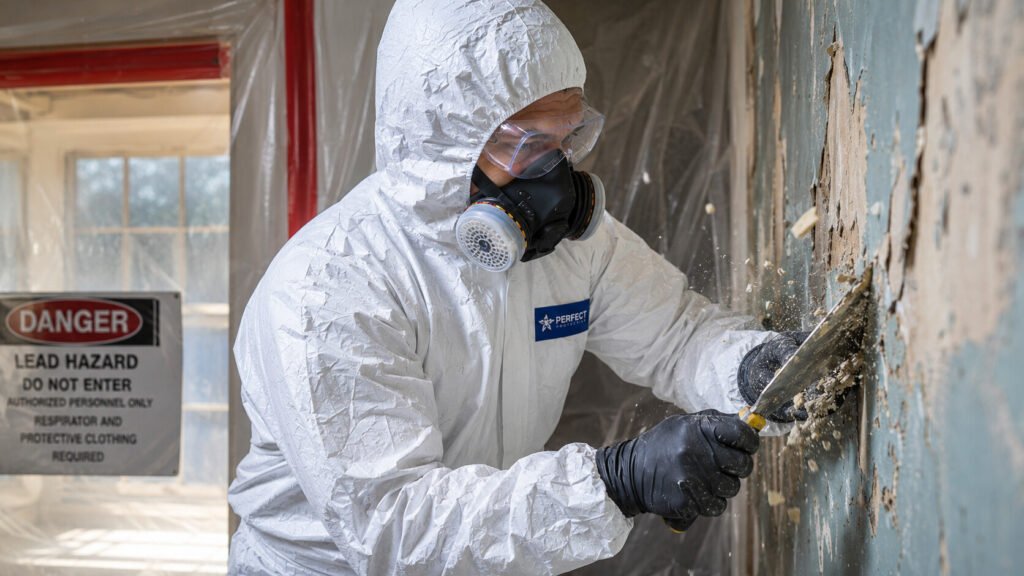
Why Lead Paint Removal Requires Protective Clothing
Many buildings constructed before modern regulations may contain lead-based coatings.
When workers perform:
- Sanding
- Scraping
- Grinding
- Demolition
- Surface preparation
lead-containing dust can become airborne.
Potential hazards include:
- Inhalation exposure
- Contaminated work clothing
- Cross-contamination of vehicles and homes
- Long-term occupational exposure
Disposable coveralls help create a barrier between workers and hazardous particles.
How Lead Dust Spreads During Renovation
Unlike visible debris, lead dust particles are extremely fine.
They can:
- Remain suspended in the air
- Accumulate on clothing
- Settle on tools and equipment
- Spread into adjacent work areas
Without disposable protective garments, workers may unintentionally transport contamination outside the work zone.
What Type of Coverall Is Recommended?
Type 5 Disposable Coveralls
Type 5 protective clothing is commonly used for dry particle hazards.
Benefits include:
- Fine particle protection
- Full-body coverage
- Lightweight construction
- Improved contamination control
For most lead dust applications, Type 5 garments are the preferred solution and are widely recognized as hazardous dust protective coveralls across construction and remediation industries.
Key Features to Look For
Hooded Design
A hood protects the head and neck from airborne dust accumulation.
Elastic Cuffs and Ankles
These help reduce particle entry points during active movement.
Covered Zipper
A storm flap improves front-body protection.
Low-Lint Fabric
Reduces particle shedding inside controlled work areas.
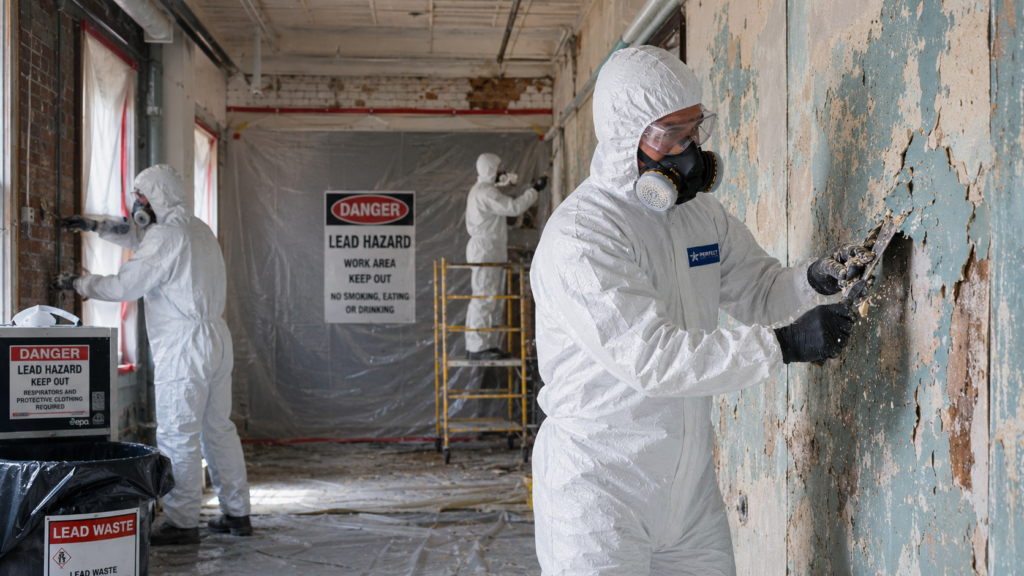
Best Materials for Lead Paint Removal Coveralls
Microporous Film Laminate
Advantages:
- Excellent particle barrier
- Lightweight
- Comfortable during extended use
- Suitable for hazardous dust environments
Recommended for:
- Lead abatement projects
- Renovation work
- Demolition preparation
Many high-performance disposable garments use microporous protective fabric technology to improve particle filtration while maintaining breathability.
SMS Nonwoven Fabric
Advantages:
- Breathable
- Cost-effective
- Suitable for lower-risk tasks
Often used for:
- General maintenance
- Light renovation work
Additional PPE Required for Lead Paint Removal
Protective coveralls should be part of a complete PPE system.
Respiratory Protection
Workers often wear:
- N95 respirators
- P100 respirators
- Half-mask respirators
depending on risk assessments and local regulations.
Gloves
Recommended options include:
- Nitrile gloves
- Chemical-resistant gloves
Eye Protection
Use:
- Safety goggles
- Sealed protective eyewear
to prevent dust exposure.
Industries That Commonly Require Lead Paint PPE
Building Renovation
Older residential and commercial properties.
Infrastructure Maintenance
Bridges, tunnels, and public facilities.
Industrial Plant Upgrades
Maintenance of legacy structures and equipment.
Demolition Projects
Removal of painted structural materials.
Why Disposable Coveralls Are Preferred
Compared with reusable workwear, disposable garments offer several advantages:
Reduced Cross-Contamination
Contaminated garments are discarded after use.
Lower Cleaning Costs
No laundering or decontamination process required.
Improved Compliance
Disposable PPE simplifies contamination control procedures.
Greater Convenience
Workers can quickly change into clean garments when necessary.
Proper Disposal Procedures
After completing lead paint removal tasks:
- Remove coveralls inside designated decontamination areas.
- Avoid shaking garments.
- Place used coveralls into approved waste bags.
- Follow local hazardous waste disposal requirements.
- Wash exposed skin thoroughly.
Proper disposal helps prevent secondary contamination.
Lead paint removal projects expose workers to hazardous dust that can spread easily through clothing and equipment. Disposable Type 5 protective coveralls provide an effective barrier against airborne particles while supporting safer contamination control practices.
When combined with respirators, gloves, and eye protection, disposable coveralls help create a comprehensive PPE solution for lead abatement and renovation professionals.
If you are sourcing PPE for renovation, demolition, or environmental remediation projects, partnering with an experienced disposable protective coverall manufacturer can help ensure product quality, certification compliance, and reliable supply.

