
Concrete grinding and cutting are common activities in construction, renovation, and infrastructure projects. While these operations are essential for shaping, repairing, and removing concrete structures, they also generate significant amounts of airborne dust.
One of the primary concerns is respirable crystalline silica, a fine dust particle that can remain suspended in the air and be inhaled by workers. Appropriate personal protective equipment (PPE), including disposable protective coveralls, plays an important role in reducing contamination and supporting safer work practices.
For projects involving structural removal, contractors often combine silica control measures with construction demolition protective coveralls to manage multiple dust hazards on site.
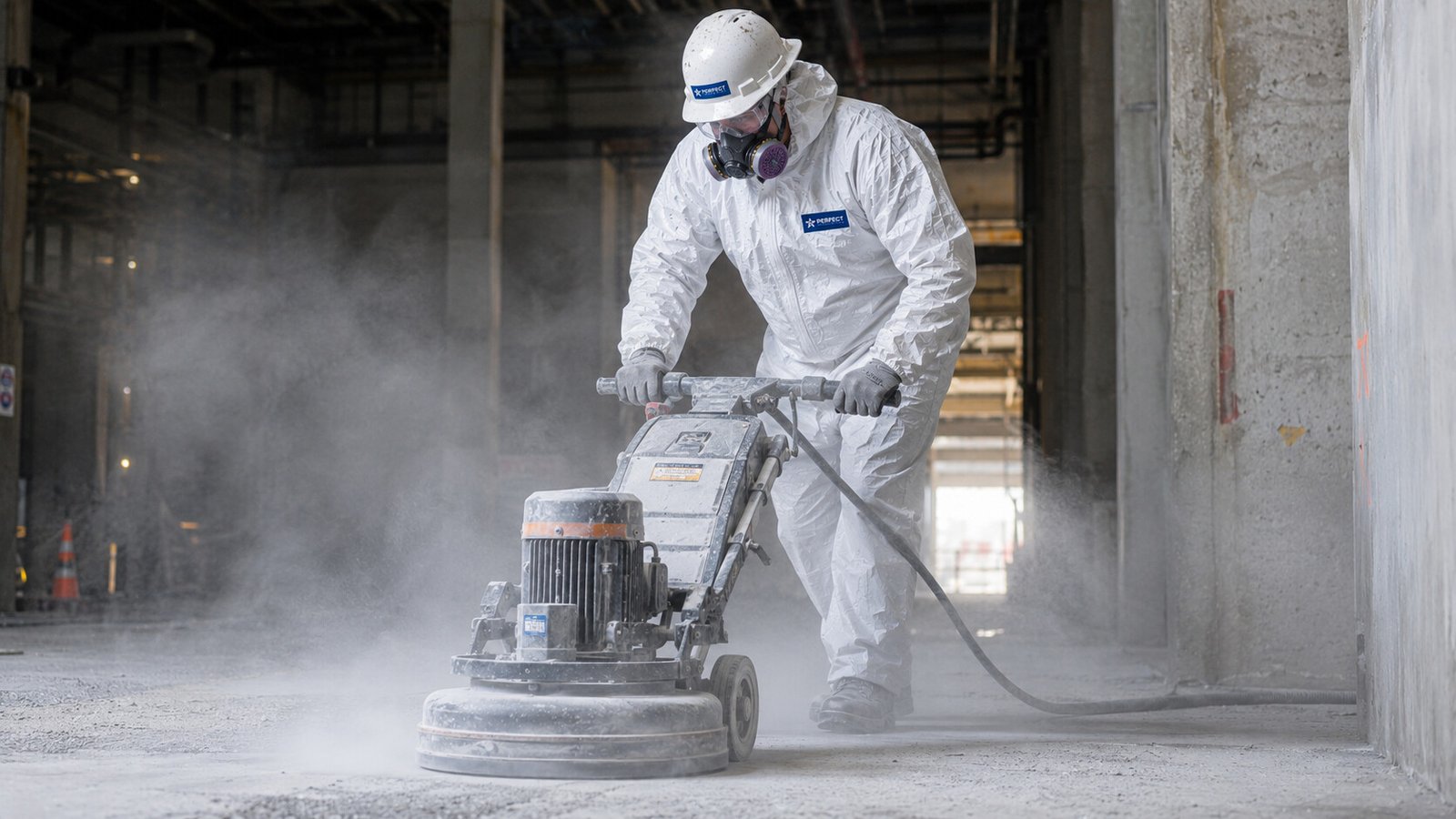
Why Concrete Grinding Creates Safety Risks
Grinding concrete surfaces produces extremely fine particles that can spread throughout the work area.
Common tasks include:
- Floor grinding
- Surface preparation
- Concrete polishing
- Joint cutting
- Wall cutting
- Sidewalk and pavement repairs
Without suitable protection, dust can settle on workers’ clothing, skin, tools, and equipment.
Understanding Silica Dust Exposure
Concrete contains natural silica materials.
When concrete is cut, drilled, or ground, microscopic silica particles become airborne.
These particles are often invisible to the naked eye and can remain suspended for extended periods.
High-exposure activities include:
- Dry grinding
- Dry cutting
- Jackhammer operations
- Surface scarifying
- Concrete demolition
Because silica dust is extremely fine, ordinary work clothing may not provide adequate contamination control.
Why Disposable Coveralls Are Recommended
Disposable coveralls help prevent dust accumulation on personal clothing and reduce contamination transfer outside the work zone.
Key benefits include:
Full-Body Coverage
Coveralls protect:
- Arms
- Legs
- Torso
- Neck
- Head (hooded models)
Reduced Dust Carry-Out
Workers can safely remove contaminated garments before entering clean areas.
Improved Workplace Hygiene
Disposable garments support dust management programs and jobsite cleanliness.
Best Coverall Types for Concrete Grinding
Type 5 Protective Coveralls
Type 5 coveralls are designed for protection against hazardous airborne dry particles.
Advantages include:
- Fine dust protection
- Lightweight design
- Comfortable movement
- Suitable for high-dust environments
Many contractors use hazardous dust protective coveralls during grinding and cutting operations because of their particle barrier performance.
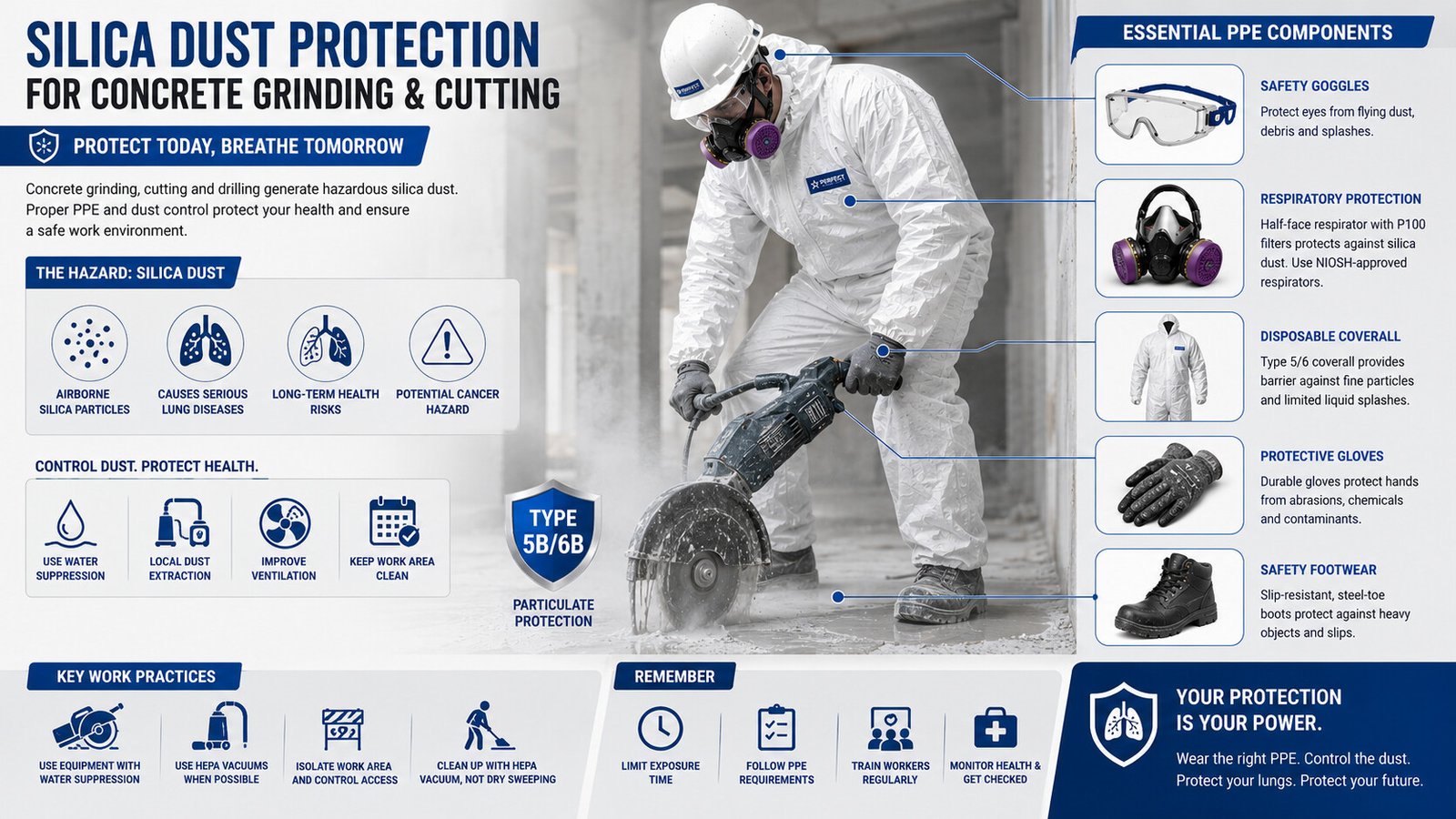
Recommended Coverall Materials
Microporous Film Laminate
Microporous materials are widely used in construction and industrial applications.
Benefits include:
- Excellent dust barrier performance
- Protection against fine particles
- Lightweight comfort
- Reduced heat buildup
To better understand material selection, see microporous protective fabric guide.
SMS Fabric
SMS coveralls offer:
- Good breathability
- Cost-effective protection
- Comfort for short-duration work
They may be suitable for lower-risk applications with reduced dust concentrations.
Features to Look For
Attached Hood
Provides additional protection for the head and neck area.
Elastic Cuffs
Helps minimize dust entry around wrists and ankles.
Front Zipper with Storm Flap
Improves closure protection during active movement.
Durable Seams
Supports garment integrity in demanding construction environments.
Additional PPE for Concrete Grinding
Protective coveralls should be part of a complete PPE system.
Respiratory Protection
Depending on exposure levels:
- N95 respirators
- P100 respirators
- Half-face respirators
- Powered air-purifying respirators (PAPR)
Eye Protection
- Safety goggles
- Dust-resistant eyewear
Hand Protection
- Nitrile-coated gloves
- Industrial work gloves
Foot Protection
- Safety boots
- Disposable boot covers
Dust Control Best Practices
In addition to protective clothing, employers should implement dust control measures such as:
Wet Cutting Methods
Water suppresses airborne dust during cutting operations.
Local Exhaust Ventilation
Dust extraction systems capture particles at the source.
Worksite Isolation
Separate grinding activities from other work areas whenever possible.
Proper PPE Removal Procedures
Remove contaminated garments carefully to reduce secondary exposure.
Benefits of Disposable Coveralls for Concrete Work
Contractors choose disposable coveralls because they:
- Reduce worker contamination
- Improve housekeeping efficiency
- Support workplace safety programs
- Eliminate laundering requirements
- Provide cost-effective protection for temporary projects
These advantages make disposable coveralls a practical solution for concrete grinding and cutting operations.
Concrete grinding and cutting generate large amounts of fine dust, including respirable crystalline silica. Proper protective clothing helps reduce contamination and supports safer jobsite practices.
Type 5 disposable coveralls made from high-performance materials such as microporous film laminate provide reliable particle protection while maintaining worker comfort. When combined with respiratory protection and dust control measures, they become an important part of an effective silica exposure management strategy.
For contractors, distributors, and safety equipment suppliers seeking dependable PPE solutions, partnering with an experienced protective coverall manufacturer helps ensure consistent product quality and reliable supply.

