
Drywall installation and finishing are common tasks in residential construction, commercial renovation, and interior remodeling projects.
Although drywall work may appear low risk compared with heavy demolition, sanding joint compounds creates large amounts of fine gypsum dust that can spread throughout the workplace.
Workers performing:
- Drywall sanding
- Joint compound finishing
- Interior renovation
- Ceiling repair
- Wall preparation
need suitable personal protective equipment to reduce dust exposure and prevent contamination.
Disposable protective coveralls provide an effective barrier by preventing drywall dust from settling on workers’ clothing and spreading outside the work area.
For larger renovation projects involving structural removal, contractors may also require construction demolition protective coveralls to handle heavier dust environments.
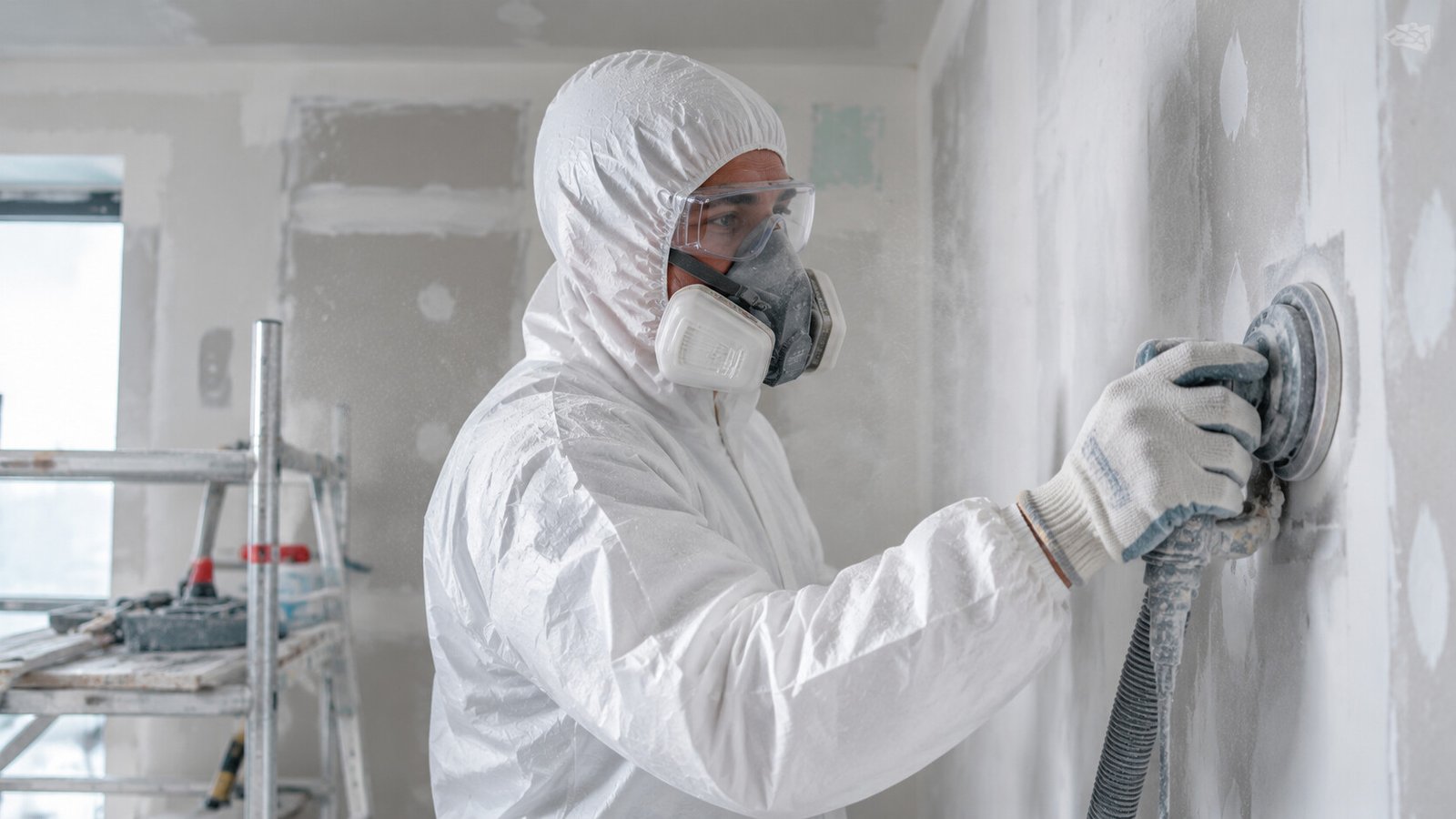
Why Drywall Sanding Requires Protective Clothing
Drywall joint compounds typically contain:
- Gypsum
- Calcium sulfate
- Mineral fillers
- Fine particles
During sanding operations, these materials become airborne as very small dust particles.
Common problems include:
- Dust accumulation on clothing
- Skin irritation
- Contamination of vehicles and homes
- Increased cleanup requirements
Disposable coveralls help control dust transfer during renovation activities.
Common Applications Requiring Drywall Coveralls
Residential Renovation
Used during:
- Home remodeling
- Wall repairs
- Ceiling installation
Commercial Construction
Common in:
- Office renovation
- Retail construction
- Hotel refurbishment
Interior Finishing Projects
Including:
- Surface preparation
- Painting preparation
- Partition installation
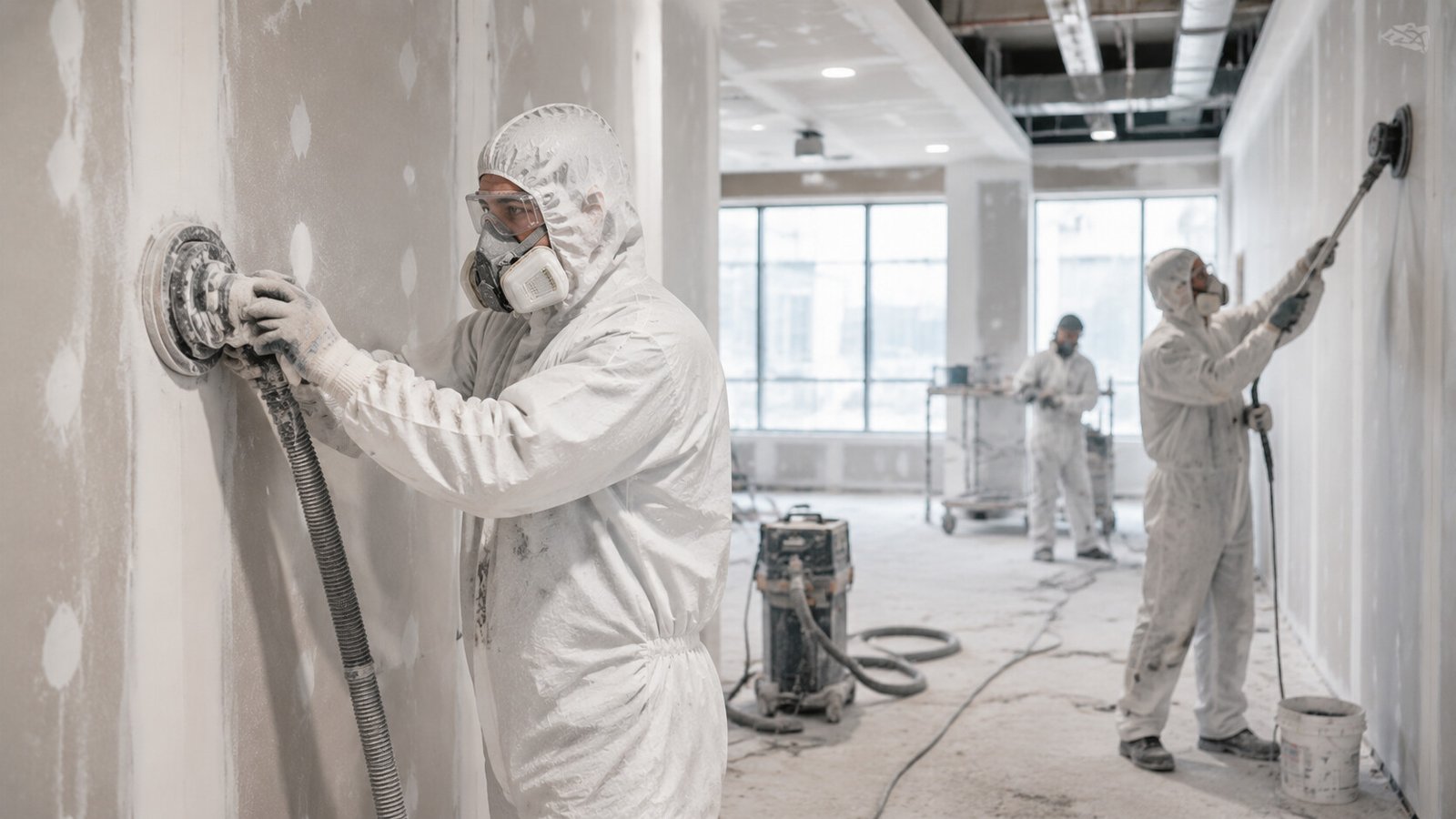
What Type of Coverall Is Best for Drywall Sanding?
Type 5 Disposable Coveralls
For dusty renovation environments, Type 5 protective coveralls are commonly selected.
They provide:
- Dry particle protection
- Full body coverage
- Reduced contamination transfer
- Lightweight comfort
Workers handling fine construction dust often choose hazardous dust protective coveralls because they are designed specifically for airborne particle environments.
Recommended Materials for Drywall Work
Microporous Coveralls
Microporous laminated fabric is suitable for drywall applications because it provides:
- Fine dust protection
- Lightweight comfort
- Breathability
- Disposable convenience
Learn more about microporous protective fabric.
SMS Coveralls
SMS fabric provides:
- Excellent breathability
- Comfortable wearing experience
- Cost-effective protection
Suitable for:
- Short-duration drywall work
- Low-dust finishing tasks
- General renovation projects
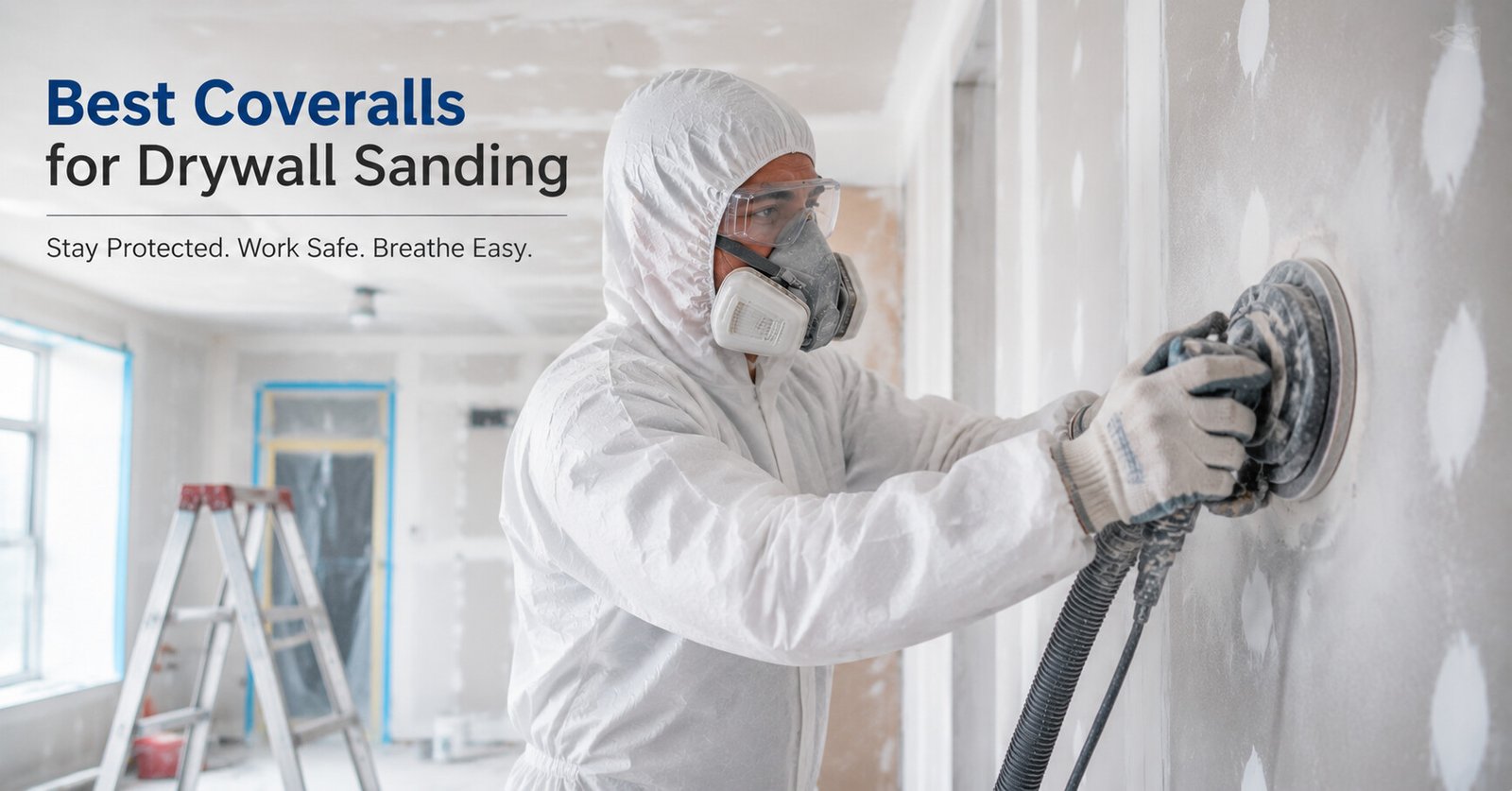
Important Features for Drywall Protective Coveralls
Hooded Design
A hood helps prevent dust accumulation around:
- Hair
- Neck
- Head area
Elastic Wrists and Ankles
These improve protection by reducing openings where dust can enter.
Zipper Flap Protection
A covered zipper provides additional front-body protection.
Low-Lint Fabric
Low-lint materials help prevent additional contamination during indoor projects.
Disposable Coveralls vs Regular Work Clothes
Many drywall workers traditionally use normal workwear.
However, disposable coveralls provide several advantages:
Better Dust Control
Fine gypsum particles are less likely to travel outside the work area.
Reduced Cleaning Time
No need to wash heavily contaminated clothing.
Improved Jobsite Hygiene
Workers can remove contaminated garments before entering clean spaces.
Convenient Replacement
Fresh protective garments can be used for each project phase.
Additional PPE for Drywall Sanding
Disposable coveralls should be combined with:
Respiratory Protection
Common options include:
- N95 respirators
- P2 dust masks
Eye Protection
Recommended:
- Safety goggles
- Dust-resistant eyewear
Hand Protection
Suitable options:
- Work gloves
- Nitrile gloves
Drywall Sanding Safety Practices
Use Dust Extraction Tools
Vacuum-assisted sanding reduces airborne dust.
Maintain Ventilation
Proper airflow helps control indoor dust levels.
Separate Clean and Work Area
Prevent dust migration into finished spaces.
Remove PPE Carefully
Avoid shaking dusty garments after use.
Why Contractors Choose Disposable Coveralls
Disposable coveralls are widely used in renovation because they provide:
- Convenient protection
- Reduced contamination risk
- Lower maintenance requirements
- Better workplace cleanliness
They are especially valuable for contractors working across multiple job sites.
Drywall sanding creates large amounts of fine gypsum dust that can spread easily throughout renovation environments. Choosing the right disposable protective coveralls helps workers maintain cleaner job sites and reduce dust contamination.
Type 5 disposable coveralls made from microporous or SMS materials provide practical protection for drywall installation, finishing, and renovation projects.
For contractors, distributors, and PPE buyers looking for stable supply and customized solutions, working with a reliable disposable protective coverall manufacturer helps ensure consistent product quality and delivery.

