
Meat processing facilities operate under strict hygiene requirements to protect food quality and consumer safety. Employees work in environments where raw meat, moisture, animal fats, and frequent washdowns create unique protective clothing requirements.
Disposable protective coveralls help reduce contamination while supporting efficient hygiene management throughout the production process.
Many food manufacturers begin with general food processing protective clothing before selecting garments specifically designed for meat processing environments.
Why Meat Processing Requires Specialized Protective Clothing
Unlike general food manufacturing, meat plants present additional challenges:
- Blood splashes
- Animal fats
- Moisture exposure
- Cold storage environments
- Frequent sanitation procedures
- Cross-contamination risks
Protective clothing must remain comfortable while helping workers maintain hygienic production practices.
Typical Areas Where Coveralls Are Used
Disposable coveralls are commonly worn in:
Slaughter Areas
Protection against contamination during primary processing.
Cutting and Deboning
Helps reduce contamination from clothing fibers.
Packaging Lines
Supports hygiene during finished product handling.
Cold Storage
Provides an additional protective layer over workers’ clothing.
Cleaning and Sanitation
Useful during equipment cleaning and production line washdowns.
Key Features to Look For
Low-Lint Construction
Reducing loose fibers is critical in food production environments.
Lightweight Comfort
Workers often wear protective clothing throughout long production shifts.
Breathable materials help improve comfort without sacrificing hygiene.
Hooded Design
An attached hood helps contain hair and supports food safety procedures.
Elastic Cuffs
Elastic wrists improve compatibility with disposable gloves and reduce contamination risks.
Full Front Zipper with Storm Flap
Covered zippers create a cleaner garment surface suitable for food production.
Choosing the Right Material
SMS Protective Coveralls
SMS is one of the most commonly used materials in meat processing because it offers:
- Breathability
- Low lint
- Comfortable wear
- Cost-effective protection
Learn more about SMS protective coveralls.
Microporous Film Laminate
Microporous materials provide:
- Enhanced particle protection
- Better contamination control
- Lightweight comfort
Facilities with stricter hygiene requirements often choose microporous protective fabric for selected production areas.
Disposable vs Reusable Clothing
Disposable garments provide several advantages for meat processing plants:
Improved Hygiene
Fresh garments reduce contamination risks.
Faster Garment Changes
Workers can quickly replace contaminated clothing.
Lower Laundry Requirements
No garment washing or collection process.
Better Cross-Contamination Control
Used garments are discarded after each shift or task.
For a complete comparison, see disposable vs reusable protective coveralls.
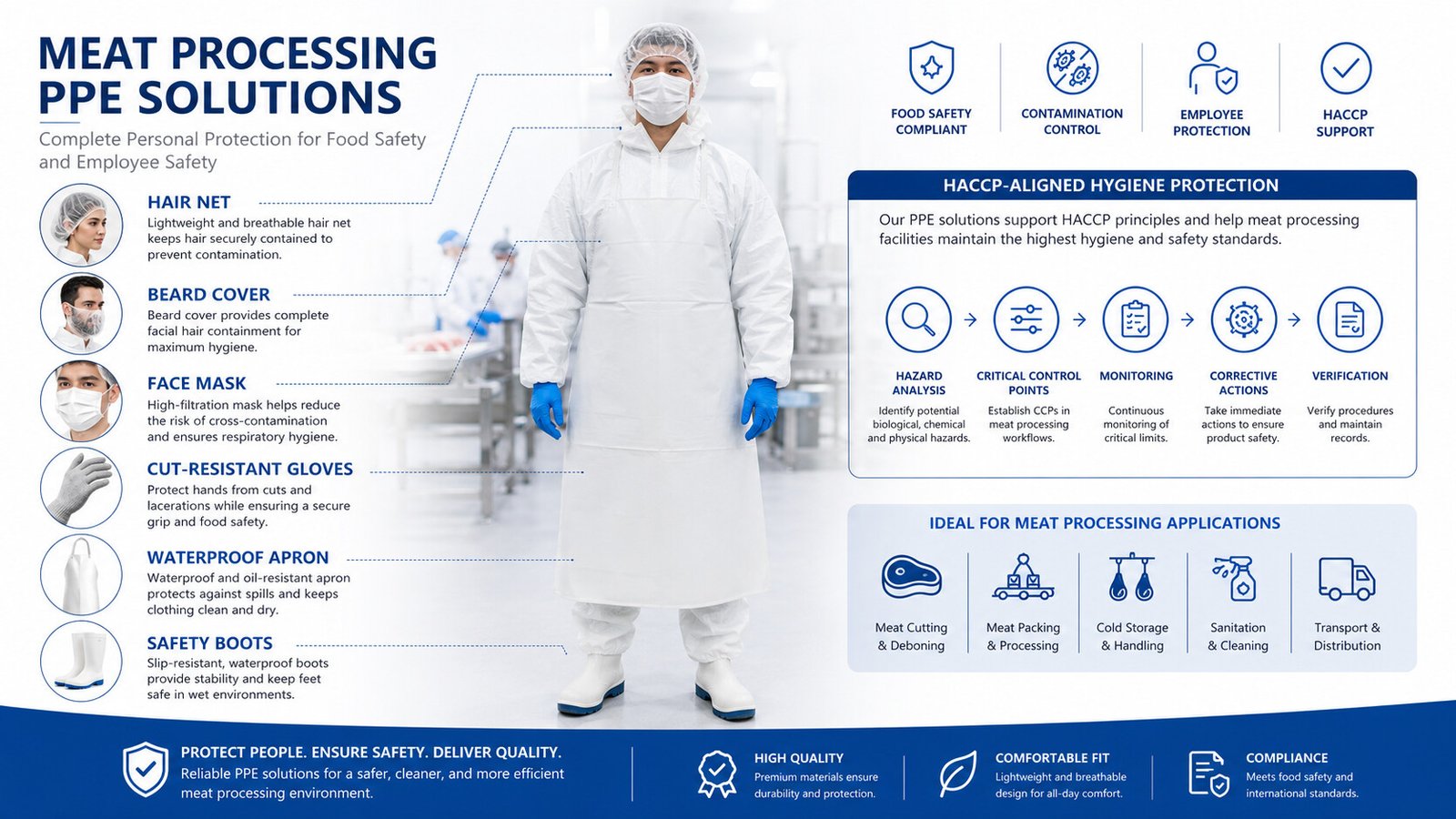
Recommended PPE for Meat Processing
Disposable coveralls should be used together with:
- Hair nets
- Beard covers
- Face masks
- Cut-resistant gloves
- Waterproof aprons (when required)
- Slip-resistant safety boots
This combination helps maintain hygiene while protecting workers during food production.
Best Practices
Food manufacturers should:
- Wear clean coveralls before entering production.
- Replace damaged garments immediately.
- Remove contaminated clothing before entering clean zones.
- Store disposable garments in dry, clean environments.
- Dispose of used garments according to facility procedures.
Benefits for Food Manufacturers
Using disposable protective coveralls helps companies:
- Improve product safety
- Support HACCP implementation
- Reduce contamination events
- Increase customer confidence
- Simplify hygiene management
Meat processing plants require protective clothing that supports hygiene, worker comfort, and efficient contamination control. Disposable SMS and microporous coveralls provide practical solutions for modern food production environments.
Selecting the appropriate material and integrating disposable garments into a comprehensive food safety program helps improve operational efficiency while maintaining high hygiene standards.
If you are sourcing protective clothing for meat processing facilities, partnering with an experienced disposable protective coverall manufacturer ensures reliable product quality, stable supply, and customization options for your production needs.
FAQ
Why do meat processing workers wear disposable coveralls?
Disposable coveralls help reduce contamination, improve hygiene, and simplify garment management in food production environments.
Are SMS coveralls suitable for meat processing?
Yes. SMS coveralls are widely used because they combine breathability, comfort, and low-lint performance.
Are microporous coveralls necessary?
Microporous coveralls are often selected for higher-risk production areas where enhanced particle protection is required.
How often should disposable coveralls be replaced?
Replacement frequency depends on facility hygiene procedures, contamination levels, and production shifts. Many plants replace garments daily or whenever contamination occurs.

