
Type 3 and Type 4 chemical protective coveralls are designed for different types of liquid chemical exposure.
The main difference is the level and form of liquid protection they are designed to provide:
- Type 3 protective clothing is designed for protection against pressurized liquid chemicals.
- Type 4 protective clothing is designed for protection against liquid spray.
The correct choice depends on the chemical hazard, exposure method, working environment, and applicable PPE requirements.
For buyers comparing products, our Type 3 protective coveralls and Type 4 protective coveralls provide two different protection options for liquid chemical applications.
Type 3 vs Type 4 Coveralls at a Glance
| Feature | Type 3 Coveralls | Type 4 Coveralls |
|---|---|---|
| Main protection | Pressurized liquid chemicals | Liquid spray |
| Typical exposure | High-pressure liquid | Spray or splash |
| Protection level | Higher liquid barrier requirement | Spray-tight protection |
| Typical applications | Chemical handling, emergency response | Industrial cleaning, chemical spraying |
| Main purchasing consideration | Pressure and chemical exposure | Spray and liquid exposure |
| Best suited for | Higher-risk liquid chemical operations | Controlled spray environments |
The table provides a general comparison. The actual suitability of a garment must be determined according to the specific chemical, exposure conditions, garment certification, and manufacturer’s technical documentation.
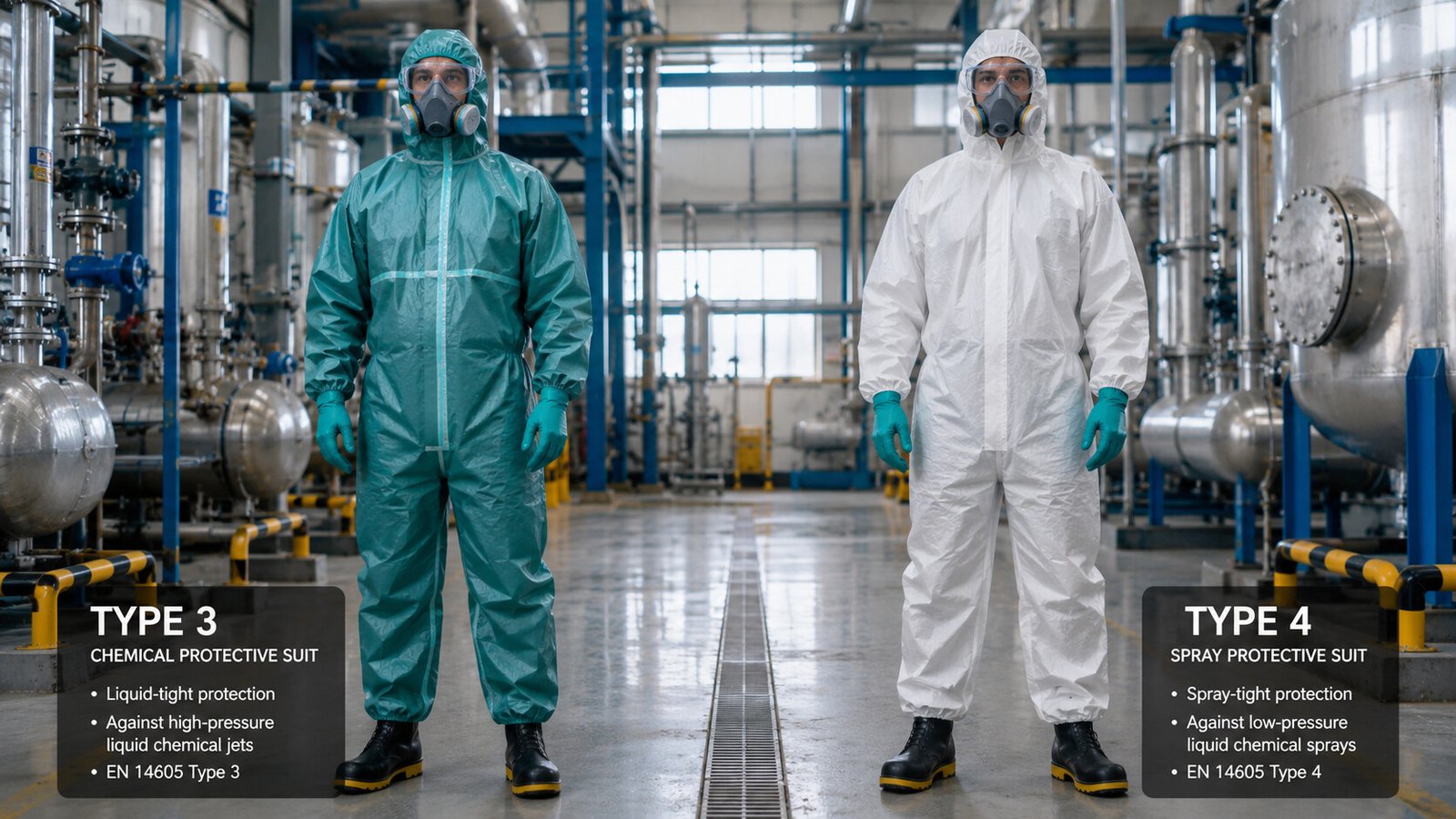
What Are Type 3 Chemical Coveralls?
Type 3 chemical protective coveralls are designed for environments where workers may be exposed to pressurized liquid chemicals.
This makes Type 3 protection relevant to applications where a simple splash barrier may not be sufficient.
Typical situations can include:
- Chemical transfer
- Chemical processing
- High-risk maintenance
- Industrial emergency response
- Hazardous liquid handling
For buyers specifically looking for this protection level, see our Type 3 chemical protective coveralls.
What Are Type 4 Chemical Coveralls?
Type 4 chemical protective coveralls are designed for protection against liquid spray.
They are commonly considered for environments where workers may encounter spray from:
- Cleaning chemicals
- Disinfectants
- Agricultural chemicals
- Industrial washing solutions
- Liquid treatment products
Type 4 garments can be a practical option when the primary hazard is liquid spray rather than pressurized liquid exposure.
Explore our Type 4 protective coveralls for product options.
Type 3 vs Type 4: Which Provides More Protection?
It is not accurate to simply describe one type as “better” for every application.
Instead, the protection level should match the hazard.
Choose Type 3 When:
The work involves potential exposure to pressurized liquid chemicals and a higher level of liquid barrier protection is required.
Choose Type 4 When:
The main hazard is liquid spray and the working environment does not require the protection level associated with Type 3 applications.
The goal is not to select the highest classification automatically, but to select the appropriate protection level for the actual risk.
Type 3 vs Type 4 Applications
Type 3 Applications
Type 3 coveralls may be considered for:
Chemical Manufacturing
Workers handling hazardous liquid chemicals may require higher levels of liquid protection.
Chemical Transfer
Transfer operations can involve unexpected leaks or liquid releases.
High-Risk Maintenance
Maintenance around chemical systems can expose workers to residual liquids.
Emergency Chemical Response
Higher-risk liquid exposure scenarios may require more substantial chemical protective clothing.
Type 4 Applications
Type 4 coveralls are commonly considered for:
Industrial Cleaning
Workers may be exposed to cleaning chemicals and spray during equipment washing.
Chemical Spraying
The garment can provide protection where liquid chemical spray is the primary hazard.
Disinfection
Certain industrial sanitation operations involve liquid disinfectants and cleaning solutions.
Maintenance Washing
Protective clothing can help reduce exposure to contaminated spray during routine maintenance.

Material Selection for Type 3 and Type 4 Coveralls
The garment classification is only one part of product selection.
Buyers should also evaluate the material construction.
Microporous Coveralls
Microporous materials are commonly used in disposable protective clothing where lightweight construction, particle protection, and resistance to certain liquid exposure are required.
See our microporous protective coveralls for additional product information.
However, buyers should not assume that a particular material is automatically suitable for every chemical.
Chemical compatibility must be verified against the actual substance and exposure conditions.
Why Seams Matter in Chemical Protective Coveralls
The fabric is not the only part of a protective coverall that matters.
Seams, closures, zippers, and interfaces can influence overall garment performance.
Important features to evaluate include:
- Seam construction
- Zipper protection
- Hood design
- Wrist closures
- Ankle closures
- Garment interfaces with gloves and boots
For chemical applications, buyers should review the complete garment construction rather than selecting a product based only on fabric type.
Type 3 vs Type 4: What Should Buyers Check?
Before placing a bulk order, procurement teams should evaluate several factors.
1. Chemical Exposure
Identify the exact chemical substances workers may encounter.
Consider:
- Chemical name
- Concentration
- Temperature
- Exposure duration
- Exposure method
2. Exposure Pressure
Determine whether workers face:
- Normal liquid splash
- Liquid spray
- Pressurized liquid
- Accidental leakage
This can help determine whether Type 3 or Type 4 protection is more appropriate.
3. Chemical Compatibility
A garment classification does not mean that the garment is resistant to every chemical.
Always request relevant chemical permeation or penetration data where applicable.
4. Certification Documentation
For B2B procurement, buyers should request:
- Certification documentation
- Test reports
- Technical specifications
- Product datasheets
You can review our CE certified protective coveralls information when evaluating supplier documentation.
Type 3 vs Type 4 for Industrial Cleaning
Industrial cleaning is one area where buyers frequently need to distinguish between Type 3 and Type 4 protection.
For routine chemical washing and spray applications, Type 4 may be appropriate depending on the chemical and exposure conditions.
For situations involving more severe liquid chemical hazards or pressurized exposure, Type 3 protection may be required.
For a dedicated application guide, see:
Best Coveralls for Industrial Cleaning
Type 3 vs Type 4 for Chemical Handling
Chemical handling covers a much broader range of activities.
For example:
- Opening chemical containers
- Transferring liquids
- Mixing chemicals
- Cleaning chemical equipment
- Handling chemical waste
The correct coverall should be selected according to the actual task rather than the industry name alone.
For a broader selection guide:
Best Disposable Coveralls for Chemical Handling
Other PPE to Use with Chemical Coveralls
Protective coveralls should not be considered a complete PPE system by themselves.
Depending on the hazard assessment, workers may also need:
- Chemical-resistant gloves
- Safety goggles
- Face shields
- Chemical-resistant boots
- Respiratory protection
- Appropriate head protection
The interfaces between different PPE components should also be considered.
For example, gloves should provide an appropriate connection with the coverall sleeves, while boots should work effectively with the garment legs.
Type 3 vs Type 4: Cost Considerations
Price should not be the only factor when comparing Type 3 and Type 4 coveralls.
A lower-cost garment may not be appropriate for a higher-risk application.
For B2B buyers, total purchasing value can include:
- Unit price
- MOQ
- Packaging
- Certification
- Testing
- Product consistency
- Delivery capacity
- Customization
- Supplier reliability
If you are comparing suppliers for bulk orders, working directly with a disposable coverall manufacturer can provide better access to product specifications, customization, and production information.
Type 3 vs Type 4: Quick Decision Guide
Use the following general decision process:
Step 1
Identify the chemical.
Step 2
Determine how workers may be exposed.
Step 3
Check whether exposure involves spray, splash, or pressurized liquid.
Step 4
Review the required garment classification.
Step 5
Verify chemical compatibility.
Step 6
Check certification and technical documentation.
Step 7
Select the appropriate product and PPE combination.
This approach is more reliable than choosing a coverall based solely on price or fabric appearance.
When Should You Choose Type 3?
Consider Type 3 protective clothing when:
- Pressurized liquid chemical exposure is possible.
- The task involves higher-risk liquid chemical handling.
- The risk assessment requires a higher liquid barrier.
- The garment’s certification and chemical compatibility data support the intended application.
View our Type 3 protective coverall range
When Should You Choose Type 4?
Consider Type 4 protective clothing when:
- Liquid spray is the primary exposure.
- Workers perform chemical washing.
- Industrial cleaning creates spray exposure.
- The application does not require Type 3 protection.
View our Type 4 protective coverall range
Why Buy Type 3 or Type 4 Coveralls Directly From a Manufacturer?
For distributors and industrial buyers, purchasing directly from a manufacturer can provide advantages such as:
- Consistent product specifications
- OEM/ODM support
- Bulk production capacity
- Custom packaging
- Technical documentation
- Quality control
- Stable supply
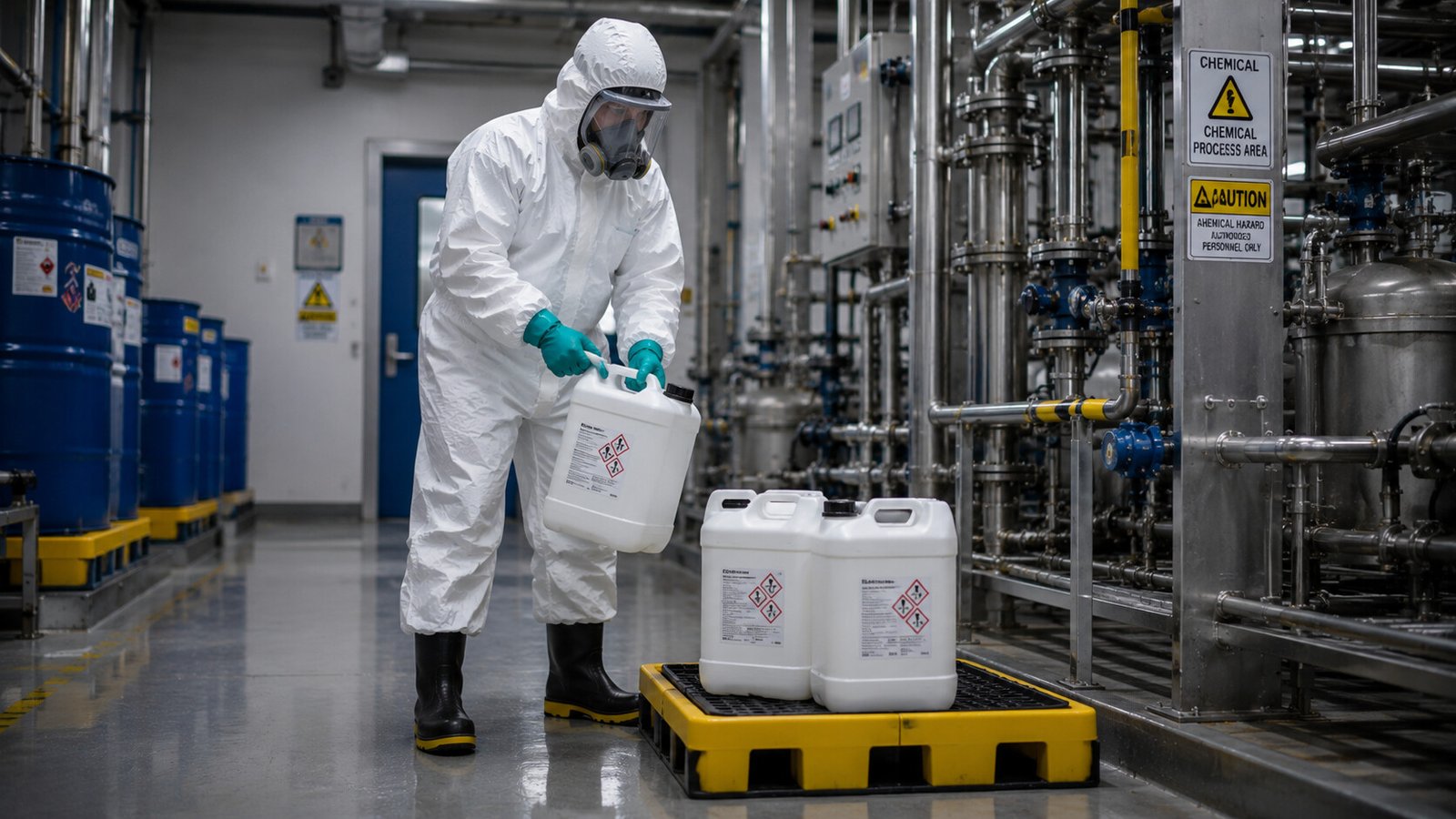
Our coverall manufacturer page provides more information about our protective coverall production capabilities.
For private-label and customized requirements, buyers can also review our OEM/ODM protective coverall service
Type 3 and Type 4 chemical protective coveralls serve different liquid exposure scenarios.
Type 3 is designed for protection against pressurized liquid chemicals, while Type 4 is designed for liquid spray protection.
The correct choice depends on the chemical, exposure method, pressure, working conditions, required certification, and chemical compatibility of the garment.
For buyers who are still unsure which option fits their application, comparing the technical requirements with the product specifications is the best starting point.
If you are sourcing Type 3 or Type 4 disposable chemical protective coveralls in bulk, contact an experienced manufacturer to discuss your application, specifications, and OEM requirements.
FAQ
Is Type 3 better than Type 4?
Not necessarily. Type 3 and Type 4 are designed for different liquid exposure scenarios. Type 3 addresses pressurized liquid exposure, while Type 4 addresses liquid spray exposure.
Can Type 4 coveralls be used for chemical cleaning?
They can be suitable for certain chemical cleaning and spray applications, provided the garment is appropriate for the specific chemical and exposure conditions.
Are Type 3 coveralls disposable?
Type 3 protection can be available in disposable garment constructions, but buyers should verify the specific product design, certification, and intended use.
Are Type 3 and Type 4 coveralls chemical resistant?
Their chemical resistance depends on the specific garment material, construction, certification, and chemical involved. A classification alone should not be interpreted as resistance to every chemical.
How do I choose between Type 3 and Type 4?
Start with the exposure scenario. Determine whether the worker may encounter pressurized liquid or primarily liquid spray, then verify the garment’s certification and chemical compatibility for the intended application.

